

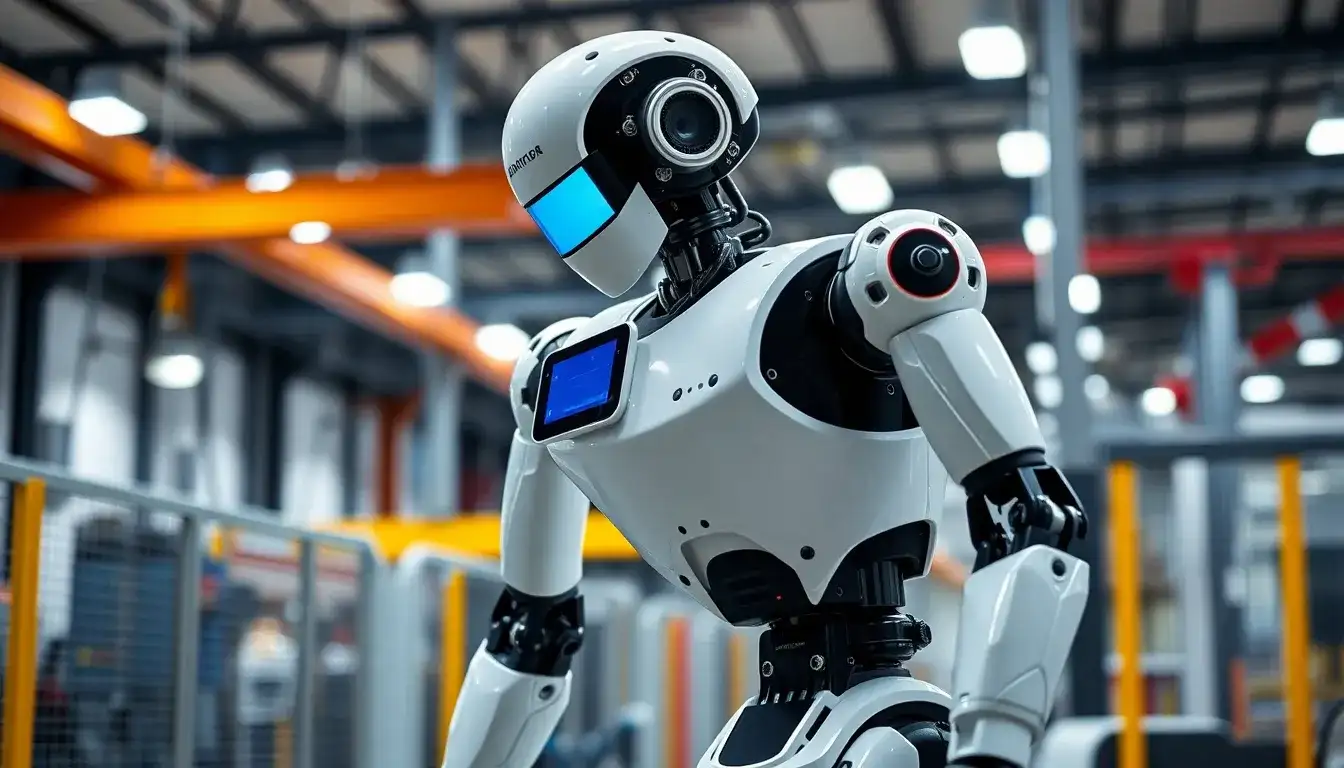
Industrial Software Acceleration Frontier: iRobotCAM Launches Domestic Autonomous Robots with Offline Programming Capabilities
With the rapid advancement of AI, industrial software is also experiencing significant transformations. The demand for intelligent solutions continues to grow, and the scope of robotics applications is expanding. Among the notable developments is iRobotCAM, a domestic software solution designed for autonomous robots that focus on offline programming. This software is recognized as a key application in the field of autonomous robotics.
As more companies integrate AI technologies, the efficiency and capabilities of industrial software are becoming increasingly critical. This article will explore the trends, challenges, and future prospects for iRobotCAM.
Question 1: What is iRobotCAM?
Answer 1: iRobotCAM is a cutting-edge software specifically designed for robots used in industrial applications. It is developed by a company that specializes in robotics and automation. This software is particularly well-known for its offline programming capabilities, which allow users to create robot programs without interrupting production processes.
Question 2: How is AI influencing industrial software?
Answer 2: AI is reshaping the landscape of industrial software by enhancing efficiency and reducing the time required for programming and operation. The ability to learn from data and adapt to varying conditions makes AI a powerful tool in industrial settings. The integration of AI into software like iRobotCAM enables faster development cycles and improved adaptability for robots in various tasks.
Question 3: What challenges does the implementation of iRobotCAM face?
Answer 3: While iRobotCAM offers advanced features, challenges such as integration with existing systems and user training remain. Ensuring that users can effectively utilize the software while maintaining productivity is essential for successful implementation.
Question 4: What advantages does iRobotCAM provide for users?
Answer 4: iRobotCAM streamlines the programming process for industrial robots, enabling users to achieve high precision and efficiency. Its offline programming capabilities allow for the creation and testing of robotic tasks without halting ongoing operations, thus minimizing downtime.
Question 5: How does iRobotCAM compare to other industrial software solutions?
Answer 5: iRobotCAM stands out due to its focus on offline programming and its compatibility with various robotic systems. Unlike other solutions, it offers tailored features for the unique needs of domestic industrial applications, making it a preferred choice among manufacturers in China.
Question 6: What are the future prospects for iRobotCAM?
Answer 6: The future of iRobotCAM looks promising as the demand for automation and intelligent solutions continues to grow. With ongoing advancements in AI and machine learning, iRobotCAM is expected to evolve further, offering enhanced capabilities and integrations that will benefit users across various industries.
Question 7: What is the expected impact of robotics on the industrial landscape?
Answer 7: As robotics technology advances, the impact on the industrial landscape is expected to be substantial. Companies will likely see increased efficiency, reduced costs, and improved product quality as they adopt intelligent robotic solutions like iRobotCAM.
Question 8: How does iRobotCAM address specific industry needs?
Answer 8: iRobotCAM is designed to meet the specific needs of various industries by providing customizable solutions that enhance productivity and adaptability. This flexibility allows companies to tailor the software to their unique operational requirements.
Question 9: How does iRobotCAM facilitate integration with existing systems?
Answer 9: iRobotCAM offers seamless integration capabilities with various industrial systems, allowing companies to incorporate it into their existing workflows without significant disruptions. This capability is critical for maintaining operational continuity during the transition to more advanced robotic solutions.
Question 10: What role will user feedback play in the future development of iRobotCAM?
Answer 10: User feedback will be essential in shaping the future development of iRobotCAM. By understanding user experiences and requirements, the developers can enhance the software’s features and functionalities, ensuring it meets the evolving needs of the industrial sector.
Original article by NenPower, If reposted, please credit the source: https://nenpower.com/blog/irobotcam-revolutionizes-industrial-robotics-with-domestic-production-and-autonomous-programming/

