

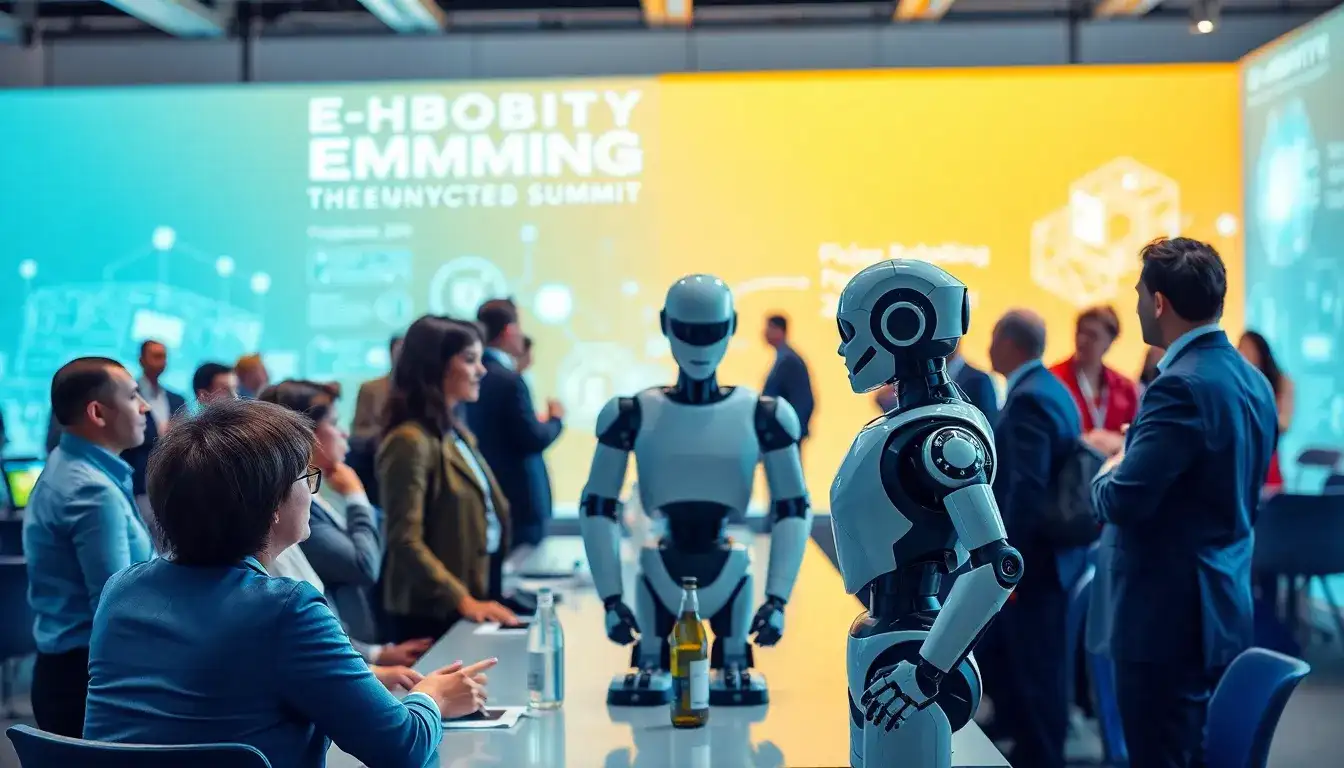
On April 28, the third China Embodied Intelligence and Humanoid Robot Industry Conference was grandly held at the National Autonomous Innovation Demonstration Zone Exhibition and Trading Center in Beijing. As one of the six major future industries clearly outlined in the national “14th Five-Year Plan,” embodied intelligence is accelerating its transition from the technology validation stage to reaching the critical point of large-scale application. Humanoid robots, being the most mature physical embodiment of this technology, have surpassed mere demonstrations of “walking and running.” They have achieved systematic breakthroughs in core capabilities such as dexterous manipulation, natural interaction, and task generalization, and are widely viewed within the industry as the prototype of the “next-generation physical intelligent infrastructure.” However, structural challenges such as insufficient model generalization capabilities, a lack of high-quality interaction data, and low collaboration efficiency among ontology, algorithms, and computational power still constrain their deep penetration across various sectors.
To address these issues, this conference was guided by the Management Committee of Zhongguancun Science City and hosted by the Lide Robot Platform (Robot Lecture Hall) under the theme “Competing in the Trillion Yuan Track of Embodied Humanoids—Reshaping the New Era of Future Industries,” bringing together over a thousand top talents from government, industry, academia, and finance. The event was prominently sponsored by Lingxin Qiaoshou, and received strong support from more than fifty enterprises in the embodied intelligence industry chain, including Yinshi Robotics, Kunwei Technology, Xinghui Sensors, Chenhun Line Technology, Yuequan Biomimetic, Tashan Technology, Xindong Era, Baidu Intelligent Cloud, Chaowei Sensors, Qiangnao Technology, Yushu Technology, Qianxun Intelligent, and Leju Robotics.
Next, we will present insights and practical observations from core guests through keynote speeches and roundtable discussions at the conference.
Core Breakthroughs in Humanoid Robots: Dexterous Manipulation, AI Brain, and Natural Interaction
Academician Yin Zhouping: Humanoid robots must overcome three core capabilities—dexterous manipulation, natural interaction, and embodied intelligence. The industry widely recognizes that dexterous manipulation, natural interaction, and general AI brains form a “three-dimensional coordinate system” of technological challenges, while simulation tool chains, high-quality datasets, and core components need significant reinforcement as foundational infrastructure. Currently, companies are engaging in technological competition along differentiated paths such as biomimetic drives, multimodal perception, data feedback loops, and end-to-end modeling, aiming to make performance leaps while engineering cost efficiencies to lay a foundation for large-scale deployment.
Academician Yin, who is also the Dean of the School of Mechanical Science and Engineering at Huazhong University of Science and Technology, emphasized that for humanoid robots to truly “get the job done,” they must possess human-like dexterous manipulation capabilities. This relies on breakthroughs in high-precision, multimodal tactile perception systems, which must achieve real-time measurement of multiple physical quantities such as force, deformation, and temperature, and align and integrate them with visual and motion data to create an edge decision-making feedback loop. While current biomimetic tactile sensors have achieved a durability of over one million cycles and sub-millimeter precision, humanoid robots still show significant gaps compared to human hands in dynamic adaptability and multitasking generalization capabilities.
Interaction is a key threshold for humanoid robots to enter households and society. The focus has shifted from pre-set instructions to three-dimensional understanding and generation of “intention-expression-action,” requiring a visual-language-action large model to achieve joint modeling of semantics, emotions, and body movements. A biomimetic face must have over 50 degrees of freedom to express subtle emotions, and emotional computing must be lightweight, with token-level responses. Future interaction systems must realize a closed-loop of “understanding-reasoning-expression” and be deeply coupled with embodied intelligence. In the industry chain, universities and enterprises are building innovative partnerships to promote the integration of technology, education, and talent.
Academician Yin stated that in the long term, the physical intelligence phase may require a decade to materialize, but interdisciplinary integration will significantly accelerate the industrialization process.
Dong Kai: Policy guidance promotes high-quality development of intelligent robots and embodied intelligence industry. The Director of the Technology Department at the China Academy of Information and Communications Technology and the Deputy Director of the Key Laboratory of Common Technology Assessment of Robot Quality pointed out that embodied intelligence, as a new generation of AI technology empowering the physical world, needs to adhere to long-termism and strengthen expectation management. Dong emphasized that intelligent robot technology encompasses five common technical dimensions: perception-interaction, learning-decision-making, operation control, structural materials, and safety ethics, with the core focus on software-hardware synergy and interdisciplinary integration.
The industry currently faces the dilemma of dispersed technical routes and a lack of national laboratory-level coordination, necessitating the enhancement of collaborative research strategy capabilities. The development tool chain is paramount; Dong believes there is a need to establish an independent physical simulation engine and data asset management system to fill the gaps in “physical AI.” At the model level, VLA and world models are converging, and a “GPT moment” is expected in the next 3-5 years. Dong views structure as the cornerstone of intelligence, stating that many innovative structures are what make our algorithms possible. Enhancing manufacturing and delivery capabilities requires collaboration between traditional manufacturing and emerging enterprises to explore new paradigms in supply chain management. In terms of security governance, enhancing system safety necessitates attention to the safety of physical entities, algorithm models, data and networks, as well as ethical and compliance safety. Dong stressed that there is currently a structural bubble in the industry, but overall health remains, advocating for rational expectation management and directing resources toward core technology breakthroughs to drive the transition from emotional value to economic and social value.
Zhou Yong: The dexterous hand is a self-evolving intelligent agent, aimed at creating a million skilled hands. The founder and CTO of Lingxin Qiaoshou described the core positioning of the dexterous hand: it is not merely hardware but an intelligent agent that connects the physical world, capable of self-learning and self-evolving. The company’s mission is “one million hands, one million skills.” Zhou noted that Lingxin Qiaoshou currently leads the global dexterous hand industry, boasting the most robust R&D team with a monthly production exceeding 4,000 units (more than many countries’ annual output) and is on the verge of surpassing 10,000 units per month. In terms of technological breakthroughs, Lingxin Qiaoshou has reduced the price of a million-yuan product to an affordable level, launching the 16-degree-of-freedom full direct-drive dexterous hand O20, which has been downscaled to the size of a 6-degree-of-freedom dexterous hand. The company is also set to open-source a 20-degree-of-freedom dexterous hand.
The key modules developed by the company utilize advanced ball screw technology, increasing efficiency from 40% to over 90%, and the plastic joints introduced with partners are priced at 399 yuan, achieving “plastic instead of steel.” Lingxin Qiaoshou has also collaborated with partners to offer various robotic arms for customer compatibility. On the software side, the company has established the Open TeleDex open-source platform to support any dexterous hand/robotic arm/collection device, collaborating with Alibaba Cloud’s Mota community and JD Robotics to launch UMI-Dex. The Linker Dex hand operation model developed by the company can achieve pinch, pull, twist, and tool usage, and the Agent development platform facilitates intelligent agent development through dialogue, enabling precise operations such as threading a needle, tying shoelaces, brewing tea, and making dumplings based on atomic skills. The Lingxin Creation large model can generate and manufacture any item in the virtual world, including robotic arms, dexterous hands, and even entire humanoid robots. Zhou predicts that within 2-3 years, robots will be widely deployed, and believes China will become a global leader and definitor in robotics. The company’s vision is to further expand dexterous hand mass production capabilities within a year, restore all human skills within three years, and create spacecraft in outer space within ten years through a fully open software and hardware platform, ushering in a new era of embodied intelligence.
Sun Rongyi: Data flywheel + end-to-end models + agent scheduling to build a universal robot brain. The Vice President of Qianxun Intelligent clearly stated that the key to the implementation of embodied intelligence lies in building a universal AI brain that can understand the physical world and drive any form of robot. First, data is the foundation. Qianxun Intelligent has constructed approximately 10T tokens of high-quality real machine data (with 95% effectiveness), including 200,000 hours of real machine operation data. The company pioneered a “data flywheel” closed loop: task design → collection → AI automatic cleaning and labeling → model training → real machine inference, with simple tasks completing a round of iteration in just 2-3 hours. Qianxun Intelligent aims to collect 1 million hours of real scene data by 2026 through portable wearable devices and crowdsourcing, breaking through the “studio walls” and entering real family environments.
Second, model realization requires leap-forward iteration. Qianxun Intelligent is the first company in China to verify the scaling law of embodied intelligence: a tenfold increase in pre-training data can halve the fine-tuning data. In January 2026, Qianxun Intelligent’s V1.5 model supported voice-driven complex tasks, outperforming North American open-source model π 0.5 and achieving a leap from parallel to leading in China-US models. The model training of Qianxun Intelligent is divided into three stages: pre-training, post-training, and reinforcement learning, achieving a success rate of 99.5% in industrial tasks. Third, agents are key to home deployment. Sun Rongyi emphasized that in the face of complex, interrupted, and multi-priority tasks, a robust agent brain is necessary for long-range planning, dynamic re-planning, and task scheduling. During a live demonstration, the Qianxun Intelligent robot demonstrated robust decision-making capabilities by autonomously adjusting sequences in real-world scenarios, such as addressing drawer jams, failed grabs, and dropped items. Sun Rongyi believes that the core paradigm of embodied intelligence consists of a universal embodied large model + stable ontology + scalable infrastructure platform + top-tier team, with the goal of enabling 10% of the global population to own their own robots within ten years.
Hu Zheqi: Yuequan Biomimetic breaks industry constraints with a muscle-like biomimetic solution. Hu Zheqi, the Deputy General Manager of Yuequan Biomimetic, pointed out that despite the current strong movement capabilities displayed by humanoid robots, three major issues—high energy consumption during movement, weak arm manipulation capabilities, and poor safety in human-robot interaction—seriously restrict their large-scale deployment. The solution proposed by Yuequan Biomimetic mimics the human skeletal muscle system. The human body has undergone optimization over hundreds of thousands of years of evolution, making it an excellent model for humanoid robots. Yuequan Biomimetic was co-founded by Academician Ren Luquan of the Chinese Academy of Sciences (the founder of the first-level interdisciplinary field of biomimetic science and engineering in China) and Professor Ren Lei (who pioneered the theory of biomimetic tension-compression robots in 2017). The team has published over 800 papers and received more than 280 patents.
Based on biomimetic tension-compression technology, Yuequan Biomimetic has achieved three major breakthroughs: overturning traditional rigid hinge designs, with a single joint achieving up to three-dimensional 6 degrees of freedom; self-developed magnetic electric-driven artificial muscles that integrate driving, transmission, and speed change, significantly reducing energy consumption; and a multi-layered, multi-joint rigid-flexible coupling system optimizing energy management, achieving a load-to-weight ratio of 50% for biomimetic robotic arms. Yuequan Biomimetic has constructed a complete product line from core components to complete machines. Its flagship product, the Y-Hand M2, boasts the world’s highest degree of freedom at 38, with fingertip force reaching 180N, far exceeding the industry’s level of 30-40N and lasting over 300,000 uses without significant performance degradation. This product can achieve true dexterous operations such as single-hand bottle opening, single-hand tool usage, and threading a needle, with ultra-high compliance ensuring safety in human-robot interactions, demonstrated to the General Secretary in February 2026.
Additionally, the X-Hand M1 features 11 degrees of freedom and 472 sensing units, capable of lifting loads up to 40kg. The W-Bot 2.0 wheeled humanoid robot has the world’s smallest chassis (0.238㎡) and a three-folding structure for wide knees and ankles, covering a working space of 0-2.2 meters, and has been applied in scenarios such as FAW, cultural tourism, and warehousing logistics. Yuequan Biomimetic has also developed the YQ Motor5 series hollow cup motors (seven models with diameters from 4-22mm), forming a full-stack self-research capability. Hu Zheqi emphasized that Yuequan Biomimetic is committed to promoting the real-world application of humanoid robots in scenarios such as intelligent manufacturing, housekeeping, elderly care, and healthcare.
Wang Letian: Star Motion Era’s breakthroughs in dexterous hand technology and industrialization pathways. Wang Letian, the Vice President of Product at Star Motion Era, believes that an excellent dexterous hand is not only “movable” but also “trainable,” supporting efficient intelligent decision-making. The embodied intelligent system relies on three pillars: models, computing power, and data, while execution capability is the essential fourth dimension. In terms of model application, VLA (Visual Language Assistance) is suitable for generalizing intention modeling, while reinforcement learning excels at performing high-frequency, high-precision dynamic detailed actions to meet complex operational needs. The key to achieving these capabilities lies in enhancing the execution precision of dexterous hands. First, it is necessary to reduce joint backlash, achieving closed-loop control between the output end and the motor end through double encoder technology, effectively minimizing mechanical transmission errors. Second, a fully direct-drive structure avoids nonlinear transmission relationships, simplifying motion control and reducing computing power consumption; a fully driven solution ensures that each joint operates independently, with orthogonal data facilitating parallel training and precise control. Moreover, while tactile sensor data is abundant, the current low-resolution tactile data is more practical for enhancing model performance.
The industrial application of dexterous hands tests their actual lifespan. Most manufacturers on the market promote lifespan under no-load conditions, but in actual use, impacts from shell collisions, shock loads during gripping, and high currents caused by motor stalling truly challenge the lifespan of dexterous hands. Star Motion Era employs reverse drive fault tolerance design and compliance force control strategies, enhancing system robustness and ensuring stable operation in complex scenarios such as logistics warehousing and industrial assembly. Its flagship products, the XHand series of dexterous hands, integrate high-density tactile sensing, fully self-developed compact joint modules, and leading control algorithms, widely procured by various modeling manufacturers, achieving end-to-end deployment and pushing industrial intelligent equipment towards greater precision and reliability.
The Tactile Revolution: How Chinese Force Sensors Break the Perception Blind Spot of Robots
In 2025, the Chinese embodied intelligence industry will reach a critical turning point. Sensor companies are transforming aerospace technology into civilian products, with annual deliveries of dexterous hands exceeding 10,000 units for the first time, and world models transitioning from pixel understanding to physical interaction. In this race from the laboratory to mass production, force sensing, tactile perception, dexterous hand execution, AI decision-making, and safety protection have become key elements driving the industry’s transition from technical breakthroughs to large-scale application.
Yuan Minglun: From aerospace force measurement to robotic tactile technology leap. The Executive Vice President of Kunwei Technology introduced that the company’s founding team comes from the China Aerodynamics Research Institute, with over 20 years of experience in measurement technology for aerospace vehicles. Yuan noted that the company addresses industry pain points, including unclear long-term parameters for force sensors, a lack of core technology domestically, and insufficient production capacity, by transforming aerospace six-dimensional force measurement technology into civilian products. The company has built a production base of over 10,000 square meters in Changzhou, Jiangsu, equipped with metal material laboratories and force perception traceability laboratories, ensuring products achieve recognition from the National Institute of Metrology.
Yuan highlighted that Kunwei Technology has independently developed fully automated six-dimensional joint calibration technology and semiconductor strain gauge technology, with product precision reaching 0.1% full scale and accuracy reaching 0.3%, outperforming mainstream foreign products. The company’s annual production capacity reaches 100,000 units, with a market share of 53%, and last year’s revenue grew by 120%, serving more than 100 clients, including leading enterprises like UBTECH, ABB, Huawei, and BYD. Yuan emphasized that the company has authored GB/T 43199-2023, the only national standard for the inspection of multidimensional force/moment sensors for civilian robots, providing clients with a reference and establishing industry production norms. Kunwei Technology’s products are widely used in scenarios such as data collection for humanoid robots, safety assurance in medical procedures, and quality testing of automotive components. The company plans to upgrade products with AI technology to achieve automation and intelligence in production processes and develop for the global market, leveraging intelligent sensing technology to aid new quality productivity.
Yu Qing: Causal world models empower embodied intelligence to enter a new stage of autonomous decision-making. The Co-Founder and CTO of Chenhun Line Technology stated that world models will be the core foundation of embodied robot brains, with the goal of causal world models reconstructing embodied intelligence through “causal thinking,” allowing robots to deduce physical causal chains and achieve understanding, prediction, and intervention in a closed loop. The model can accurately understand complex instructions, support breakpoint continuation, process supervision, and multitasking concurrency, enhancing predictive capabilities through multi-world line searches, combined with an atomic skill library for precise execution. The company has established a full-stack landing system, with technology validated across multiple scenarios, pushing robots from “seeing” to “understanding deeply,” thereby achieving true autonomous decision-making and efficient operations.
Yu stressed that the team’s self-developed 4B world understanding model enhances spatial understanding accuracy through causal links and process goal reinforcement learning, surpassing open-source 32B models and some closed-source large models in complex spatial reasoning tasks. The company has also built 14 basic skills and 7 advanced skill libraries, planning to transfer nearly a hundred Digital Agents’ experience into Physical Agent scenarios through structured Skill definitions and Agentic RL technology. Yu revealed that Chenhun Line Technology has completed nearly 20 types of adaptations for embodied hardware and deployed in over 10 scenarios. Currently, the company is collaborating with a certain institute under the Ministry of Industry and Information Technology, domestic computing power companies, and various manufacturing scenario enterprises to create a Task-Centric data collection training validation closed-loop system called TermiDataClaw. Additionally, the company is developing an evaluation system for embodied world understanding models, TermiBenchmark, focusing heavily on dimensions such as understanding fine operations, and will continue to improve in collaboration with universities and standard evaluation institutions. The goal of the causal world model is to root every action in a deep understanding of the physical world, ensuring every decision originates from precise predictions based on contextual goals and physical causality, empowering robots with the ability to act freely and think deeply in complex real-world environments, advancing embodied robots towards commercial scale.
Wang Taige: Safety in embodied intelligence cannot wait for incidents to remediate. The Scene Safety Officer of Baidu Intelligent Cloud’s Cloud Security Department pointed out that the industry is in a period of rapid explosion, with investments in Chinese embodied intelligence expected to reach 38 billion yuan by 2025 and over 230 related enterprises emerging, but safety risks have already become apparent. Wang listed several typical cases: a Tesla factory robot injury incident leading to a $51 million compensation; a robot “zombie swarm” attack in an overseas logistics warehouse causing millions in losses; a combat robot losing control during debugging; and a demonstration at the GeekCon hacker conference showcasing infectious attacks between robots. Wang emphasized that three core risks need urgent addressing: first, remote hijacking attacks can lead to asset loss, personal injury, and brand crises; second, intellectual property leakage, where edge models can be reverse-engineered, risking internal confidential data leakage; third, inducing intelligent behavioral decision-making, where poisoned training data or audio-video deceptions can trigger covert attacks.
Wang acknowledged that the industry’s overall safety foundation is weak: over 80% of enterprises lack dedicated security teams, and companies have a fragmented understanding of information security, with no unified safety standards established in the industry. Although safety industry standards for humanoid robots will be released in 2026, enterprises need to proactively build safety capabilities. Baidu Intelligent Cloud proposes a phased safety system construction plan: starting with the TARA analysis platform, automatically outputting safety goals and implementation paths through large models; at the product security level, building comprehensive security capabilities, including “PKI security base—security operation platform, secure OTA, secure storage, vulnerability scanning, intelligent decision security, and training data toxicity detection.” This entire systematic security solution covers five phases from concept design to development, testing, certification, and mass production operations, providing embodied ontology manufacturers with complete security construction ideas prioritized from P0 to P2. Wang stressed, “Safety is not a cost but a necessary prerequisite for product credibility; companies cannot wait for robots to injure people, leak data, or be controlled to remediate.”
Shen Xinxing: The key to breaking through force sensing lies in “light, thin, high precision + ecological collaboration.” The Co-Founder of Xinghui Sensors noted that the current robot force sensor industry faces three major dilemmas: first, the market size is small, and six-dimensional force sensors, due to high prices and lack of humanoid robot-specific designs, struggle to scale; second, technological innovation is lagging, as traditional industrial-grade sensors cannot meet robots’ composite demands for lightweight, high precision, anti-interference, and high-temperature resistance; third, customized demands are fragmented, and user application scenarios are highly uncertain, forcing suppliers to possess strong rapid response and originality capabilities. Shen introduced that Xinghui Sensors, supported by Zhongding Co. and a research team with aerospace and military backgrounds, has created a dual-track product matrix of “promotion series + innovation series.” The innovative series has achieved several industry firsts: ultra-lightweight six-dimensional force sensors with a thickness of only 13mm, through-holes of 11mm, and a range of 500N/30Nm, outperforming mainstream products on the market that exceed 20mm in thickness; the world’s first high-integrated six-dimensional joint calibrator, “Mercury 1.2,” supports full-parameter self-detection and rapid calibration for incoming materials; the C-type beam torque sensor, which is unaffected by axial force, has a maximum working temperature of 105°C; and an 8mm diameter mini one-dimensional tension and pressure sensor base measuring only 12×10mm, with a range of 150N, fills the gap in measuring force in narrow spaces like dexterous hands.
Shen emphasized that the future core advantage of sensor companies lies in industry chain collaboration and mass production capability: Xinghui Sensors has formed an ecological closed loop with companies under Zhongding, including harmonic reducers, micro motors, and lightweight skeletons, and has established a first-mover advantage in quality control, batch stability, and cost management through an automotive-level supply chain system, providing reliable underlying support for the commercialization of robots in the C-end market.
Fang Hainan: The breakthrough and challenges of commercializing dexterous hands in ten years. The CMO of Yinshi Robotics stated that the company achieved a breakthrough in the annual delivery of five-finger dexterous hands, exceeding 10,000 units in 2025, marking the first time in nearly 20 years that the dexterous hand industry has surpassed this mark. Fang emphasized that this achievement reflects not only the explosive downstream demand but also demonstrates Yinshi Robotics’ comprehensive enhancements in supply chain, production capacity, assembly efficiency, and cost control. Fang pointed out that the dexterous hand industry faces the “impossible triangle” dilemma of performance, cost, and reliability. She admitted that no existing dexterous hand perfectly resolves all three issues. High performance inevitably leads to high costs, while reliability requires long-term experience accumulation and testing validation. Yinshi Robotics has conducted over 20 standard reliability tests on each product before leaving the factory, including high and low temperature, salt spray, vibration, and load-bearing lifespan tests, which is one of the few practices in the industry.
Fang stated that micro-servo cylinders are the “muscles” of dexterous hands, and as the pioneer of this technology, Yinshi Robotics has significantly lowered the manufacturing threshold for dexterous hands. The company currently has six series of dexterous hand products, ranging from 6 to 13 degrees of freedom, and has achieved standardization and modular configuration of tactile sensors. By 2026, Yinshi Robotics aims to reach a production capacity of over 50,000 dexterous hands and 500,000 micro-servo cylinders.
Fu Yihui: Tactile perception has become the core bottleneck of embodied intelligence. The Vice President of Market and Ecology at Tashan Technology pointed out that the tactile sensor market had already exceeded 10 billion US dollars by 2021 and is projected to reach 26 billion US dollars by 2028. With the development of humanoid robots, tactile perception is becoming the second sensor for robots after vision, bringing a new wave of growth to the tactile sensor market. Currently, the development of robots has entered the stage of generalization capabilities and physical world large models, with higher demands for tactile perception in robot interactions with the external world. The lack of tactile perception has become the core bottleneck at this stage. Fu illustrated the importance of tactile perception through rare disease cases of tactile loss, where patients heavily rely on vision and often squeeze soft objects during grasping, leading to high data collection time costs.
When robots lack tactile perception dimensions, they must exhaustively observe the object being measured, incurring high costs in data collection time. However, once robots have tactile perception, data collection and learning efficiency can be significantly improved, enabling adaptive force grasping and fine operations. Tashan Technology has developed the world’s first mixed-mode AI sensing chip, the only company to integrate the full chain of “underlying chips + sensors + whole-hand algorithms.” Tashan Technology held an 80% global market share in tactile sensors by 2025. Currently, the company has partnered with 150 commercial robot clients to achieve scalable applications in vertical scenes such as industrial quality inspection and smart agriculture.
Zhang Dong: Tactile data is the key breakthrough point for physical world models. The Partner and Chief Commercial Officer of Daimon Robotics indicated that the past two years have seen a surge of demos and investment in the industry, showcasing mostly point capabilities. However, as robots transition from demos to real physical scene applications, tactile perception is an indispensable element, crucial for focusing on physical world models. While AI has excelled in language and programming capabilities in recent years, robots still face substantial bottlenecks in generalization and operational capabilities in real physical environments, where simple tasks such as plugging, aligning, and slippery grabbing remain highly challenging. Zhang emphasized that the next generation of high-quality data containing physical attributes must understand how friction, improper force usage, and contact forces affect the next action, thus creating new physical world models. This new physical world model must encompass textual, visual, and ontological perceptions, along with additional physical modalities. For instance, tasks like striking a match, picking up an egg, and squeezing fruit require high-density multi-modal tactile perception, particularly fingertip tactile perception; without it, robotic operations become exceedingly difficult or even impossible. Tactile perception can effectively fill the visual blind spots and illusions, which is particularly vital in precision assembly and commercial service scenarios. Zhang introduced Daimon Robotics’ 3D strategy and product layout, positioning the company as a builder of tactile and data infrastructure.
The company has developed a tactile sensor that covers industrial-grade grippers to fingertip perceptions, encompassing various modal tactile entry points from traditional industrial automation to embodied robots. Moreover, Daimon not only provides exoskeletons and heterogeneous robotic collection devices but also offers data collection devices that can be distributed without a body, allowing for entry into C-end commercial service scenarios at minimal cost. This month, Daimon Robotics launched the world’s largest multi-modal tactile physical world dataset, Daimon-Infinity, which is now available on the Alibaba Mota community. The company aims to solidify the infrastructure to facilitate the industry’s transition from single demos to industrialization and genuine mass production applications.
Zeng Zebin: Overcoming the bottlenecks of embodied intelligence by constructing a full-process tool chain, real-machine data ecology, and promoting the development of the embodied intelligence platform. The Deputy Director of Leju Robotics introduced that in 2025, the company will jointly launch a 5GA industrial scene solution with China Mobile, while also leading operations at multiple training grounds for humanoid robots in real machine training. He pointed out that the industrialization of humanoid robots has shifted its core challenge from the “small brain” (motion control) to the “big brain” (data-driven experiential skill learning), and currently, the absence of a breakthrough foundational model for embodied intelligence has made real-machine data the critical bottleneck limiting algorithm training.
Zeng emphasized that the embodied intelligence development platform constructed by Leju has two distinctive features: first, it provides a full-size motion control tool chain, from motion capture systems that collect human trajectories to simulation training and real-machine deployment in a Sim2Real full process, enabling zero-baseline users to grasp scene demo training within a week. He particularly pointed out that many current data collection solutions only capture upper limb data, resulting in a disconnection between upper and lower body; however, biped humanoid robots must achieve unified collaboration in full-terrain operational scenes, where wheeled arms cannot substitute. Second, the platform reduces the costs of data collection and model training, having open-sourced the OpenLET dataset, which includes multi-dimensional real-machine data covering fundamental operations, dexterous operations, tactile information, and full-body collaboration. In terms of the industrialization pathway, Zeng predicts that embodied intelligence will undergo three evolutionary stages: scientific research and business services, industrial applications, and household integration. He revealed that Leju has conducted extensive visits to factories, discovering that non-standard scenarios such as total assembly lines face hiring difficulties, and mechanical arms are often inadequate. Leju has currently achieved skills in unloading, box handling, and SMT tray sorting. The production line built in collaboration with Dongfang Jinggong has realized batch production, with a goal of reaching tens of thousands of units.
Zeng also emphasized the establishment of multiple training grounds nationwide, with the Beijing Shijingshan training ground being the largest real machine data collection training site in the country. This training ground is built upon genuine scene requirements, executing stringent data detection standards, and Leju has taken the lead in establishing the first national open-source dataset community for embodied intelligence. The currently open-sourced OpenLET dataset has over one million downloads, ranking first among embodied intelligence datasets, and in June, the company will host a parallel competition with a prize pool exceeding $90,000 during the ICRA top conference, with over a thousand participating teams and more than ten thousand developers.
In the future, Leju will cultivate an open-source ecological closed loop of embodied intelligence, with training grounds as the soil, competitions as seeds, pilot bases as filters, and incubation funds as nutrients.
Fan Yong: “Traveler Taishan” achieved a remarkable feat of going from project initiation to walking in just 48 days, realizing a single strategy for comprehensive motion control. The founder and CEO of Youbot introduced that the “Traveler Taishan” project took only 48 days from initiation to walking, and in June 2025, it will climb Mount Tai, where it won first place in the 100-meter race and third place in the 4×100 meter relay at the World Humanoid Robot Games, ranking among the top eight in the Yizhuang Marathon. Fan pointed out that Youbot’s fully self-developed joint motors achieve a response time of less than 10 milliseconds and torque accuracy of 0.1nm, with a product series ranging from 50W to 1000W, and are currently developing the next generation of YASA axial flux motors. In terms of motion control, Youbot has unified modeling for walking, running, and jumping, achieving comprehensive modeling for full-body motion through motion capture learning of natural movement styles and VR devices for actions like dancing and rolling.
In terms of operational control, Youbot proposed a decoupling technology for walking and operation, optimizing the controller through the PPO algorithm, and has deployed skills in handling, grabbing, pushing, and guiding.
Lei Zhirong: Six-dimensional force sensors enable robots to transition from “blindly applying force” to “perceptive action.” The Marketing Manager of Yuli Instruments introduced that Yuli has over 30 years of technical accumulation in the field of force control. Founder Dr. Huang Yue served as the Chief Engineer of Human Netis in the U.S. and led the development of the world’s first commercial humanoid finite element model, designing over 100 kinds of multidimensional force sensors and participating in formulating the American traffic regulations’ Class 572 national standard. Yuli was established in China in 2007, starting from collision dummy sensors and collaborating with General Motors, Volkswagen, and others, and in 2010, the technology was applied to the robotics industry, partnering with ABB, KUKA, and Foxconn, with its Shanghai branch established in 2021 focusing on humanoid robot solutions, aiming to complete capacity upgrades and achieve large-scale delivery by 2026.
Lei explained that six-dimensional force sensors can simultaneously measure six components in three-dimensional space—three forces (FX, FY, FZ) and three moments—serving as the tactile nerves for robots. He contrasted the differences between having and lacking sensors on four levels: in terms of precision, having sensors allows for real-time force feedback, improving positioning accuracy by an order of magnitude; regarding yield rates, they can automatically accommodate workpiece tolerances, preventing rigidity jams; in terms of safety, they can trigger emergency stops when monitoring abnormal force thresholds; and in terms of application boundaries, robots can expand their capabilities from simple handling to intricate tasks such as assembly and polishing.
In humanoid robot applications, Lei introduced three major scenarios. Wrist six-dimensional force sensors enable smooth upper limb movements, eliminating rigidity shaking, compensating for loads, and enhancing stability during dual-arm collaborative operations; fingertip sensors enable precise grasping and gentle handling of fragile items, automatically adjusting gripping force based on force changes, and supporting fine operations like bottle opening and plugging; and foot bottom sensors can adjust walking postures in real-time to adapt to complex surfaces, sensing ground changes to autonomously switch gaits and achieve landing cushioning and shock absorption. The sensors developed for humanoid robots feature ultra-compact dimensions, allowing them to be embedded in dexterous hands, built-in data acquisition cards for simplified wiring, and support for native EtherCAT transmission, achieving five breakthroughs in performance: precision reaching 0.005 full scale, a zero point change of 0.0005 per 10 degrees increase in indoor temperature, exceptional impact resistance, single-sided portable installation, and signal stability in high electromagnetic interference environments.
Conclusion and Future Directions
The hosting of the third China Embodied Intelligence and Humanoid Robot Industry Conference signals a clear message: China’s strategic focus in the global intelligent manufacturing sector is shifting from technological accumulation to industrial deployment. The technological foundation for this shift lies in the fact that when AI large models endow machines with “cognitive abilities,” embodied intelligence allows this capability to be truly embedded in the physical world. Humanoid robots, as one of the significant carriers of this technology, are expected to profoundly impact future labor structures and production modes.
The industrial landscape presented at the conference—an ecosystem encompassing the “brain-small brain-ontology” full industry chain, a technological leap from “being able to move” to “being able to work,” and engineering breakthroughs in dexterous manipulation and multimodal perception—concisely illustrates the core proposition of commercializing embodied intelligence: how advanced technologies penetrate laboratory walls to achieve stable value output in real industrial scenarios. Industrial clusters represented by Haidian are innovatively transforming scattered technological breakthroughs into systematic industrial capabilities through mechanisms such as collaborative organization along the industry chain, precise supply-demand matching, and iterative validation of scenarios. This not only serves as a vivid practice of China’s transformation from a “manufacturing giant” to a “strong manufacturing nation,” but also suggests that embodied intelligence is poised to become a significant force in redefining the global industrial division of labor and establishing the next-generation universal technology platforms following the mobile internet.
Original article by NenPower, If reposted, please credit the source: https://nenpower.com/blog/insights-from-40-experts-at-the-embodied-intelligence-industry-summit-challenges-and-innovations-in-human-robot-interaction-and-smart-automation/

