

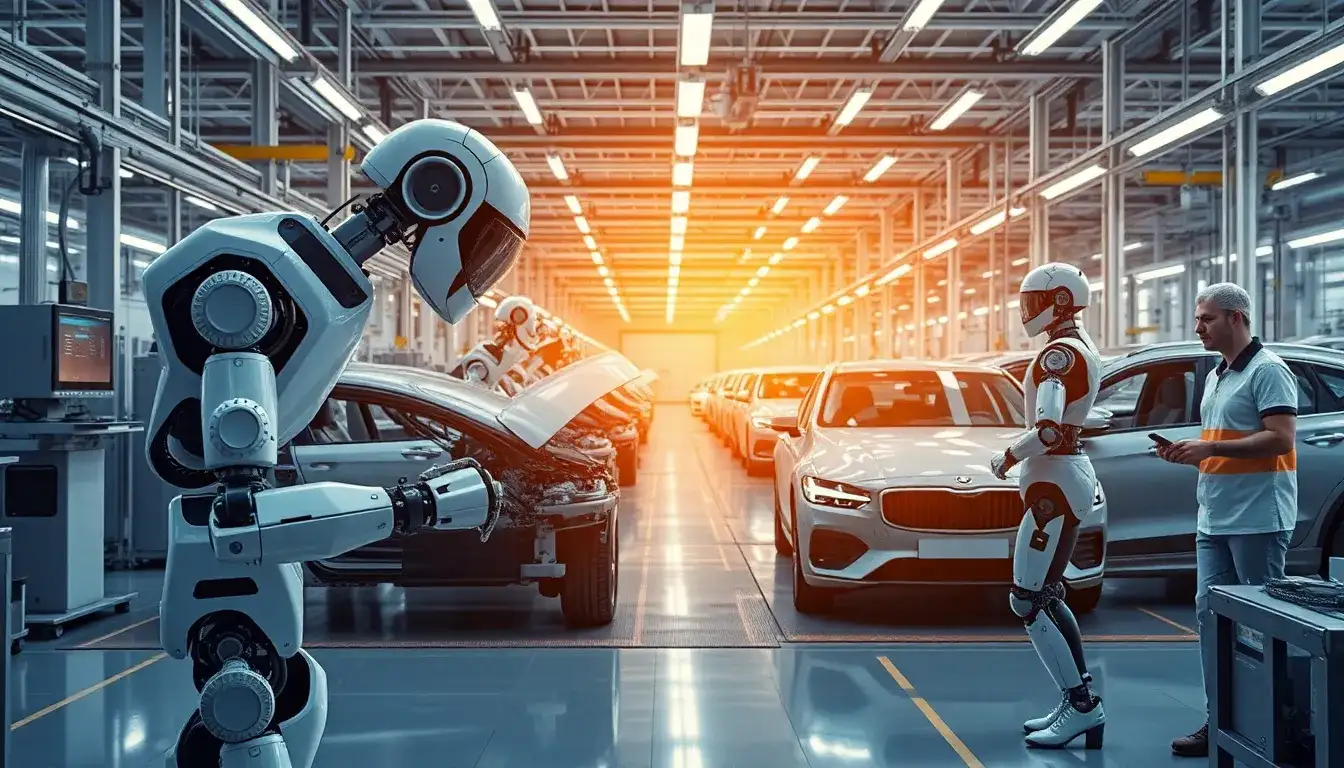
Tesla’s Robotaxi Vision! The automotive supply industry is shifting towards humanoid robots. This announcement comes from a financial report released by Tesla on April 27, 2026, during a conference call. The company stated that its future strategy is focused on “AI, autonomous driving, and humanoid robots” as the core components of its transformation. At the recent Shanghai Auto Show, it was noted that this shift has already begun to impact the automotive supply chain.
Several automotive suppliers, including SAIC Motor, Weichai Power, and Geely, have commenced varying degrees of implementation of intelligent driving technology. SAIC Motor aims to enhance its supply chain with intelligent systems and connectivity technologies. This commitment was highlighted by the company during the auto show, emphasizing that the integration of artificial intelligence and intelligent driving will lead to significant advancements in their operations.
According to a report from the first quarter of 2026, the automotive industry is experiencing a growing demand for intelligent networks and systems. The need for these technologies is driven by the increasing complexity associated with autonomous machines. “In our designs for digital products and intelligent systems, we anticipate generating vast amounts of data, which can be used to train humanoid robot AI models,” the company representative stated. They also mentioned that future collaborations will likely be extensive.
However, developing such technologies is not without challenges. “Compared to humanoid robots, the requirements for machine perception are significantly higher, necessitating advanced algorithms to improve performance,” they added. By leveraging visual perception as an example, SAIC Motor’s PULSE system has removed the dependency on traditional vehicle platforms, potentially expanding its capabilities to humanoid robots.
Currently, SAIC Motor has partnered with Vecna Robotics and Robust.AI to develop autonomous humanoid robots for various applications. Another player in the automotive supply sector also indicated that their focus is on integrating intelligent systems within their operations, which could pave the way for new business opportunities.
The company pointed out that the development of humanoid robots is closely linked to innovations in automotive technologies. “Through our accumulated experience in automotive operations, we can rapidly transition to these new technologies, which will significantly enhance our engineering applications,” the representative noted.
SAIC Motor plans to unveil its first generation of humanoid robots named Optimus during the second quarter of this year, targeting an initial production capacity of 100,000 units. This production will utilize existing technologies from the Model S and Model X lines. Furthermore, Tesla has already established a manufacturing facility in Texas dedicated to the production of the second generation of humanoid robots, aspiring to achieve an annual output of 1 million units.
In summary, Tesla’s commitment to advancing humanoid robotics reflects a broader trend within the automotive industry, where the integration of cutting-edge technologies is becoming increasingly vital for future growth.
Original article by NenPower, If reposted, please credit the source: https://nenpower.com/blog/automotive-supply-chain-transformation-the-future-of-human-like-robots-in-industry/

