

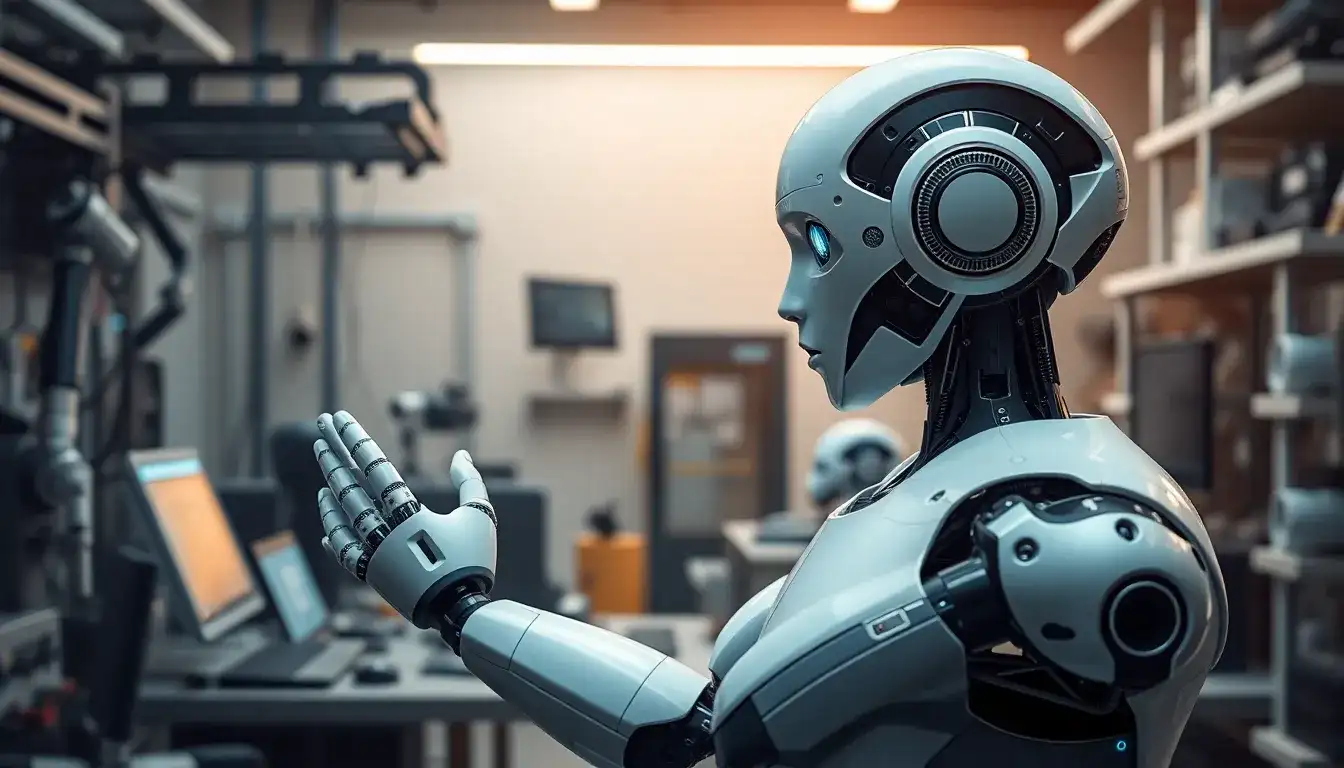
Humanoid Robots: Intelligence without Limits, Smart Future, and Accelerating Sensory Machines
Date: May 1, 2026, 09:41
The future of artificial intelligence is rapidly evolving with the emergence of humanoid robots that are equipped with advanced sensory machines. These robots are designed to enhance their capabilities significantly.
According to recent forecasts, the market for humanoid robots equipped with sensory machines is expected to reach 28 billion USD by 2026, with projections of 79 billion USD by 2036, reflecting a compound annual growth rate (CAGR) of approximately 10.9% during the period from 2026 to 2036.
Humanoid robots are characterized by their ability to perceive and interact with their environment through advanced sensory capabilities. These robots utilize various models of perception and decision-making, which enable them to operate effectively in complex environments.
The sensory models used by these robots are responsible for understanding their surroundings and making real-time decisions based on environmental data. The integration of sensory machines allows humanoid robots to navigate and interact in ways that were previously unimaginable.
In the sensory domain, these machines significantly rely on information derived from their immediate surroundings, along with internal state information. This integration allows for a stable operation in dynamic environments, facilitating their deployment in various applications, including healthcare, education, and customer service.
As the market for humanoid robots continues to grow, advancements in sensor technology will further enhance their capabilities. The integration of IMU (Inertial Measurement Unit) and other sensory devices provides crucial data for maintaining balance and executing complex movements.
The humanoid robot sector is also expected to witness significant improvements in the functionality of sensory machines. These advancements will enable robots to perform more sophisticated tasks, including real-time environmental assessments and adaptive learning.
According to FactMR, the humanoid robot market is anticipated to see substantial growth, with the sensory machine segment projected to achieve 10 billion USD by 2026. This growth is driven by the increasing demand for automation in various industries.
As for sensory technology, there are ongoing developments in 3D vision systems, which are becoming vital for humanoid robots. These systems enable robots to better understand their surroundings and respond effectively to dynamic conditions.
Furthermore, the market for vision-based sensory machines is expected to reach 226 billion USD by 2025 and continue to grow, with an estimated CAGR of approximately 13% from 2025 to 2030.
Technological advancements are poised to enhance the capabilities of humanoid robots, making them more efficient and reliable in various applications. The ongoing research and development in this field are critical to achieving a successful integration of sensory machines in humanoid robots.
In conclusion, the future of humanoid robots equipped with advanced sensory machines looks promising, with significant growth expected in the coming years. As these technologies continue to evolve, they will likely redefine the capabilities and applications of humanoid robots across various sectors.
Original article by NenPower, If reposted, please credit the source: https://nenpower.com/blog/the-future-of-humanoid-robots-advancements-in-sensory-technology-and-intelligent-automation/

