

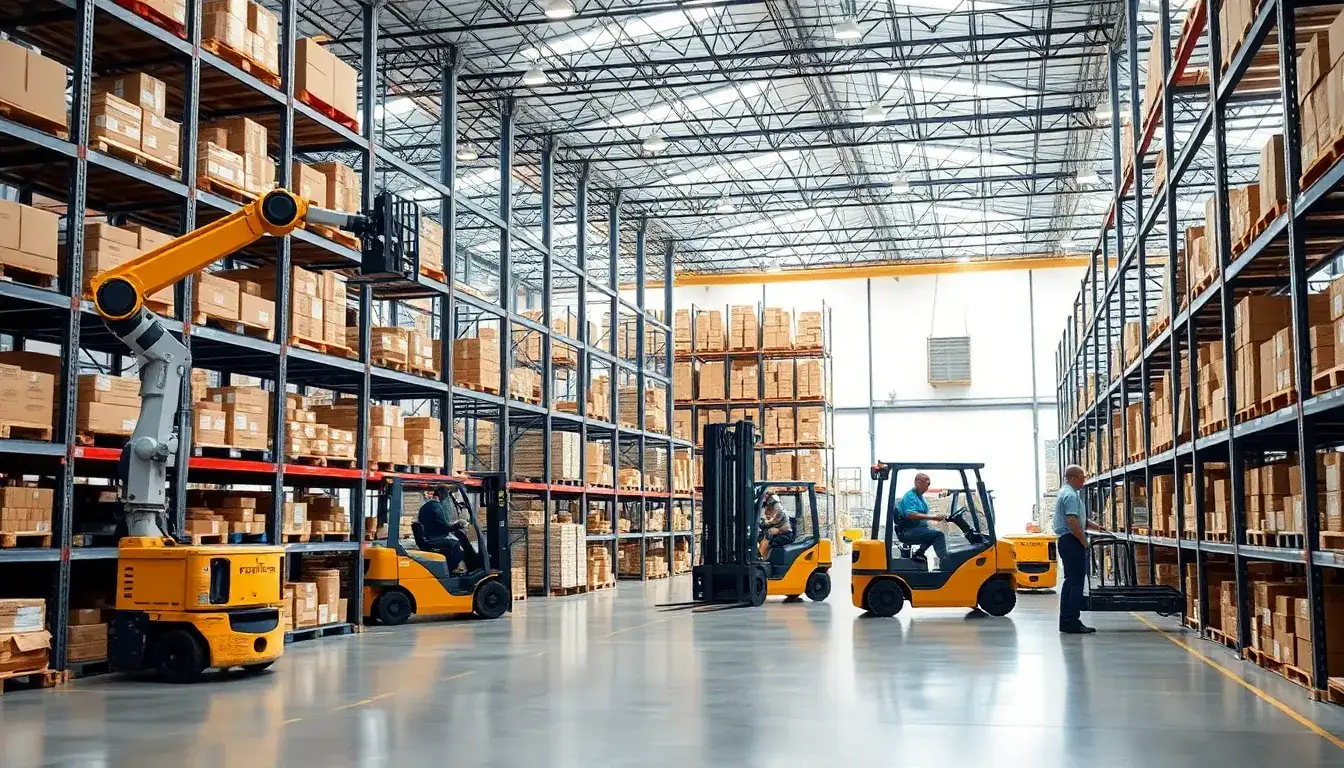
Revolutionizing Warehouse Automation: Transforming Storage Space into Strategic Advantage
As logistics delivery speeds surpass advertising investments, warehouse management has stepped into the spotlight. A single delivery delay can trigger customer complaints that are often more damaging than a failed advertisement; conversely, a flawless same-day delivery can turn an ordinary buyer into a loyal customer. Drawing inspiration from the agile iteration concepts in full-cycle game development services, the best warehouse centers have adopted a compact weekly iteration model instead of cumbersome annual projects, allowing for simultaneous upgrades of software, robots, and operational processes. This approach leads to faster order processing speeds, lower carbon emissions, and a genuine ability to withstand future supply chain disruptions.
Driving Forces Behind the Speed Competition
The concept of two-day delivery is no longer impressive; many mid-sized brands now promise next-morning delivery, while some pioneers in densely populated cities are even experimenting with two-hour delivery windows. In this context, a viral piece of social media content can cause an obscure product to sell out overnight. Static shelf layouts are overwhelmed by this pressure, making dynamic slot allocation and real-time scheduling the new industry standard.
The core driving forces behind this speed competition include:
- Continuously compressed delivery times, with “next-day delivery” now seen as sluggish.
- Sudden changes in demand can reshape product priorities overnight.
- Investment evaluation systems now consider supply chain agility alongside earnings before interest, taxes, depreciation, and amortization (EBITDA).
Collaboration Between Humans and Machines: Balancing Efficiency and Human-Centric Care
Collaborative robots (cobots) handle heavy lifting, allowing human workers to focus on resolving exceptions, optimizing slot logic, and interpreting complex order patterns. As the daily 12 kilometers of walking are replaced by data analysis, employee satisfaction increases. With high-intensity lifting tasks transferred to robotic arms, the incidence of workplace injuries has also dropped significantly.
The benefits of a hybrid operational model are evident:
- Heavy goods are managed by robots, effectively reducing muscle strain and insurance claims.
- Algorithmically planned picking routes enable operators to verify edge cases, increasing accuracy to over 99%.
- Night shift workers conduct A/B testing on software optimization proposals, cutting feedback cycles from months to just days.
Carbon Emission Tracking: Ensuring Sustainable Development
Regulatory bodies and consumers demand data to prove that speed improvements do not come at the cost of environmental degradation. Automated warehouse facilities can now extract energy usage data for each order from charging logs, analyze it in conjunction with transportation distances, and publish real-time carbon emission dashboards. When heatwaves force compressors to operate at full capacity, the slot scheduling system shifts the picking locations for ice cream products closer to loading areas and assigns high-intensity tasks to low-power battery units. Quarterly reports indicate a quantifiable reduction in carbon emissions without sacrificing delivery efficiency.
Modular Design: Preparing for Future Changes
The warehouse layout of the future will follow modular design principles. Charging bases can be installed on universal rails, laser radar brackets can be quickly disassembled based on new angle requirements, and firmware updates can be deployed during breaks. Key initiatives to enhance future adaptability include:
- Mandating a unified data format protocol to ensure seamless data exchange between inventory, finance, and transportation systems without costly middleware modifications.
- Incorporating model retraining and sensor replacements into investment cycles aligned with hardware depreciation.
- Utilizing digital twins to simulate scenarios like seasonal peaks, road closures, and new product launches before making physical adjustments to shelving.
Continuous Iteration: Building an Unassailable Competitive Barrier
In modern warehouse fulfillment systems, success is measured in fractions of seconds and centimeters of accuracy, rather than headcount. Viewing warehouses as continuously evolving products—adjusting aisle layouts weekly, operating real-time dashboards around the clock, and tightly controlling hardware and software—will create a competitive barrier that discount wars cannot breach. As each short-cycle iteration is completed, the gap between warehouse sites that delay upgrades and those that adopt automation will continue to widen. The latter will enhance picking accuracy while reducing carbon emissions, ultimately solidifying customer loyalty. Speed has evolved from a supplementary advantage to a fundamental threshold; only through continuous improvement can this competitive edge be maintained.
Q&A
Q1: What specific problems does edge computing solve in warehouse automation?
A: Edge computing primarily addresses issues of data latency and bandwidth pressure in warehouse automation. Traditional methods require uploading large volumes of sensor data to the cloud for processing, resulting in slow response times. Local edge servers can process the massive data streams generated by IoT sensors in real time, pushing only critical alerts to the cloud dashboard. This means that when a robot malfunctions, the system can respond immediately without waiting for remote interface calls, significantly enhancing overall operational efficiency.
Q2: How does warehouse automation achieve carbon emission tracking?
A: Automated warehouse facilities track carbon emissions by extracting energy usage data from charging logs for each order and analyzing it alongside the actual operating distances of robots and equipment. The system generates real-time carbon emission dashboards. When external factors (such as high temperatures) lead to increased energy consumption, the system proactively adjusts slot layouts, moving frequently picked items closer to unloading areas and assigning high-intensity tasks to low-power devices, achieving measurable carbon reduction without compromising delivery efficiency.
Q3: How will the work of warehouse employees change in a human-machine collaboration model?
A: In a collaborative warehouse environment, employees will shift away from high-intensity physical labor to focus on more valuable tasks. Collaborative robots will manage heavy lifting, effectively reducing muscle strain and insurance claims for employees. Workers will primarily handle exceptional order situations, optimize slot logic, analyze complex demand patterns, and validate algorithmically planned picking routes. Night shift employees can also participate in A/B testing for software optimization, significantly shortening feedback cycles from months to days and greatly enhancing overall job satisfaction.
Original article by NenPower, If reposted, please credit the source: https://nenpower.com/blog/revolutionizing-warehouse-automation-transforming-storage-space-into-strategic-advantage/

