

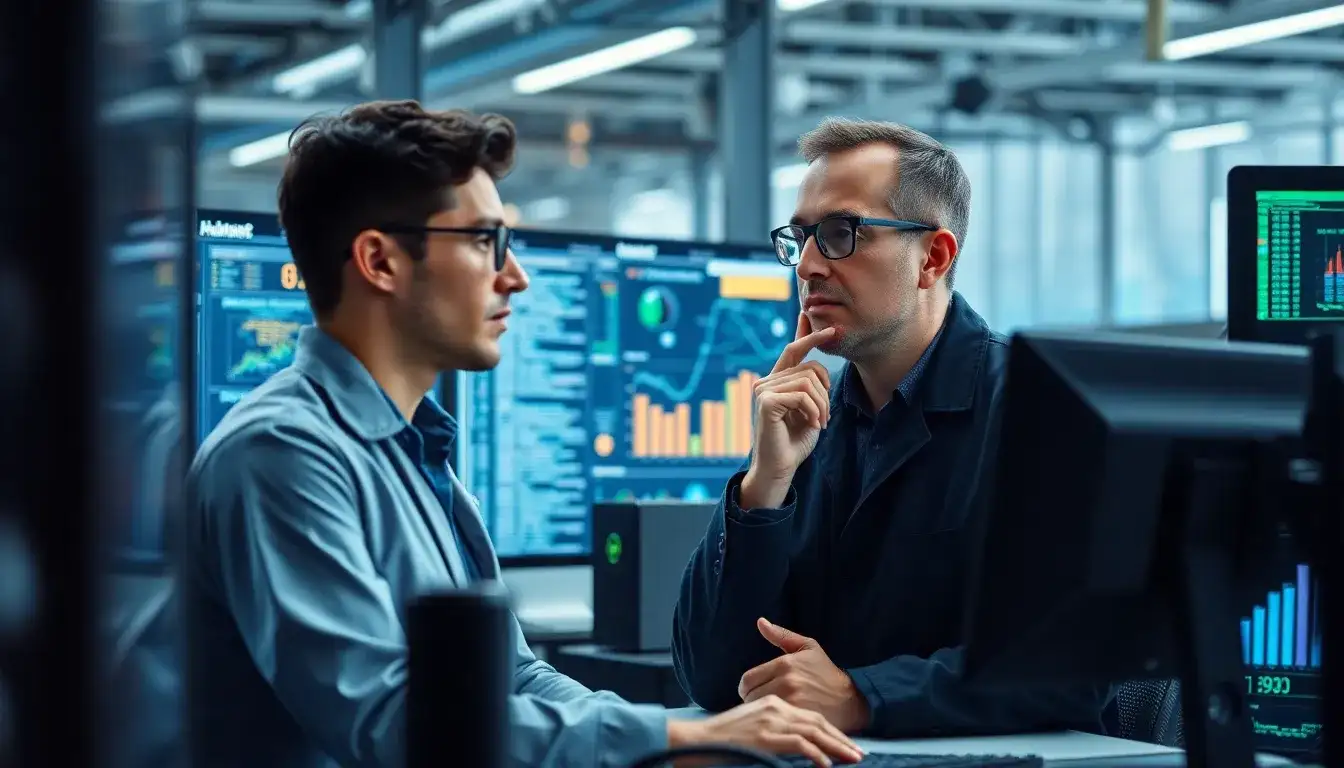
AI Revolutionizes Computing: AI is no longer just about software optimization; it is transforming into a direct interaction with computing machines.
As of May 3, 2026, AI technology has made significant strides. For the past decade, the way humans utilize computers has remained fundamentally unchanged: we write programs, and machines execute commands. However, the emergence of large-scale models has shifted this paradigm. Instead of focusing on “how to do,” the emphasis is now on “what to think,” with systems taking responsibility for executing various processes.
In this context, researchers from what is considered the “modern artificial intelligence lineage,” particularly from institutions like Meta and KAUST, have proposed a new concept called AI Computing Machines. This approach allows AI networks to learn directly from the computing machine itself, rather than relying on existing software interfaces, workflows, or programming structures.
According to the researchers, this shift does not aim to enhance AI’s utility with current software but seeks to allow the “software itself” to become a part of the learning model. After their initial discussions, they quickly revealed that this design is not merely an isolated iteration but rather a significant leap towards developing a new type of computing machine.
The research indicates that this system can adapt and learn from its operational environment, making it more responsive and efficient. This transition marks a departure from conventional AI paradigms, where systems have primarily relied on predefined interfaces and programming methodologies.
In practical terms, the implementation of these AI computing machines involves a significant amount of data collection and processing. For instance, the researchers utilized over 25,000 hours of H100 GPU training across eight distinct models, resulting in the collection of substantial datasets. This process included around 80 million command executions, totaling approximately 1,100 hours of operational time.
Moreover, they achieved a high degree of accuracy in text recognition tasks, with models reaching over 98.7% accuracy in certain conditions. They also noted that this approach allows for real-time adjustments and learning, effectively making AI systems more autonomous and capable of self-optimization.
Looking ahead, the future of AI computing machines will likely not be defined by rigid programming but rather by a dynamic system that continuously learns and adapts through each interaction. This means that humans will no longer need to engage with software in traditional ways; instead, they will set objectives directly, letting the system handle execution and process management.
This paradigm shift could redefine our relationship with technology, moving toward systems that are not only capable of executing commands but are also capable of independent thought and action.
In summary, the research from DeepTech suggests that if this work continues to progress, we may soon see AI that can learn and operate independently, reshaping the landscape of computational technology.
Original article by NenPower, If reposted, please credit the source: https://nenpower.com/blog/revolutionizing-computing-ai-moves-beyond-software-to-direct-machine-learning/

