

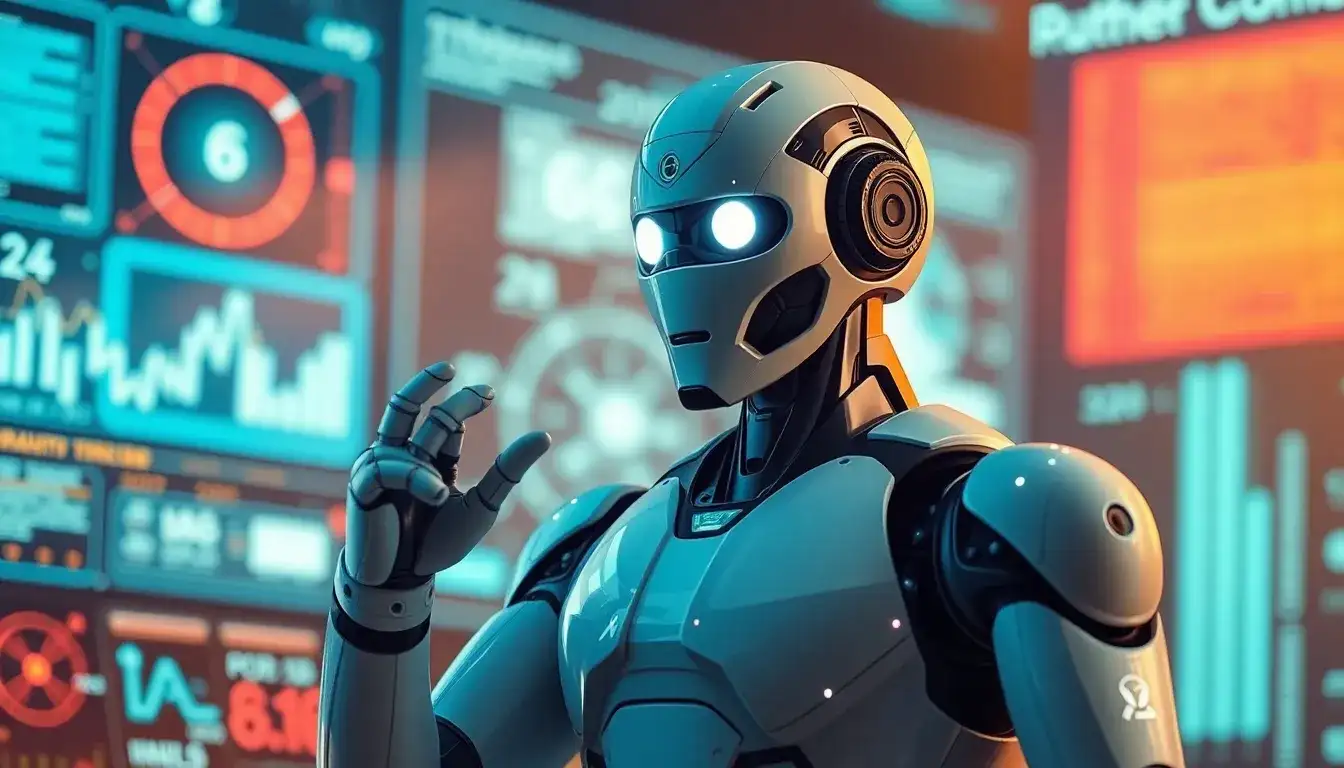
Jingsong Intelligence is signaling a comprehensive acceleration in its development, with plans to launch a new humanoid robot this year. As the smart logistics and mobile robotics sectors deepen, Jingsong Intelligence, an industry veteran with nearly two decades of experience, is demonstrating its confidence through a series of strategic initiatives aimed at significant self-iteration.
In early 2025, a new production line in Hefei began operations, with plans to produce 10,000 sets of smart logistics equipment annually. This facility, built primarily with self-developed software and hardware, marks a significant step forward for the company. By March 2026, the launch of the smart logistics equipment project in Lu’an will establish a collaborative production capacity between the two sites. In terms of performance, Jingsong Intelligence’s annual shipments reached several thousand units in 2025, with both order volume and value hitting record highs.
For years, Jingsong Intelligence has been perceived as oscillating between a system integrator and a product manufacturer. However, according to Wang Dan, the company’s Vice General Manager, Jingsong’s true role is as an “operator of smart logistics value.” In 2025, this strategic positioning entered a comprehensive offensive phase, with the company officially transitioning from a “system provider” to a “smart logistics value operator.” This shift is not merely a change in title but represents a fundamental restructuring of the company’s business logic.
Wang Dan emphasized that this large-scale strategic transformation is supported by substantial investments in production capacity. The new production line, described by Wang as an “automated line for discrete smart manufacturing,” will utilize fully automated processes and all self-developed systems and equipment. This approach allows Jingsong to produce robots and systems that will, in turn, manufacture future robots, achieving a unified reduction in costs and improved efficiency.
As the product line expands from indoor to outdoor applications and from light to heavy-load transportation, Jingsong Intelligence will navigate the balance between standardization and customization. Wang Dan explained that the core value of standard products lies in driving cost reductions and ensuring rapid delivery, while customization addresses specific customer pain points, forming a complementary relationship.
On the customization front, Jingsong’s capabilities are divided into software and hardware dimensions. Software customization involves adapting systems and algorithms to different logistics equipment, while hardware customization tailors solutions to various cargo forms. The company also provides deep structural customizations to meet specific industry requirements, such as explosion-proof standards in the chemical sector.
The foundation for this customization capability is Jingsong’s long-term investment in its software platform, which has enabled the creation of an integrated system for unified scheduling, monitoring, and operation, thereby breaking down equipment silos. The robust scheduling algorithms support real-time collaboration among hundreds of robots, dynamically optimizing task assignments and establishing a multi-machine collaborative mechanism.
Jingsong’s delivery capabilities are evident in its record-setting project with China National Cereals, Oils and Foodstuffs Corporation, where they achieved deployment in just 20 days. Wang Dan attributes this efficiency to their in-house manufacturing system and extensive experience in product and project management, stating, “Experience, technology, and manufacturing are our trifecta for fast and high-quality delivery in large-scale complex projects.”
Product expansion is another key aspect of Jingsong’s strategy. Wang Dan notes that two product categories currently in high demand are nimble FMR (Flexible Mobile Robots) that require low investment and quick results, and heavy-duty FMRs that are technically sophisticated and adaptable to diverse scenarios. The demand for heavy-load automation is rapidly increasing, prompting Jingsong to focus on this area by introducing outdoor versions of their 2.5-ton counterbalance forklifts and 8 to 10-ton ultra-heavy-duty stackers.
Jingsong’s heavy-duty products are defined as those with a capacity of over four tons. The company has developed three critical technologies: high-precision navigation, heavy-load stability control, and adaptability to complex environments. These capabilities have been honed through practical experience in numerous heavy industrial projects, proving their reliability in real-world applications.
The company’s commitment to solving complex scenarios has led to strong customer loyalty, with Wang Dan revealing that a leading beverage client has made nearly 20 repeat purchases. “Repeat purchases are the highest indicator of our value as an operator,” she stated.
In addition to enhancing existing scenarios, Jingsong launched two new products at the CeMAT Asia Logistics Exhibition last October that target new applications. Their intelligent unmanned loading solution addresses the “last link” in logistics, while their wheeled humanoid robot aims to enter the “general scenario” market. Wang Dan explained that both products, while seemingly disparate, aim for the same goal: achieving seamless integration from logistics warehousing to production.
Jingsong’s humanoid robot development is grounded in practical “wheel-foot” combinations, ensuring that the equipment can navigate stairs and loading docks efficiently while addressing the challenges of the final mile in warehousing. The company has been actively developing its humanoid robot, which has already moved beyond the experimental stage and is undergoing commercial validation in specific warehousing and manufacturing settings.
The integration of AI technology is also pivotal to Jingsong’s product evolution. Wang Dan views AI not as a concept but as a productivity tool that enhances operational efficiency. The company has incorporated AI models into its scheduling systems and robot perception layers, focusing on dynamic task allocation, real-time obstacle avoidance, and predictive maintenance.
Looking ahead, Jingsong plans to launch humanoid robots in both wheeled and footed forms, which will cater to various customer scenarios. This dual approach reflects a pragmatic strategy as the industry navigates early-stage uncertainties and competition.
In terms of capacity, the initiation of the Lu’an smart logistics equipment project in March 2026 will establish a dual-base operational model with Hefei. The Hefei facility will focus on R&D and high-end manufacturing, while Lu’an will serve as a high-capacity production base. Together, these sites will support an annual output of over 10,000 sets of smart logistics equipment.
Wang Dan summarizes this capacity strategy with three key points: “Promote research through production, ensure delivery through production, and expand globally through production.” A significant portion of the new capacity will be reserved for overseas markets, reflecting the necessity for Chinese smart logistics companies to explore international avenues.
Jingsong has already secured meaningful overseas projects in countries like Spain and has extended its services to the United States, South Korea, South America, and Southeast Asia. Wang Dan has identified distinct differences between overseas and domestic clients, noting their heightened demand for system stability, compliance, and lifecycle service, which presents structural opportunities for Jingsong.
In the face of intensifying global competition, Wang Dan believes Jingsong’s strengths lie in its solid products, localized service, and extensive experience from over 2,000 large-scale projects. While brand recognition and global service network expansion remain challenges, she remains optimistic, stating, “We are already on the road, and we are accelerating.”
Wang Dan emphasizes that despite the influx of new entrants in the robotics sector, Jingsong remains focused on leveraging its deep experience to deliver quality solutions. “Our stance is clear: we welcome competition and prioritize our own path,” she asserted. As the industry evolves, Jingsong is poised to redefine its role from merely being a provider of equipment to becoming a partner in operational excellence.
Original article by NenPower, If reposted, please credit the source: https://nenpower.com/blog/jingsong-intelligent-signals-major-acceleration-with-upcoming-launch-of-new-humanoid-robot-in-2026/

