

Delta Electronics (2308) is targeting the growing power demands of AI data centers while expanding its focus on microgrids and solid oxide fuel cells (SOFC).
Delta’s chairman, Zheng Ping, noted that global geopolitical conflicts have led to an energy crisis, prompting countries to enhance local energy development. Recognizing this trend, Delta is actively investing in regional power grids, microgrids, and SOFC technologies.
The surge in AI has increased demand for data centers, making power a critical resource for technology companies. While many players concentrate on “white space” equipment such as servers and cooling systems, Delta has quietly broadened its focus. During the 55th Anniversary Forum held on May 13, Zheng emphasized that AI infrastructure is transforming the global energy landscape. Delta’s strategy now encompasses opportunities beyond the internal structures of data centers, extending into power conversion, distribution systems, regional grids, and microgrids, often referred to as “grey space” opportunities.
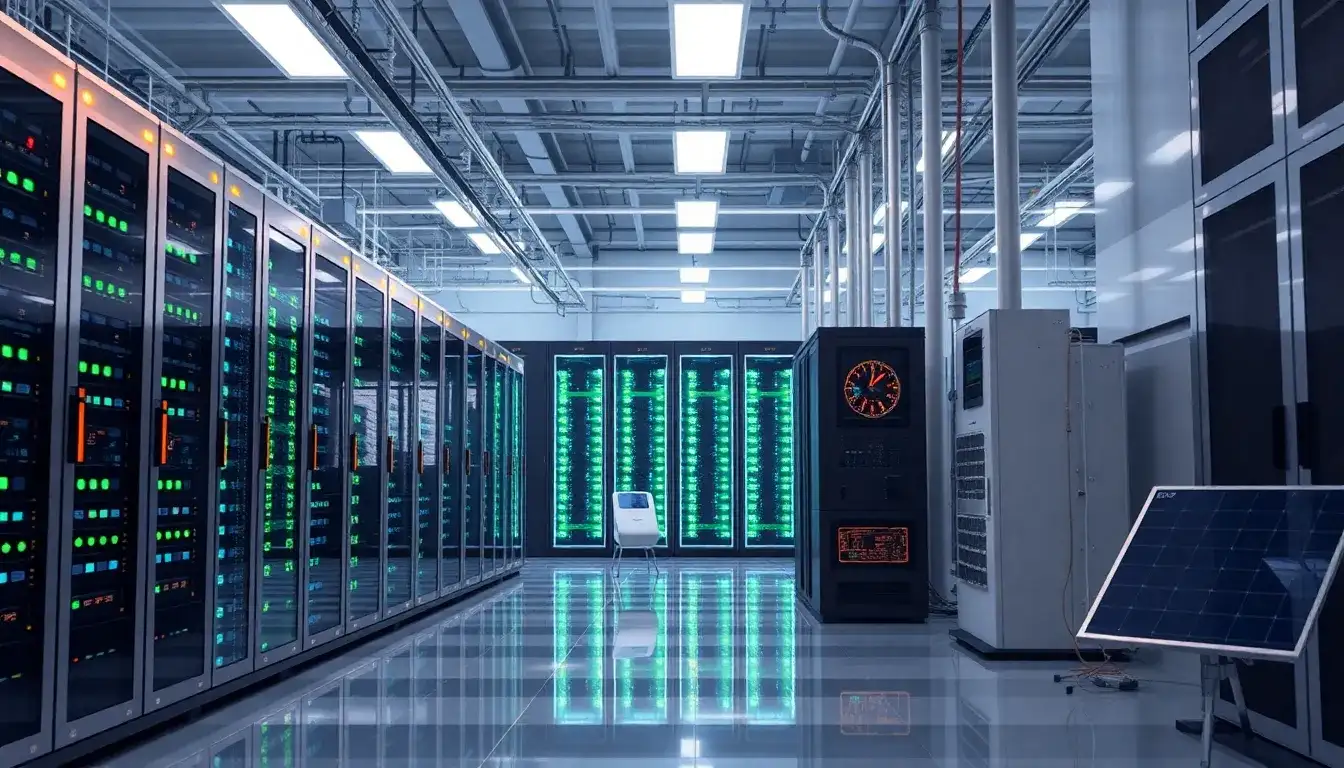
White space refers to areas housing servers, storage devices, and network switches, and is characterized by raised floors, bright lighting, and strict temperature control. In contrast, grey space encompasses the infrastructure that supports these systems, including power conversion and cooling systems.
Zheng commented, “Future competition will not only be about chip efficiency but also about overall power management capabilities.” According to the International Energy Agency (IEA), global data center electricity consumption is expected to double to approximately 945 TWh by 2030, more than twice the levels recorded in 2024. A data center with a capacity of 100 MW consumes as much electricity annually as 100,000 households. A mere 1% improvement in energy efficiency could power an additional 1,000 households.
Zheng revealed that the construction speed of AI data centers has significantly accelerated. Large projects that once took over a year to complete can now be finished in just six months. As the generation of AI chips advances quickly, power and cooling infrastructures must also adapt, presenting new opportunities for Delta.
He described a future where AI will not be confined to large cloud data centers but will also spread to edge computing nodes, regional data centers, enterprise server rooms, factory floors, and eventually into robotics and AI applications at the end-user level. Consequently, energy management will need to become more decentralized and immediate.
Delta’s chairman emphasized that as AI infrastructure heats up, Delta’s strategy is expanding beyond the internal structures of data centers into grey space opportunities involving power conversion and distribution systems.
Beyond data centers, Delta is optimistic about the demand for “power resilience” in the AI era. Zheng acknowledged that while traditional large power grids are stable, they come with high setup costs and limited flexibility. Once established, upgrading them can be exponentially expensive. With AI causing peaks in electricity demand and increasing the penetration of renewable energy, future grids will need to be more agile and responsive.
Regional grids and microgrids are poised to become focal points of the next wave of energy transformation. Zheng pointed out that future microgrids should not only be power systems but also integrate energy storage, battery technology, and AI management capabilities to respond dynamically to changes in energy supply and demand. In light of recent geopolitical tensions, countries are reevaluating their energy independence and local power capabilities.
“Although no one wants war, it has accelerated investments in more resilient local energy systems,” Zheng stated. Delta is currently investing in solid oxide fuel cells (SOFC), which are seen as a crucial technology for distributed energy. SOFCs can generate electricity using natural gas or hydrogen, achieving efficiencies of 60% to 65% even without heat recovery, significantly higher than the 30% efficiency of traditional thermal power generation. Despite their complexity, Zheng believes that these high-efficiency decentralized power technologies will have substantial growth potential in microgrid and AI data center applications.
Delta is also converting sustainability into a business model rather than merely seeing it as a compliance obligation. Zheng pointed out that the company aims to assist businesses in finding sustainable paths tailored to their needs. Delta’s internal carbon pricing system links electricity costs with carbon reduction performance, turning energy-saving investments into tangible financial incentives. Currently, Delta aims for a 91% usage rate of renewable energy globally by 2025, with most sites in Taiwan, the U.S., China, and Europe already achieving RE100 status.
In conclusion, Delta views AI and energy transformation as intersecting fields rather than parallel tracks. As global tech companies compete for computing power, Delta aims to secure control over the underlying power demands.
Original article by NenPower, If reposted, please credit the source: https://nenpower.com/blog/delta-electronics-expands-into-ai-data-center-power-solutions-and-microgrid-technologies/

