

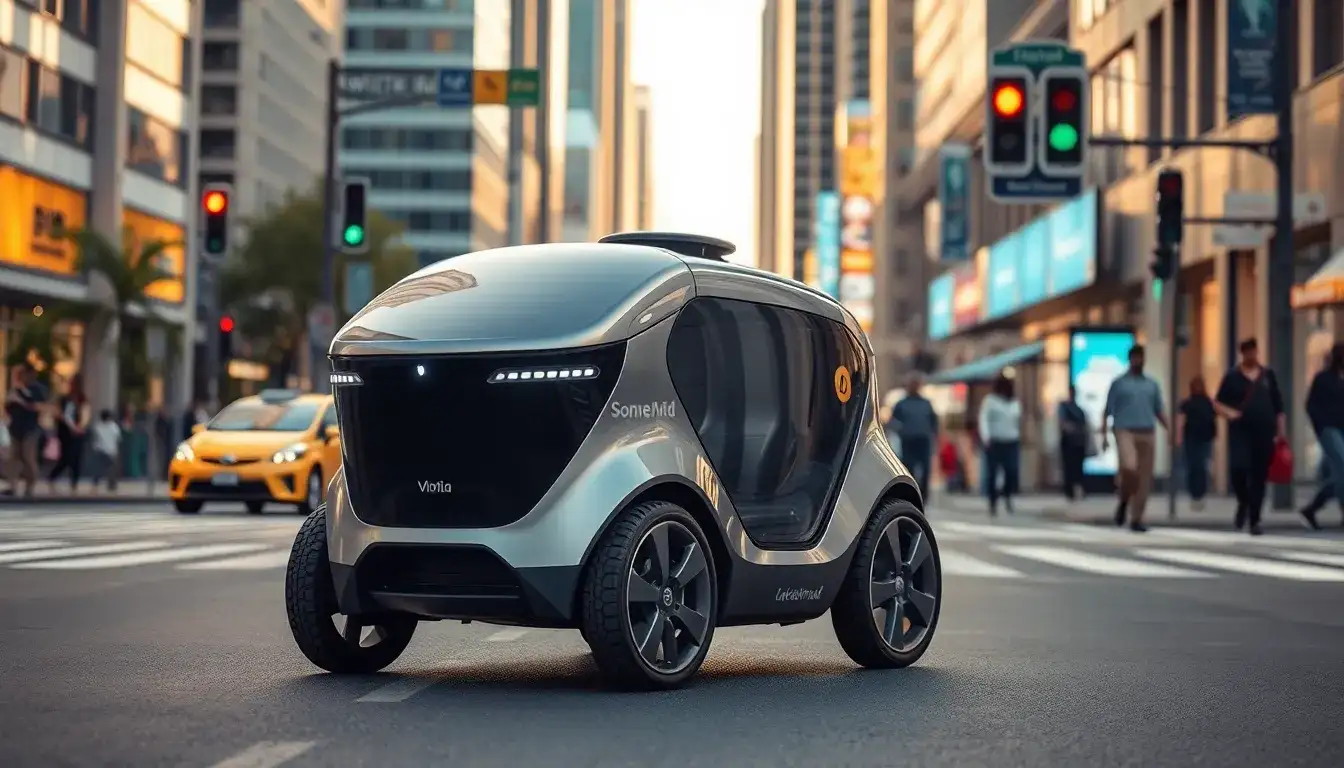
AI Discrimination: The Secret Technology Behind Autonomous Vehicles
Publication Date: May 8, 2026
Source: Autonomous Daily Report
At 8:00 AM on May 7, 2026, the Autonomous Vehicle Alliance unveiled a new autonomous vehicle equipped with advanced technology. The vehicle, painted silver, is designed to navigate urban settings seamlessly. Accompanied by a sound system that emits calming tones, this autonomous vehicle aims to enhance user experience, providing a smooth ride through busy streets.
The vehicle is powered by an AI system capable of high-speed visual recognition, implementing a unique and accurate flow identification. “This new machine is our flagship AI discrimination vehicle,” stated the alliance’s general manager, emphasizing its ability to process up to 2,000 objects per second, equivalent to the work output of over 50 human workers.
He continued, “In real-time, the AI can identify and respond to objects effectively, and through advanced machine learning, it can minimize potential accidents to the lowest possible level.” He highlighted that this technology is rooted in a long-term investment in the autonomous vehicle sector.
The first challenge faced is the efficiency of the technology. The rapid transformation of the autonomous driving landscape has already become a critical industry requirement. However, the reliance on human labor and the timing of vehicle decision-making remain significant hurdles that must be addressed annually.
The second challenge pertains to quality. As AI discrimination technology evolves, speeds increase, and margin for error decreases, the need for high-quality, precise processing becomes paramount.
AI discrimination technology has been developed to tackle these issues. In terms of efficiency, the reduction in labor costs is significant, with a focus on achieving high reliability rates. The current accuracy rate stands at approximately 90%, and by employing AI technologies, human errors can be minimized further.
The effectiveness of this technology directly correlates to the operational success of the autonomous vehicles, which are projected to generate revenue for manufacturers within a year of operation.
As noted by the general manager, “The machine’s discrimination capabilities are incredibly fast and efficient, making it nearly impossible for human-operated vehicles to compete.”
The autonomous vehicle industry is essential for our city, contributing significantly to the local economy, which has reached a staggering $191 billion. Recently, there has been an accelerated push to adopt autonomous vehicles, targeting a reduction in labor costs and increasing efficiency through AI-driven solutions.
The autonomous vehicle alliance is committed to further enhancing this technology, ensuring that it meets market demands effectively. “As a leading player in the autonomous driving sector, we are responsible for applying the latest advancements in technology to the manufacturing line,” the general manager concluded.
Original article by NenPower, If reposted, please credit the source: https://nenpower.com/blog/ai-innovations-revolutionizing-the-future-of-autonomous-delivery-vehicles/

