

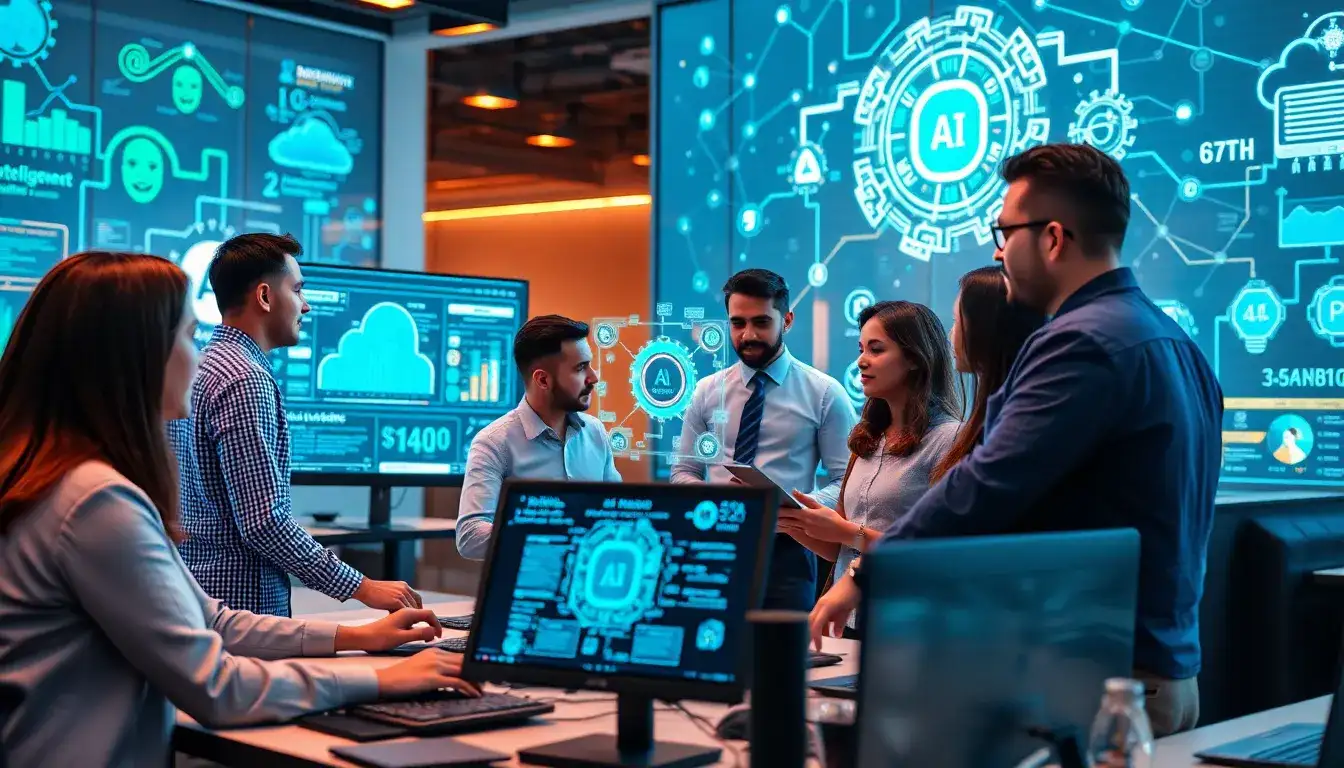
The Bridge Assembler: From individual intelligence to collective synergy, how does the bridge create a “computational factory” for physical intelligence?
On April 29, 2026, at 11:38 AM, the Market Information section of the New Wave Financial APP published an article emphasizing the significance of computational power and its application from single-point intelligence to collective intelligence.
During the period from April 21 to 22, the 2026 China Generative AI Conference held in Beijing focused on the theme “Embarking on the Future of AGI.” This conference gathered 73 industry experts and featured one opening session, three specialized discussions, and six technical forums. The conference discussed the integration of AI with business practices, the emergence of novel paradigms, token economy, and the Chinese machine learning landscape.
The scope of the topics covered was extensive, ranging from large language models (LLMs), multi-modal models, global models, intelligent systems, AI ethics, and more. The discussions also included data, privacy, storage, communication, and cloud services.
In this high-density information environment, the bridge (in Beijing) proposed a comprehensive solution for the computational factory, aimed at addressing the challenge of integrating AI into business practices.
As the conference progressed, it became apparent that the demand for computational power is shifting from single-point models to collective models, focusing on efficiency and collaboration.
The bridge has introduced a five-dimensional integrated computational framework, which is based on the principle that computational power is categorized by different divisions. This framework is designed to enhance both large-scale computing capabilities and precision.
It features two major components: firstly, the X200 computational unit, which is designed for high precision and reliability, and secondly, the S200 unit, which operates on a lower scale and is used for shadow model applications.
The bridge is addressing the challenges posed by power limitations and surface load constraints, emphasizing the need to fulfill the requirements of computational workloads and ensure consistent performance under various conditions.
With this in mind, the bridge aims to optimize the interface between services and tokens, ensuring that the backend remains responsive and adaptable to changing demands.
In summary, the discussions around the bridge’s computational models and their implications for AI integration into various sectors have highlighted the critical role of collaboration and efficient resource allocation in the future of AI technologies.
The bridge believes that the core of its service endpoints lies in the token model, emphasizing the shift in computing paradigms from single-instance operations to collaborative frameworks.
We look forward to engaging with all stakeholders in discussing the future of AI implementations and the implications of computational strategies.
For more insights and updates, please refer to the New Wave Financial APP.
Original article by NenPower, If reposted, please credit the source: https://nenpower.com/blog/advancing-ai-infrastructure-from-point-intelligence-to-collective-collaboration-in-creating-intelligent-solutions/

