

Today, the fierce battles of fundraising for Ji Tai and Yingpai have just concluded, and the results are bound to be impressive. Recently, new stocks in Hong Kong have been quite volatile, especially in the fields of pharmaceuticals, AI, and robotics. As long as a company has a compelling story and a smaller market cap, capital seems to flow in abundantly. Ji Tai, focused on AI pharmaceuticals, is a narrative that is currently very appealing to the market, while Yingpai, a star in the biotech sector, boasts strong cornerstone investors and a solid theme. The two together have essentially drained market liquidity once again. However, the flow of new stocks continues, and today we welcome a new entrant, Yifei Technology. Although its name sounds similar to “Yifei,” this company does not operate in the beauty economy but rather in robotics.
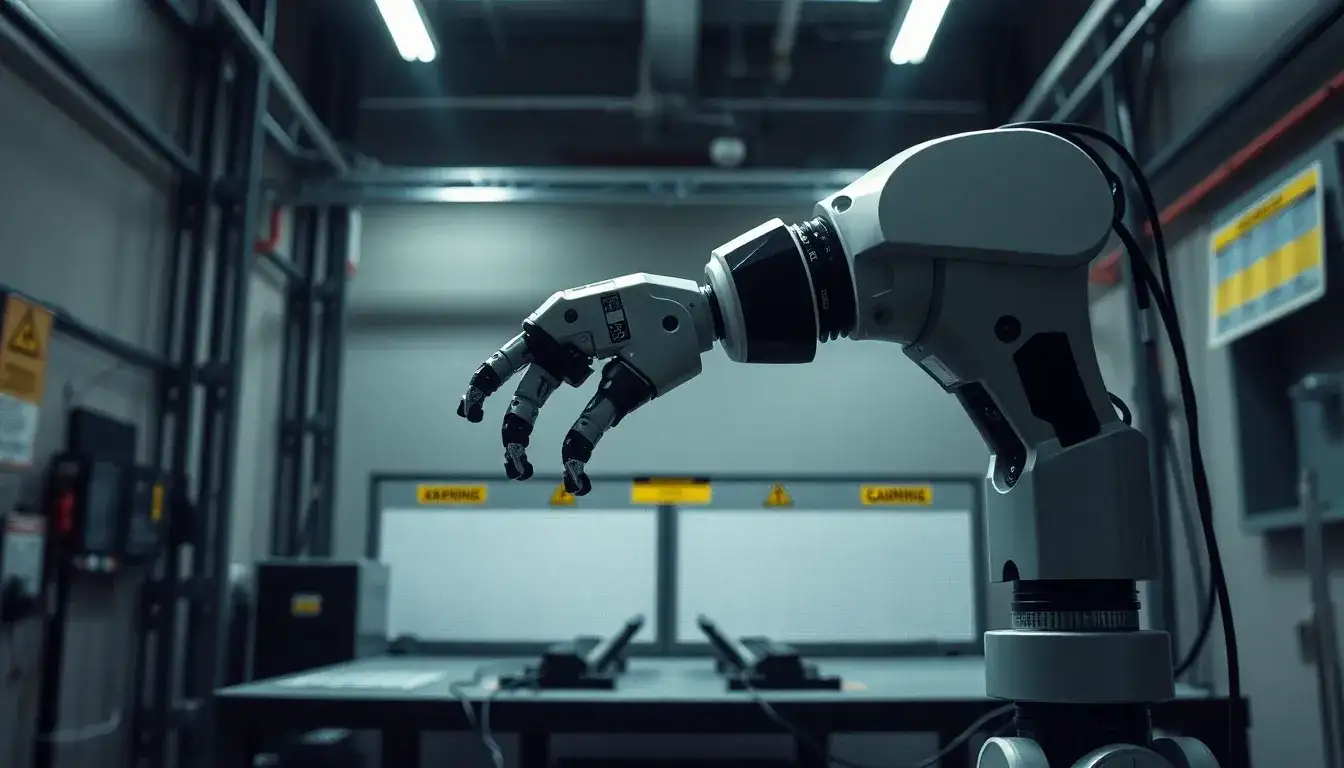
Founded in 2012 and headquartered in Taizhou, Zhejiang, Yifei Technology is pursuing an 18C special technology listing pathway. The company specializes in industrial robots and smart manufacturing solutions, focusing primarily on light industrial scenarios. In simple terms, it does not manufacture humanoid robots or vacuum cleaners; instead, it provides robotic systems for automated production lines in factories. Their product lineup includes parallel robots, SCARA robots, six-axis robots, wafer handling robots, and AGV/AMR mobile robots, along with self-developed control and vision systems.
According to their prospectus, Yifei ranks fourth among industrial robot and solution suppliers in China’s light industrial application scenarios based on projected revenue for 2025, with a market share of 1.4%. This positioning is promising, as there is considerable interest in robotics right now. However, the robotics market has already shown significant internal stratification. Simply being labeled as a robot does not guarantee a high premium from the market. For instance, companies like Kailesi, on the cusp of explosive growth, saw their stock surge 84% on opening day, with a cumulative increase that once doubled after its IPO. In contrast, industry leader Estun experienced a drop below its IPO price on its first day, eventually plummeting over 25% from its issuance price. Yifei faces similar challenges; while it carries the robot concept, it is not the most attractive type of robot. Humanoid robots tend to generate the most market excitement, while logistics robots are also easily understood by investors. AI vision and perception technologies are also favorable. However, Yifei focuses on light industrial automation, with applications primarily in sorting, picking, packaging, inspection, assembly, and adhesive application. The actual quality of their offerings will depend on how the market prices them based on current interest.
Examining their financial performance, Yifei’s revenue is projected to grow from 201 million yuan in 2023 to 268 million yuan in 2024, and further to 387 million yuan in 2025, yielding a compound annual growth rate of 38.8%. This growth rate is not bad, with a year-on-year increase of over 44% expected in 2025, indicating that the company is indeed scaling up. However, the profitability does not look promising: Yifei is expected to incur a loss of 111 million yuan in 2023, 71.5 million yuan in 2024, and an increased loss of 153 million yuan in 2025. Operating cash flow has also consistently shown net outflows, with a projected net outflow of 183 million yuan in 2025. Revenue is increasing, but the losses are significant. While it is not a completely unproven 18C stock, it is also not close to achieving profitability. The revenue from robot hardware is increasing, with projections showing that by 2025, the income from robot hardware and solutions will account for 31.9% and 68.1% of total revenue, respectively. This indicates a positive shift towards core product growth rather than merely project-based solutions. Nevertheless, the company has yet to demonstrate its ability to convert scale growth into profitability, making it a typical early-stage player in hard technology. Revenue is growing, R&D expenses are high, and cash flow is under pressure, with valuations relying heavily on the narrative.
Looking at the issuance details, the subscription period runs from May 8 to May 13, with an issue price set at 30.5 Hong Kong dollars per share, and a minimum investment of approximately 3,080.75 Hong Kong dollars for a lot of 100 shares. A total of 24.6 million shares will be offered globally, with 1.23 million shares available for public sale in Hong Kong and 23.37 million shares for international sale, with expected listing on May 18. Notably, the company has no cornerstone investors and no greenshoe option, resulting in a post-issue market capitalization of approximately 7.471 billion Hong Kong dollars and a net fundraising amount of about 673 million Hong Kong dollars. This scenario is quite thrilling; without cornerstone backing and a greenshoe, the stock structure is significantly “naked” in the current environment for new stocks. On the bright side, the company and its underwriters may be confident, believing that market sentiment is robust enough not to require cornerstone support or a greenshoe for price stabilization. Conversely, this could also be likened to skydiving without a parachute, relying entirely on the wind direction for a safe landing. Such situations often attract speculative investors, as a lack of cornerstone investors leads to cleaner liquidity, while the absence of a greenshoe may result in greater volatility post-listing. The stock could surge dramatically or plunge without support.
The valuation is not cheap either. Based on the projected revenue of 387 million yuan in 2025, the issuance market capitalization of 7.471 billion Hong Kong dollars corresponds to a price-to-sales ratio of about ten times. When converted to RMB, this translates to over 16 times. For a company still incurring losses, with negative operating cash flow and a mere 1.4% market share in the light industrial robotics sector, this price point is certainly not considered cheap. Market participants are willing to invest not in current profits but in the robotics sector, the scarcity of 18C stocks, and the overall sentiment surrounding new listings. However, the recent sentiment has indeed been fluctuating. With high demand for lottery shares and optimism surrounding Ji Tai and Yingpai, the subscription mood has been reignited. In Hong Kong, the trend is clear: as long as a small-cap stock has a compelling story, investors are eager to take a chance. Although Yifei’s fundamentals are not exceptionally strong, it has tapped into the robotics sector, and with an entry fee of just over 3,000 Hong Kong dollars, the low barrier makes it easy for retail investors to jump in, as seen with Le Dong.
Mechanically, Yifei also falls under the 18C issuance category, with an initial public offering ratio of 5%. If the subscription multiples are high enough, the public offering ratio could be increased to a maximum of 20%. After the maximum adjustment, the public offering could reach approximately 49,200 lots. This volume is not excessively low, making it somewhat more comfortable compared to lottery shares like Tianxing. If 200,000 investors apply, the theoretical share allocation rate would be significantly more favorable than for many recent small-cap stocks. Of course, the actual distribution will depend on the final number of applicants and the intensity of financing.
Conclusion: This stock is worth considering. It does not possess the solid performance, substantial discounts, and high certainty seen in stocks like Shenghong. Nor does it have the cutting-edge technological narrative of companies like Xizhi, known as the “first stock in optical computing.” Yifei is more of a middle-tier option: it has a concept, growth potential, and losses, with a structure that leans towards stimulation and a valuation that is not low. The most significant variable for this stock is not the prospectus itself but rather the performance of Le Dong Robotics. If Le Dong performs strongly upon listing, demonstrating that interest in robotics remains high, Yifei is likely to enjoy a premium as well. At that point, the market is unlikely to fixate on its losses or scrutinize the price-to-sales ratio too closely; the mere mention of “robotics” will be sufficient.
Best of luck to everyone. The above content is solely personal analysis and does not constitute any investment advice. Investing in new stocks carries risks, and participation is at one’s own discretion. Follow my official account: Quantitative Cris Notes, for ongoing sharing of Hong Kong and U.S. stock fundraising strategies and practical cases, to avoid detours and to better understand market trends.
Original article by NenPower, If reposted, please credit the source: https://nenpower.com/blog/wingfei-technology-caution-required-for-the-less-glamorous-robotics-market-in-hong-kong-ipos/

