

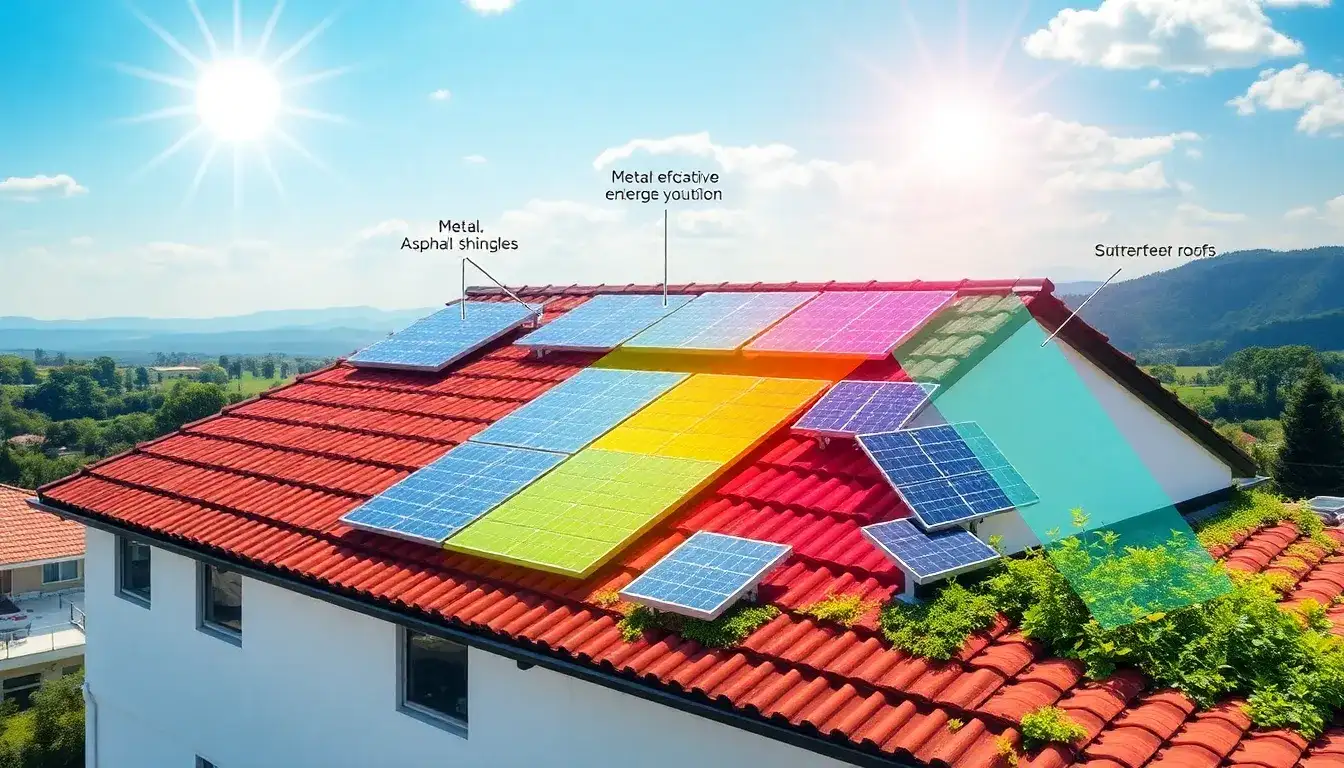
The best roofing materials for maximizing solar panel efficiency combine durability, load-bearing capacity, ease of solar panel installation, and thermal properties that help keep panels cooler for optimal performance. Based on the latest expert insights, the top roofing materials are:
1. Metal Roofing (Especially Standing Seam Metal Roofs)
- Durability and Longevity: Metal roofs last 40 to 75+ years, substantially outliving typical solar panels (which last about 25-30 years). This longevity aligns well with the lifespan of solar systems, reducing the need for roof replacement that would require removing panels.
- Load-Bearing Capacity: Metal roofs are strong yet lightweight (1.4 to 1.6 pounds per square foot), easily supporting the additional weight of solar panels without major structural upgrades.
- Installation Ease: Standing seam metal roofs allow solar panels to be clamped directly onto seams without drilling holes, minimizing risks of leaks and simplifying installation, which lowers labor costs.
- Energy Efficiency: Metal roofs, especially light-colored ones, have high solar reflectivity which reduces heat buildup. This cooler surface helps maintain solar panel efficiency as panel output declines when temperatures rise above 77°F.
- Other Benefits: Metal roofs are often made from recycled materials and are 100% recyclable at end of life. They can reduce cooling costs by up to 25-40% due to reflectivity and may qualify for insurance discounts.
2. Asphalt Shingles (Composite Shingles)
- Prevalence and Cost: Asphalt shingles are the most common and affordable roofing material. They typically last 12 to 30 years. Higher-quality shingle roofs can provide reliable support for solar panels for much of the solar system’s lifespan.
- Installation: Solar panels are mounted via penetrations that are sealed with flashing to prevent leaks. This is a standard and well-understood installation for most solar installers, reducing complexity and costs.
- Durability: Composite shingles (fiberglass or cellulose mat with asphalt and minerals) offer moderate durability. Installers usually recommend replacing shingles if the roof is older than 15 years before adding solar.
3. Tile Roofing (Clay, Concrete, Slate)
- Longevity: Tile roofs can last 50 to over 100 years, well beyond the lifespan of solar panels, making them a durable long-term choice.
- Challenges: Tiles are heavy (especially clay and concrete) and brittle, requiring careful handling during solar panel installation. Labor costs can be higher due to the need to remove and replace tiles for mounting brackets and flashings.
- Suitability: Tile is common in hot, sunny climates and coastal areas. If structural support is adequate, it is a good roofing material for solar.
4. Tar and Gravel Roofing
- Typical Use: Commonly used on flat or low-slope commercial roofs.
- Installation: Requires additional mounting hardware to tilt panels at the optimal 30-degree angle since the roof is flat. This extra hardware can increase installation costs but optimize panel performance.
- Durability: Lasts about 20-30 years and is relatively easy to repair.
Key Considerations for Maximizing Solar Panel Efficiency on Any Roof
- Roof Orientation and Pitch: A south-facing roof with a pitch around 30 degrees is ideal for solar efficiency in the Northern Hemisphere.
- Thermal Reflectivity: Roofing materials that reflect sunlight and reduce heat (like metal) help keep panels cooler and more efficient during hot weather.
- Structural Integrity: A roof must be able to bear the added weight of solar panels (which can total around 800 pounds for 20 panels) without risk.
- Roof Age and Condition: The roof should be in good condition and have a remaining lifespan at least as long as the solar system to avoid costly panel removal and reinstallation later.
Summary Table of Roofing Materials for Solar Panels
| Roofing Material | Lifespan | Installation Ease | Durability & Load-Bearing | Thermal Reflectivity & Cooling | Cost Consideration |
|---|---|---|---|---|---|
| Metal (Standing Seam) | 40-75+ years | Very easy (no drilling on seams) | High, lightweight | High reflectivity, cools roof | High upfront cost but long-term savings |
| Asphalt Shingles | 12-30 years | Standard penetrated mounts | Moderate | Moderate | Low cost, widely available |
| Tile (Clay, Concrete) | 50-100+ years | Complex, labor-intensive | Heavy, durable | Moderate | Expensive installation |
| Tar & Gravel | 20-30 years | Requires tilt mounts | Moderate | Reflective gravel helps | Moderate cost |
Metal roofing, particularly standing seam metal roofs, emerges as the best roofing material for maximizing solar panel efficiency due to its durability, ease of installation, superior load-bearing capacity, and reflective cooling benefits. Asphalt shingles are a close second for affordability and ease, while tile roofs offer durability but at higher installation complexity and cost. Tar and gravel roofs suit flat roofs but require additional mounting hardware.
Choosing the right roofing material is critical to optimizing solar panel performance, lifespan, and overall system return on investment.
Original article by NenPower, If reposted, please credit the source: https://nenpower.com/blog/what-are-the-best-roofing-materials-for-maximizing-solar-panel-efficiency/

