

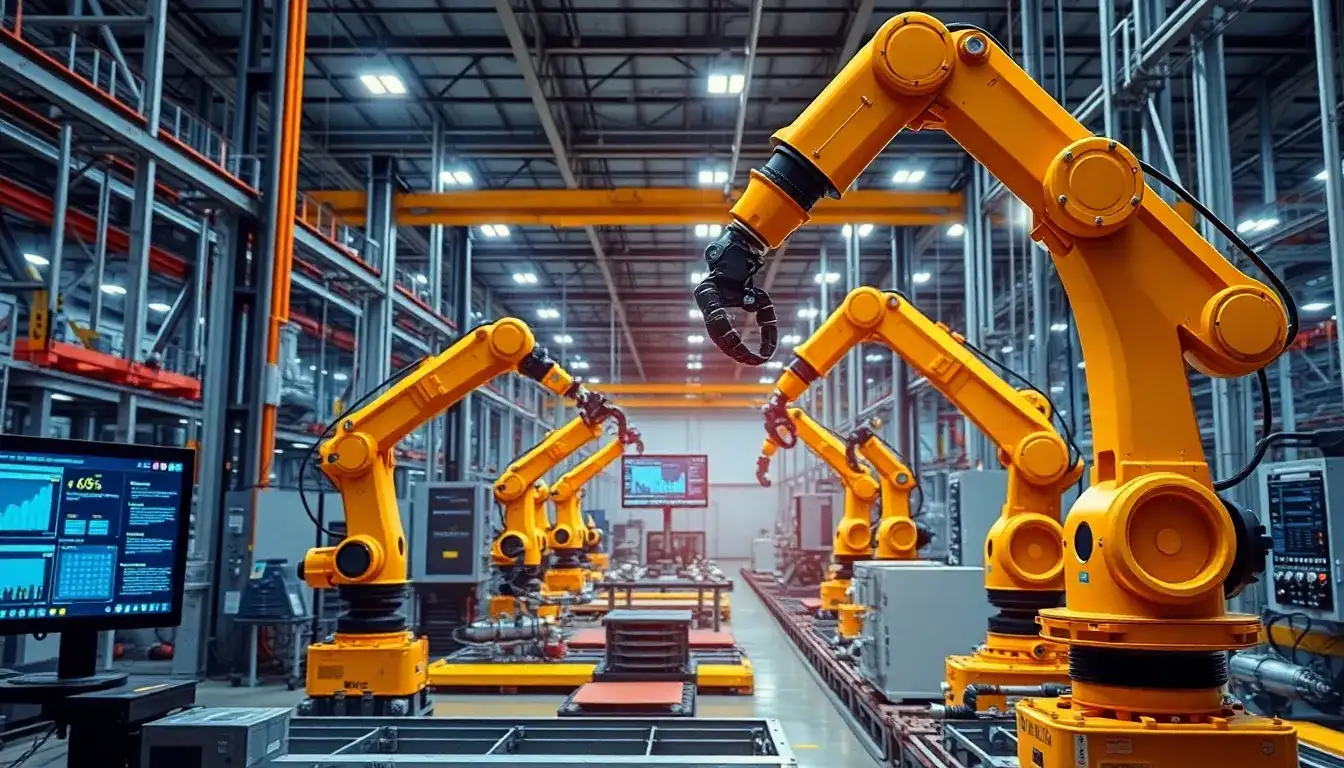
The Integration of Artificial Intelligence, IoT, and Robotics in Modern Manufacturing
Manufacturing has long relied on fixed production schedules and manual control. Inventory adjustments typically occur only after shortages arise, and equipment maintenance is often initiated only after a failure occurs. Production targets are usually set based on experience rather than actual operational data. However, this model is rapidly changing. The integration of artificial intelligence, Internet of Things (IoT), and robotics is driving the industry towards a more predictive production model.
Factories today are designed to proactively identify and address efficiency issues before they impact output. This trend is helping manufacturers enhance production efficiency, reduce downtime, and achieve more stable production in a fluctuating market environment.
Connectivity Reshaping Factory Operations
The core difference between traditional automation systems and today’s manufacturing environment lies in connectivity. In traditional factories, machines operate independently, with limited data collection and isolation between departments. Today, IoT infrastructure integrates production equipment, warehousing systems, sensors, and monitoring platforms into a unified operational network. Every operational action generates data, allowing real-time monitoring of temperature changes, equipment vibrations, production rhythms, and material consumption.
This comprehensive visibility enables factory managers to accurately identify the root causes of operational bottlenecks. A delay of just a few seconds in a robotic arm during a production cycle may seem insignificant, but when this delay accumulates across an entire production line, the losses can be substantial. Connected systems can help identify and rectify these issues.
Artificial Intelligence Deeply Integrated into Manufacturing Systems
Artificial intelligence has evolved from an exploratory technology to a practical tool deeply embedded in manufacturing systems. Compared to traditional analytical methods, AI can analyze thousands of production variables in a shorter time and provide optimization suggestions. Currently, AI software is being applied in numerous factories for:
- Predictive maintenance scheduling
- Inventory demand forecasting
- Quality assurance monitoring
- Energy consumption analysis
- Workflow optimization
This transformation is especially critical in industries like custom chip manufacturing, where maintaining product reliability and profitability is paramount. Even minor inconsistencies during production can lead to significant financial losses, highlighting the value of intelligent systems.
Robotics Moving Towards Collaboration and Flexibility
Industrial robots were primarily designed for repetitive tasks in the past. However, modern robotic systems are now built for flexibility and adaptability, allowing them to collaborate with human workers. In production processes that require frequent adjustments, collaborative robots are taking on roles in packaging, inspection, assembly, and material handling. In the realm of human-assisted technology, bio-inspired hands provide crucial references for companies, especially in situations that require precise operations and adherence to ergonomic safety standards.
Physical Infrastructure Remains Essential
Despite the focus on AI software and next-generation robotics, robust physical infrastructure remains a critical requirement. In automated environments, durable tooling, maintenance systems, and high-quality industrial hardware play a vital role in meeting production demands. Even highly automated factories still require specialized tools like deep impact sockets for heavy maintenance tasks and large industrial machinery assembly. While future factories may become fully digital, a solid mechanical foundation is necessary to support operations.
Towards Data-Driven Intelligent Manufacturing
The integration of artificial intelligence, IoT, and robotics does not imply that factories will automatically achieve full autonomy. Rather, this integration is gradually pushing the manufacturing industry towards a more integrated, data-driven, and resilient direction, whereby every operational decision is based on comprehensive information.
Q&A
Q1: What role does IoT play in modern manufacturing?
A: IoT connects production equipment, warehousing systems, sensors, and monitoring platforms into a unified operational network, enabling real-time monitoring of temperature changes, equipment vibrations, production rhythms, and material consumption. This comprehensive visibility helps factory managers accurately identify operational bottlenecks and promptly address efficiency issues to prevent losses from accumulating across the production line.
Q2: In what areas is artificial intelligence primarily applied in manufacturing?
A: AI is currently applied in manufacturing for predictive maintenance scheduling, inventory demand forecasting, quality assurance monitoring, energy consumption analysis, and workflow optimization. Compared to traditional analytical methods, AI can quickly analyze vast amounts of production variables and offer optimization suggestions, particularly in precision-demanding industries like custom chip manufacturing.
Q3: With increasing automation, do factories still require traditional mechanical tools?
A: Yes, even in highly automated factories, physical infrastructure and traditional mechanical tools remain essential. In heavy maintenance operations and large industrial machinery assembly scenarios, specialized tools like deep impact sockets are still irreplaceable for technicians. Although future factories may trend towards complete digitalization, a strong mechanical foundation is a necessary condition for overall operational support.
Original article by NenPower, If reposted, please credit the source: https://nenpower.com/blog/the-integration-of-artificial-intelligence-iot-and-robotics-in-modern-manufacturing/

