

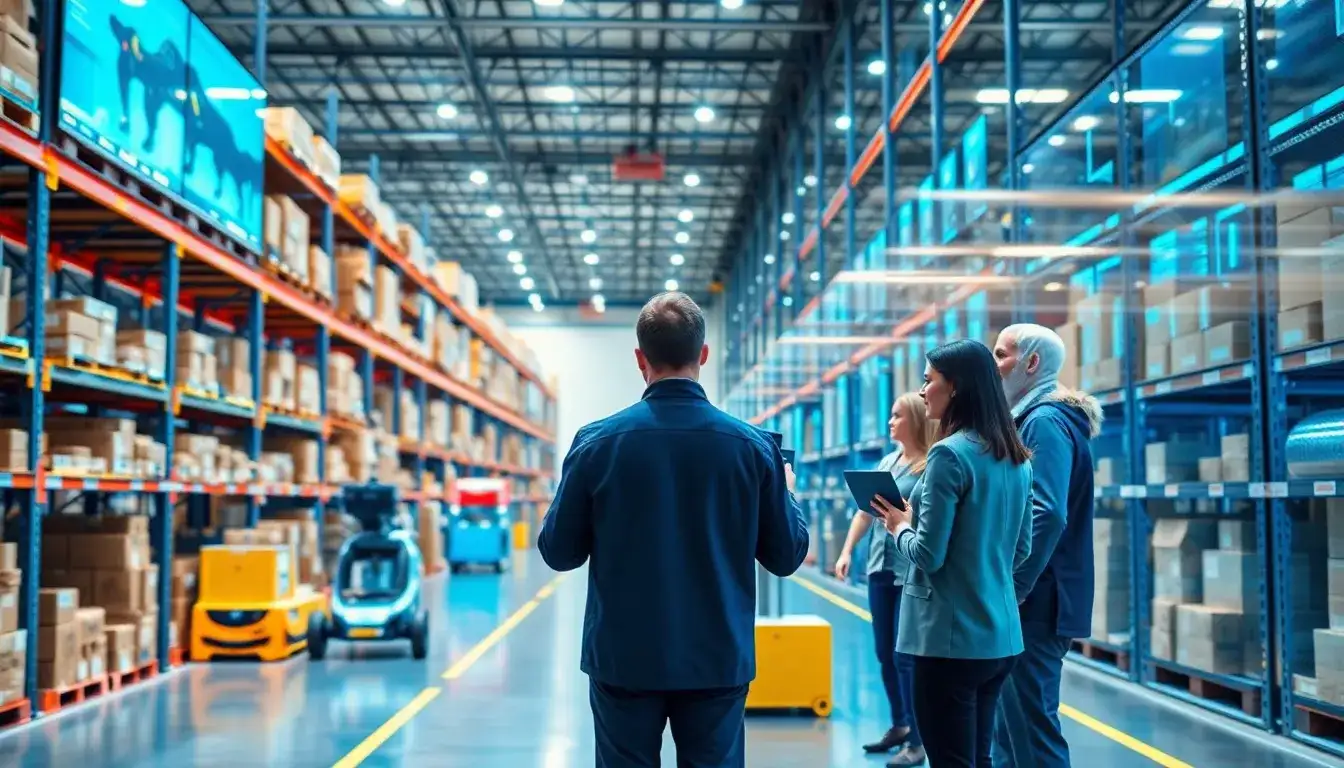
From the warehouse to the factory, how much potential does the application of AI in intelligent manufacturing, specifically the “GPT era,” still hold? As of April 27, 2026, the intelligent manufacturing sector is undergoing transformative changes.
By 2026, the landscape of intelligent manufacturing is expected to shift significantly, driven by advancements in AI technologies. With the introduction of the 2025 increase in production capabilities, the industry is faced with a pressing question: Can machines be more autonomous, reduce labor costs, and operate on a larger scale?
Currently, there are numerous experts predicting substantial growth in the intelligent manufacturing sector, which is considered to be at a pivotal moment. In 2026, the demand for intelligent manufacturing solutions is projected to reach $1.8 trillion, significantly influencing the sector’s future.
This year, both the AI and manufacturing sectors are expected to grow rapidly, with many discussions focusing on the potential of “ChatGPT era” solutions. Questions arise as to when AI applications such as “ChatGPT” will become mainstream, similar to the “iPhone era.” The timeline for these technologies to reach a practical application stage will be critical for the industry.
As the manufacturing landscape evolves, the integration of AI into processes will be essential. Experts suggest that the key points in the adoption of AI technologies in manufacturing involve efficiency, scalability, and cost-effectiveness. The traditional barriers to entry are diminishing, allowing for more rapid deployment of intelligent systems across various applications.
By 2026, the intelligent manufacturing market is expected to grow to encompass a workforce of approximately 1.8 billion people, with the sector increasingly reliant on automated guided vehicles (AGVs) and autonomous mobile robots (AMRs). The projections indicate a growth rate of 19.5% from 2024 to 2030 in the global market.
However, significant challenges remain. Current advancements in AI technology must overcome limitations in machine learning, particularly concerning the adaptability of robots in unpredictable environments. This necessitates the development of higher precision and reliability in AI-driven systems.
Furthermore, as companies transition to smarter manufacturing solutions, the emphasis will be on achieving high operational efficiency, capable of handling complex tasks with minimal human intervention. Leading companies are already investing heavily in developing robust AI capabilities to streamline their manufacturing processes.
In summary, the future of intelligent manufacturing appears promising, with the potential for AI applications to revolutionize how industries operate. The transition from traditional manufacturing practices to intelligent systems will define the next era for manufacturing as companies seek to leverage the benefits of AI technologies effectively.
Original article by NenPower, If reposted, please credit the source: https://nenpower.com/blog/the-future-of-ai-in-warehousing-how-gpt-innovations-are-transforming-the-industry/

