

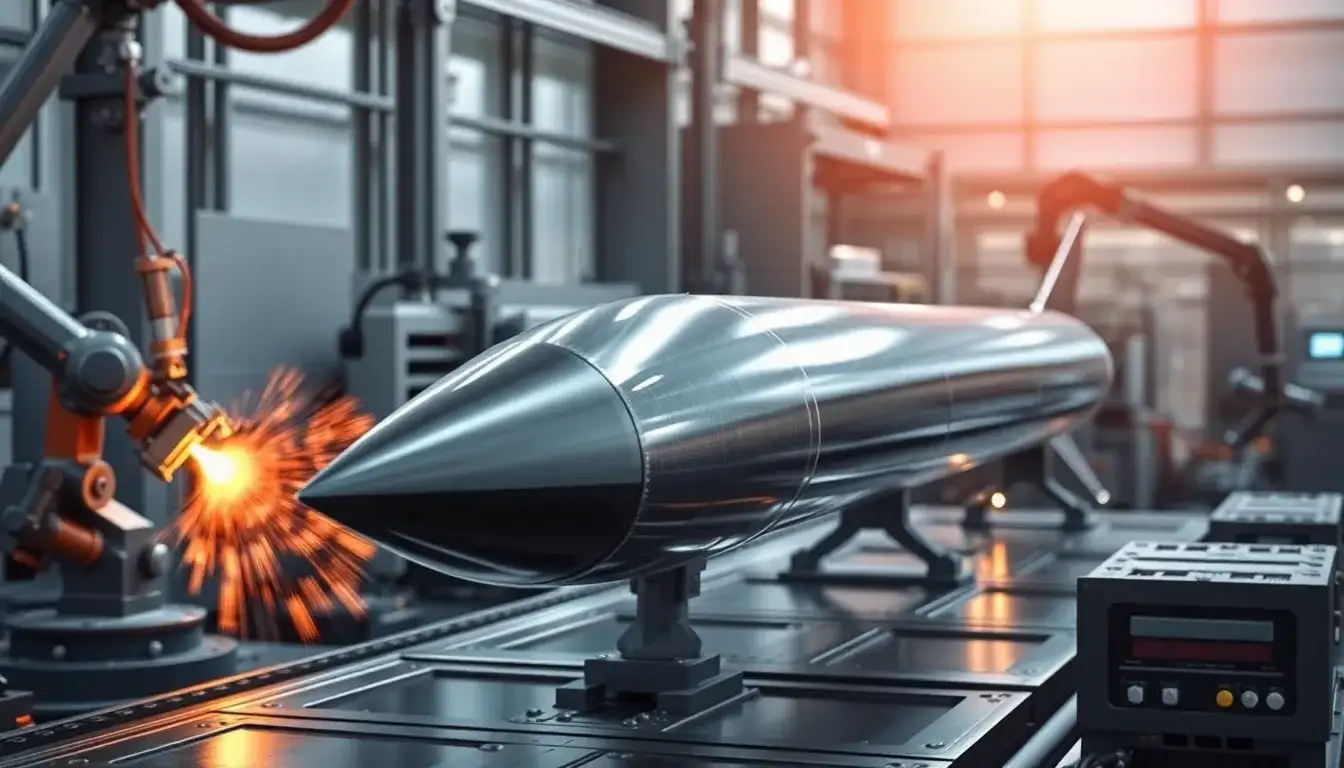
What Makes the Thunder Tiger Triangular Cruise Missile Captivating? It’s Not Just About Performance; Aluminum Alloy Stamping and Robotic Welding Make Mass Production Its Biggest Advantage.
Thunder Tiger Technology has unveiled the “Papa Delta” triangular cruise missile, which features a unique triangular wing design and utilizes aluminum alloy stamping for mass production, allowing it to provide saturation attack capabilities at a low cost.
The allure of the Thunder Tiger “Triangular Cruise Missile,” when compared to Iran’s Shahed-136 and the U.S. LUCAS, lies in its advantages and potential for future upgrades. Thunder Tiger’s Chairman, Chen Guanru, emphasizes that the appeal of their UAVs, including the upcoming “Triangular Cruise Missile” set to debut at the end of August, goes beyond individual performance metrics. The company has replaced traditional manual composite material processes with aluminum alloy stamping, facilitating rapid industrial mass production.
While the performance of UAVs encompasses range and precision, the critical aspect is the ability to produce them cheaply, quickly, and reliably in large quantities. The operational effectiveness of the upcoming “Triangular Cruise Missile” UAV is expected to be on par with the Iranian Shahed-136 and the American LUCAS. However, it is constructed from more reliable materials than the Shahed-136 and has a lower manufacturing cost compared to the LUCAS, particularly in terms of chip upgrades, which hold significant potential.
Historically, most medium to large UAVs have relied on composite materials due to their lightweight and flexible designs. However, these materials have notable drawbacks: they depend heavily on manual labor, incur high costs, and suffer from slow production speeds. In high-consumption battlefield scenarios, sustaining long-term operations with limited precision manufacturing becomes challenging.
Thus, Chen Guanru states that Thunder Tiger is transitioning from traditional manufacturing to establish a defense market for UAVs through a non-red supply chain and industrial production methods. The “Triangular” missile is taking a different approach.
Chen Guanru highlights that Thunder Tiger employs aluminum alloy stamping technology, allowing the airframe to be produced through industrial manufacturing methods. The weight difference compared to composite materials is a mere 0.2 kilograms, but the advantages in cost, speed, and mass production stability present significant opportunities for differentiation. With a wealth of manufacturing experience, the company aims to invest in molds, stamping equipment, laser cutting, robotic welding, and assembly processes to create UAVs and even unmanned boats that are replicable, scalable, and rapidly deliverable.
Currently, Thunder Tiger has redirected its existing 1,700-ton stamping equipment toward UAV component production and plans to introduce a larger 5,000-ton stamping machine to enhance mass production efficiency. This indicates that the core selling point of the “Triangular” missile, beyond the anticipated chip advancements, is to leverage Taiwan’s traditional manufacturing capabilities into the military UAV market.
Once the “Triangular Cruise Missile” UAV is developed, areas for potential upgrades include the power system. Thunder Tiger is initially starting with a two-stroke engine, but to improve speed, range, and mission flexibility in the future, collaboration with relevant Taiwanese industries will be essential to advance towards turbine engines or higher-efficiency power systems. As for electrification, the current battery energy density has yet to reach ideal levels, leaving room for further development.
Join the official account of Mirror News to stay updated on exciting news.
Original article by NenPower, If reposted, please credit the source: https://nenpower.com/blog/the-allure-of-thunder-tigers-triangular-cruise-missile-revolutionizing-production-with-aluminum-stamping-and-robotic-welding/

