

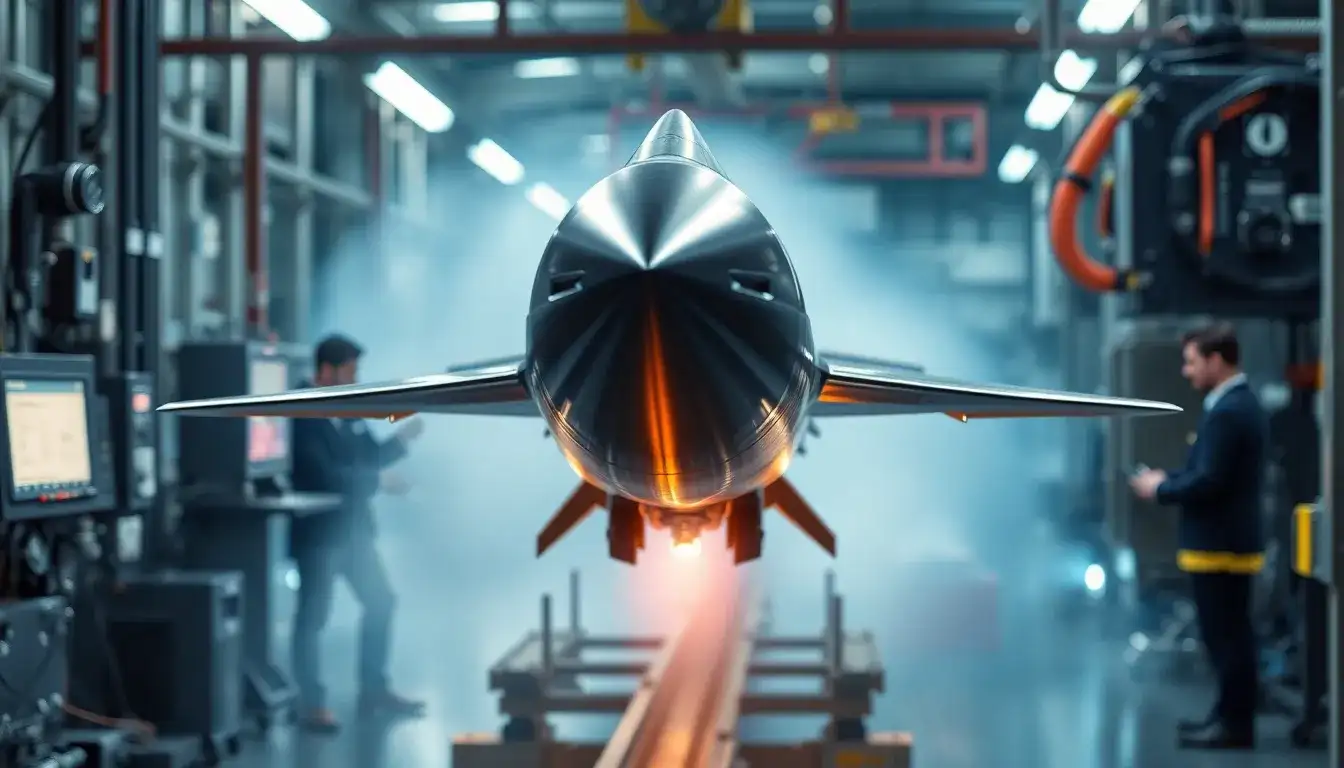
The Thunder Tiger “Triangle” cruise missile has gained attention not just for its performance but also for its innovative manufacturing techniques. Utilizing aluminum alloy stamping and robotic welding, Thunder Tiger has achieved a significant advantage in production speed, positioning it as a key player in the market.
Thunder Tiger Technology recently unveiled the “Papa Delta” triangle cruise missile, which features a unique triangular wing design and is produced through a cost-effective aluminum alloy stamping process. This allows for enhanced saturation strike capabilities at a lower cost. In comparison to the Iranian Shahed-136 and the American LUCAS, what makes the Thunder Tiger missile stand out?
According to Chairman Chen Guanru, the appeal of Thunder Tiger’s UAVs, including the upcoming “Triangle” cruise missile set to debut at the end of August, lies not only in individual performance metrics but also in the rapid industrialization of production. While UAV performance is often assessed by range and accuracy, the true significance lies in the ability to produce them cheaply, quickly, and reliably.
For instance, the upcoming “Triangle” cruise missile UAV is expected to match the operational effectiveness of the Iranian Shahed-136 and the American LUCAS. However, it offers greater material reliability compared to the Shahed-136 and lower production costs than the LUCAS, especially with regard to chip upgrades, which hold considerable potential for improvement.
Most medium to large UAVs have traditionally relied on composite materials, which, while lightweight and flexible in design, also come with notable drawbacks: labor-intensive production, high costs, and slow manufacturing speeds. This makes it challenging to support prolonged operations in high-consumption battlefield scenarios with limited precision production.
Chen emphasized that through a non-restricted supply chain and industrial production, Thunder Tiger is transforming from conventional manufacturing to establish opportunities in the UAV defense sector. As a result, the “Triangle” has opted for a different route.
Thunder Tiger has adopted aluminum alloy stamping technology, allowing for the production of the UAV body through industrial manufacturing methods. The weight difference between aluminum and composite materials is only about 0.2 kg, but the advantages in cost, speed, and production stability are significant. This represents a crucial differentiation for Thunder Tiger.
The company has extensive manufacturing experience and is investing in molds, stamping equipment, laser cutting, robotic welding, and assembly processes. The goal is to create a UAV that can be replicated, scaled, and delivered rapidly.
Currently, Thunder Tiger has shifted its existing 1700-ton stamping equipment to produce UAV components, with plans to introduce a larger 5000-ton stamping machine to enhance production efficiency. This shift underscores the core selling points of the “Triangle,” which not only anticipates advancements in chip technology but also leverages Taiwan’s traditional manufacturing capabilities in the military UAV market.
Once the “Triangle” cruise missile UAV is developed, upgrades can be implemented as needed, starting with the power system. Thunder Tiger is currently utilizing a two-stroke engine but aims to improve speed, range, and mission flexibility in the future by collaborating with Taiwanese companies to explore turbo engines or more efficient power systems. As for electrification, the current energy density of batteries has yet to reach an ideal level, leaving room for future developments.
Original article by NenPower, If reposted, please credit the source: https://nenpower.com/blog/the-allure-of-thunder-tigers-triangular-cruise-missile-innovative-mass-production-techniques-and-performance-advantages/

