

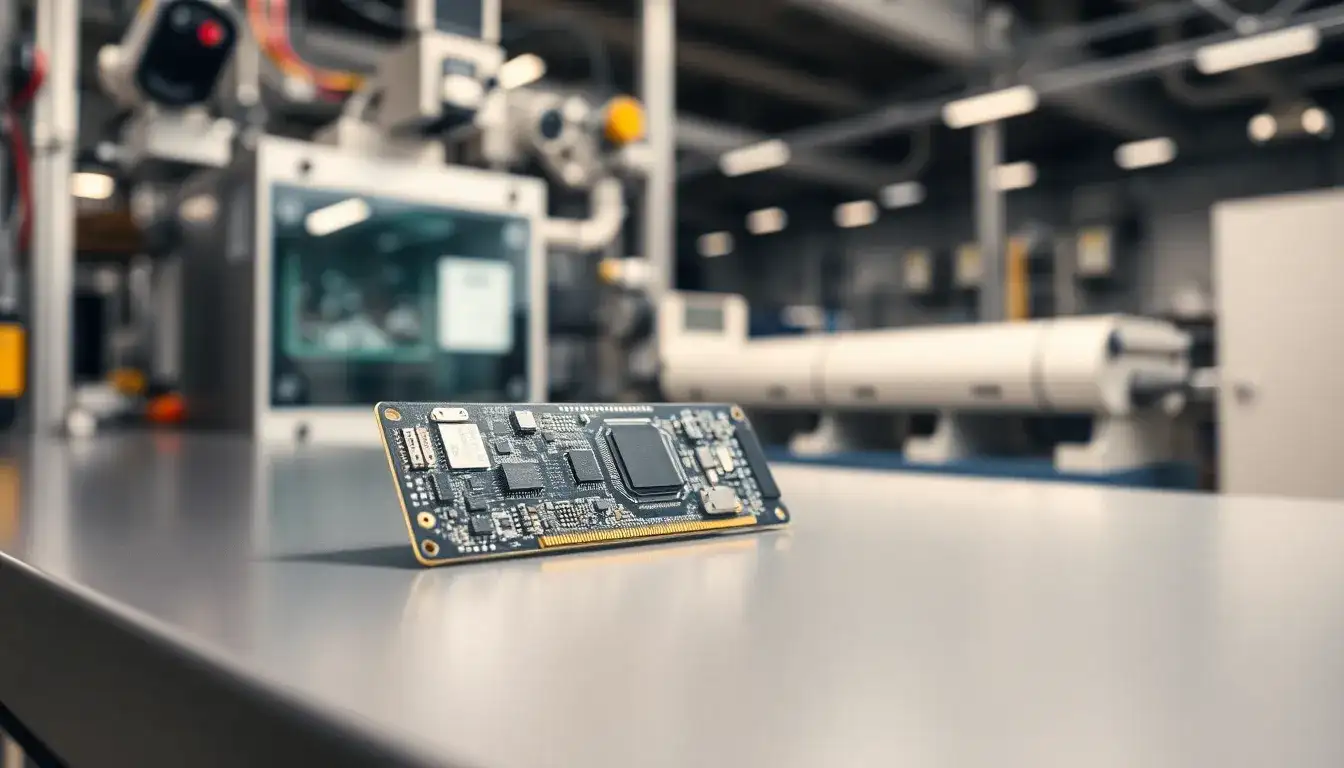
The visual recognition sorting system is a core automation equipment in the fields of modern manufacturing and logistics warehousing. It relies on industrial cameras, PLC controllers, and visual recognition algorithms to achieve automatic material identification, defect detection, and precise sorting. The efficiency of sorting, accuracy of detection, and stability of operation are directly related to production capacity and product quality. The IoT card, as a key communication medium for this system, breaks the limitations of traditional sorting systems that often suffer from “isolated devices, delayed data, and inefficient management.” It establishes a real-time communication link between the “sorting terminal, cloud management platform, and maintenance personnel terminal,” upgrading visual recognition sorting from “manual assistance” to “intelligent collaboration, precision, efficiency, and remote control.” This transformation is crucial for supporting the digital and automated transition in sorting processes.
Without the capabilities provided by the IoT card, the visual recognition sorting system cannot realize remote data synchronization, device coordination, or remote maintenance, thus failing to leverage its core value of automation and intelligence and struggling to meet the demands of modern large-scale production.
1. The Core Role of IoT Cards in Visual Recognition Sorting Systems
The essential value of visual recognition sorting systems lies in “precise identification, efficient sorting, and convenient management.” The IoT card, through stable and reliable wireless communication, connects the entire sorting chain and supports three core functions, helping businesses enhance sorting efficiency, reduce labor costs, and ensure product quality.
1.1 Real-time Data Transmission for Detection and Sorting
The IoT card serves as the main channel for system data flow. It enables instantaneous synchronization of material images captured by industrial cameras, defect data output by visual recognition algorithms, and sorting action parameters to the cloud management platform, achieving an integrated process of “collection, transmission, and archiving.” Management personnel can view the detection results, sorting paths, and operational data of each material in real time, quickly grasping the sorting status on the production line. This provides precise data for optimizing production processes and improving sorting efficiency, addressing the pain points of traditional sorting systems characterized by “local data storage and inefficient manual export,” and adapting to high-speed sorting demands of dozens to hundreds of times per second.
1.2 Remote Management and Device Coordination
With the support of the IoT card, management personnel can remotely control the visual recognition sorting system without physical contact. They can issue commands for detection accuracy calibration, sorting rule adjustments, and equipment operation through the cloud platform, which are precisely transmitted to the PLC controller and execution devices via the IoT card, enabling multi-device collaboration and coordination. This allows for flexible adaptation to different specifications and types of materials without the need for on-site staff, significantly enhancing the flexibility and convenience of managing the sorting system, especially in mixed-flow production scenarios.
1.3 Fault Monitoring and Real-time Alerts
The IoT card plays a crucial role in monitoring system faults and providing alerts. When abnormalities occur in devices such as the visual recognition module, sorting robotic arms, or industrial cameras, or if there are deviations in detection accuracy or sorting errors, the system immediately triggers an alert. The IoT card quickly pushes fault information (fault type, device location, real-time status) to maintenance personnel’s mobile devices. This facilitates swift fault localization and timely troubleshooting, preventing production line shutdowns and batch sorting errors due to equipment failures, thereby minimizing production losses and achieving precise maintenance through “early detection and early resolution.”
2. Core Advantages of IoT Cards for Visual Recognition Sorting Systems
Visual recognition sorting systems are often deployed in industrial workshops, facing challenges such as “dense equipment, strong electromagnetic interference, dusty environments, and the need for 24-hour continuous operation.” IoT cards are precisely matched to industrial sorting requirements, showcasing differentiated adaptability advantages that ensure stable and efficient system operation.
2.1 Robust Interference Resistance to Ensure Continuous Data Transmission
4G IoT cards possess strong signal capture and electromagnetic interference resistance capabilities, able to withstand the strong electromagnetic interference produced by workshop machinery, variable frequency drives, and high-voltage lines. This prevents data loss or command failures due to interference. Even in densely equipped corners of the workshop with signal obstructions, stable connectivity is maintained, and latency remains within acceptable limits, fully meeting the core demands of “real-time data transmission and command synchronization” for visual recognition sorting. For synchronous transmission of high-definition defect images and multi-device sorting data, 5G IoT cards can be selected to ensure high bandwidth and low latency transmission, enhancing sorting and management precision.
2.2 Industrial-grade Weather Resistance for Complex Workshop Environments
With an industrial-grade encapsulation design, these cards operate within a wide temperature range of -40°C to 85°C, capable of withstanding high temperatures, low winter temperatures, and temperature fluctuations throughout the day. This prevents performance degradation or damage due to temperature changes. They also have an IP65 protection level or higher to resist dust, oil, and minor moisture intrusion, ensuring that the card remains functional in dusty and oily workshop environments, thus guaranteeing the long-term stable operation of the sorting system and reducing maintenance frequency.
2.3 Low Power Consumption for Long-lasting Operation and Reduced Maintenance Costs
Perfectly matching the characteristics of visual recognition sorting systems that require “24-hour continuous operation and intermittent data transmission,” IoT cards automatically enter deep sleep mode during non-peak sorting times, significantly reducing overall system energy consumption. This aligns with the workshop’s AC power supply mode, further lowering energy costs. The low power design also reduces device heat generation, extending the lifespan of the cards and sorting equipment, thereby minimizing maintenance costs and ensuring that the system remains in precision sorting mode without affecting normal production line operations.
2.4 High-security Encrypted Transmission to Ensure Data Safety
Addressing industrial production data safety and regulatory requirements, IoT cards support fixed IP transmission, directional transmission, VPDN private network, and other encrypted communication methods. This creates a dedicated secure channel for detection data, device commands, and operational logs, preventing interception, tampering, or leakage of data and avoiding the exposure of core detection standards and product quality data. They feature a triple binding function of “device-card-platform,” ensuring that the card is uniquely encoded to the visual recognition sorting system, preventing unauthorized access to the cloud platform, and eliminating risks associated with malicious control or data tampering, thus ensuring the safety and controllability of production sorting.
3. How to Choose the Right IoT Card for Visual Recognition Sorting Systems
When selecting an IoT card, considerations should revolve around “adaptation to industrial sorting scenarios, communication stability, environmental adaptability, and management convenience.” It is essential to balance practicality and long-term effectiveness to precisely meet the core needs of visual recognition sorting systems, thus helping businesses enhance sorting efficiency and product quality.
3.1 Choose Communication Standards Based on Data Requirements
In most sorting scenarios, the system only needs to transmit low-volume data such as detection results and sorting parameters, with moderate transmission frequency. A 4G IoT card is sufficient to meet these needs, balancing communication stability, low power consumption, and scene adaptability. For simultaneous transmission of high-definition defect images or multi-device data in high-speed sorting or high-precision detection scenarios, a 5G IoT card should be chosen to ensure high bandwidth and low-latency transmission for improved sorting control precision.
3.2 Select Adaptation Features Based on Deployment Scenarios
In workshops with dense machinery and strong electromagnetic interference, choose cards that have electromagnetic interference resistance features. For dusty and oily production environments, prioritize cards with IP65 or higher protection ratings. In workshops located in cold northern regions or hot southern areas, select cards designed for extreme temperature environments. For corners of workshops with weak signal reception, choose enhanced 4G cards with strong signal reception capabilities to eliminate communication blind spots.
3.3 Choose Encryption Capabilities Based on Security Requirements
In industries such as electronics manufacturing and automotive parts, where product quality and data security are paramount, it is essential to select IoT cards that support fixed IP, directional transmission, and VPDN private networks to strengthen the security of detection data transmission and meet regulatory compliance requirements. In all scenarios, prioritize cards with the triple binding function of “device-card-platform” to eliminate security risks and ensure the authenticity and accuracy of detection and sorting data.
3.4 Select Maintenance Features Based on Management Scale
In large factories with multiple production lines and sorting devices, choose IoT cards that support group management and traffic pooling features to enable unified monitoring, traffic allocation, and batch maintenance of multiple sorting systems, significantly improving management efficiency. For small workshops or single-point sorting device deployments, opt for cards that are stable in signal, low in power consumption, and easy to operate, reducing maintenance frequency and ensuring long-term stable operation of the equipment.
The IoT card builds an “intelligent industrial communication bridge” for the visual detection sorting system, addressing core challenges such as unstable communication, environmental adaptability, inconvenient remote management, and insufficient data security in industrial sorting scenarios. This advancement propels sorting systems from “automation” to “intelligence and precision.” Choosing the appropriate IoT card not only ensures the long-term stable operation of the sorting system and enhances sorting efficiency and product pass rates but also helps businesses optimize production processes, reduce maintenance costs, and facilitate the digital and automated transformation of the manufacturing and logistics industries, providing robust communication support for high-quality industrial development.
Original article by NenPower, If reposted, please credit the source: https://nenpower.com/blog/selecting-the-right-iot-card-for-visual-recognition-sorting-systems-key-considerations-for-automation-and-efficiency/

