

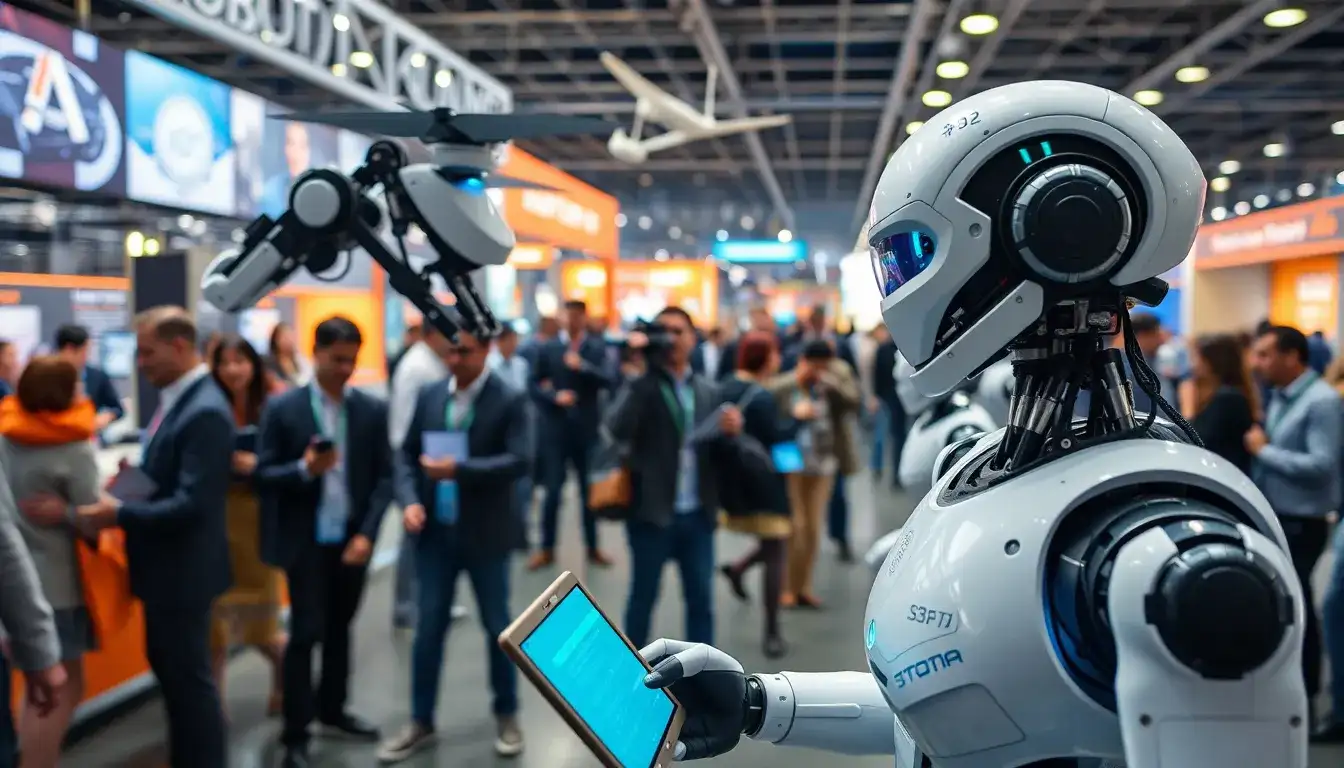
Two Major Events Ignite the Post-Holiday Robot Sector
During the recent holiday break, significant developments in the robotics industry emerged, poised to energize the sector as it resumes operations.
1. Meta Acquires Robotics AI Startup ARI to Enhance Core Technology
On May 1, Meta, the parent company of Facebook, officially completed the acquisition of ARI, a robotics AI startup focused on developing artificial intelligence models for robots. The entire ARI team will be integrated into Meta’s “Super Intelligence Lab” and work closely with the recently established Meta Robotics Studio team. A Meta spokesperson stated that this team will leverage deep expertise in cutting-edge capabilities, such as robot control and self-learning, to advance the development of fully humanoid robots. Meta’s strategic direction is clear—it aims to become the “Android system” of the humanoid robotics field rather than a hardware manufacturer. The robotics team at Meta is dedicated to developing proprietary humanoid robot hardware and the underlying AI technology, including key components like sensors and software, which they plan to make available to the industry for broader adoption. This strategy mirrors how the Android system and Qualcomm chips laid the groundwork for the mobile phone industry.
At the same time, Tesla announced during its earnings call on April 23 that the third-generation Optimus humanoid robot is expected to debut mid-year, with production starting as early as late July or August at the Fremont factory in California. Elon Musk confirmed that production of the Model S and Model X will cease in early May to make way for Optimus, with the production line set to be reconfigured within four months. Additionally, Tesla is constructing a second Optimus factory at its Texas gigafactory, with production anticipated to commence around the summer of 2027. With Meta’s acquisition and Tesla’s countdown to mass production, tech giants are accelerating their efforts in this sector, which may lead to positive market sentiment during the post-holiday trading period.
2. Hangzhou’s 15 “Special Police” Robots Officially Commence Duty
On May 1, Labor Day, a landmark event took place in China. The first fully established traffic management robotics team, “Hangzhou Police Smart Patrol,” officially began its operations. This unit, consisting of 15 intelligent traffic management robots, has been deployed around key areas such as the West Lake scenic area, shopping districts, and major roads like Yan’an Road and West Lake Avenue, covering essential traffic nodes in multiple regions. These robots are not merely decorative; they are equipped with high-performance visual recognition algorithms that enable round-the-clock intelligent monitoring at intersections, accurately identifying traffic violations such as non-motorized vehicles parking illegally, riders not wearing helmets, and pedestrians lingering on roadways. Upon detecting violations, the robots immediately issue real-time verbal guidance and warnings.
In addition to monitoring, visitors can interact with the traffic management robots. By approaching the robots and pressing the “I want to speak” button on their interactive screens, visitors can initiate inquiries. The robots utilize advanced voice recognition technology to quickly understand requests and, combined with real-time traffic conditions and geographical data, provide optimal walking and public transportation routes through voice interaction and visual displays on their screens. The Hangzhou Traffic Management Department indicated that the formation of this robotic team aims to liberate police resources. The robots can operate continuously for 8 to 9 hours a day, effectively taking over repetitive tasks such as making announcements and guiding traffic. A significant policy milestone was also achieved on the same day with the implementation of the “Regulations for Promoting the Development of Embodied Intelligent Robotics Industry in Hangzhou.” This regulation establishes a comprehensive system covering technological innovation, infrastructure, industry cultivation, scenario empowerment, and safety management. Hangzhou has attracted over 700 robotics-related companies, including industry leaders like Yushu Technology and Yunshen Technology, with the embodied intelligent industry cluster expected to generate a value of 106.8 billion yuan by 2025. The entire chain from top-level design to local legislation and practical application in the police system has been successfully integrated.
3. Outlook for Post-Holiday Trends
In fact, during the last trading day before the holiday, the most perceptive investors had already begun to act. On that day, stocks related to humanoid robots experienced a surge, with companies like Genesis, Guangpu Shares, and Lingyun Optics hitting their daily price limits, while Ruikeda rose over 13% and Shenglan Shares increased by more than 12%. Following the holiday, two forces are likely to resonate in the market. The first is the positive sentiment from overseas developments—Meta’s acquisition and Tesla’s impending mass production. The second is the sustained domestic demand for practical applications and the benefits of favorable policies. From the Spring Festival Gala to the recent deployment of police robots, the speed of commercialization for Chinese robotics is visibly accelerating.
4. Key Areas for Investment Focus
The first area is the core beneficiaries of Tesla’s supply chain. With the imminent mass production of the Optimus Gen3, suppliers in the T-chain will be the first to benefit from increased orders, making this one of the most certain directions for investment. The second focus is on visual perception and core component technologies. The ability of robots to perceive and interact in complex environments represents a significant technological barrier, and the ARI team acquired by Meta is concentrating on high-precision agile operations, tactile sensing, and overall coordination and balance. The third area involves domestic complete machines and practical applications. The demonstration effect of Hangzhou’s robotic police unit is expected to further promote the deployment of robots in government and public service scenarios, creating new opportunities for policy benefits. With the implementation of the “Regulations for Promoting the Development of Embodied Intelligent Robotics Industry in Hangzhou,” the over 700 related companies already established in the city will encounter new growth prospects. The year 2026 is considered a critical milestone for humanoid robots to achieve breakthroughs from “zero to one.” As overseas giants accelerate their layouts and domestic application scenarios continue to expand, the robotics sector is poised for historic investment opportunities.
Original article by NenPower, If reposted, please credit the source: https://nenpower.com/blog/major-events-ignite-post-holiday-surge-in-robotics-sector/

