

Leju Robotics has successfully completed its IPO counseling acceptance, marking a significant milestone in its journey. On April 22, the China Securities Regulatory Commission (CSRC) announced that Leju Intelligent (Shenzhen) Co., Ltd. has transitioned its IPO counseling status to “Acceptance of Counseling,” with Orient Securities serving as the guiding brokerage firm.
Founded in 2016 by Ling Xiaokun and a group of over ten graduates from Harbin Institute of Technology, Leju Intelligent is a national-level specialized enterprise focusing on the independent research and development of core technologies for humanoid robots. The company has established a leading full-stack technical system encompassing “brain, cerebellum, operating system, and body.” It has launched several benchmark products, including AELOS (small), ROBAN (medium), and KUAVO (large), achieving mass delivery and application across various fields such as research, commerce, industry, and home use.
Leju has attracted strategic investments from notable institutions, including Tencent, Shenzhen Investment Holdings, and CITIC Jinshi. According to the previously disclosed counseling filing report, Leju has no controlling shareholder. The actual controllers are individuals Ling Xiaokun, Chang Lin, and An Ziwei, holding 15.92%, 6.01%, and 4.15% of the shares, respectively. Additionally, Ling Xiaokun indirectly controls 7.64% through Shenzhen Leyue Intelligent Business Management Partnership, resulting in a total control of 33.72% of the company.
In October 2025, Leju successfully completed nearly 1.5 billion yuan in Pre-IPO financing, led by Shenzhen Investment Holdings Capital, Shenzhen Longhua Capital, Qianhai Basic Investment, Shijingshan Industry Fund, Orient Precision Engineering, Top Group, CITIC Jinshi, Zhongzheng Investment, Daohua Long-term Investment, Shengyi Capital, Lianxin Capital, Probe Venture Capital, Hefei Industrial Investment, Jiu Zhao Investment, and the China-US Green Fund.
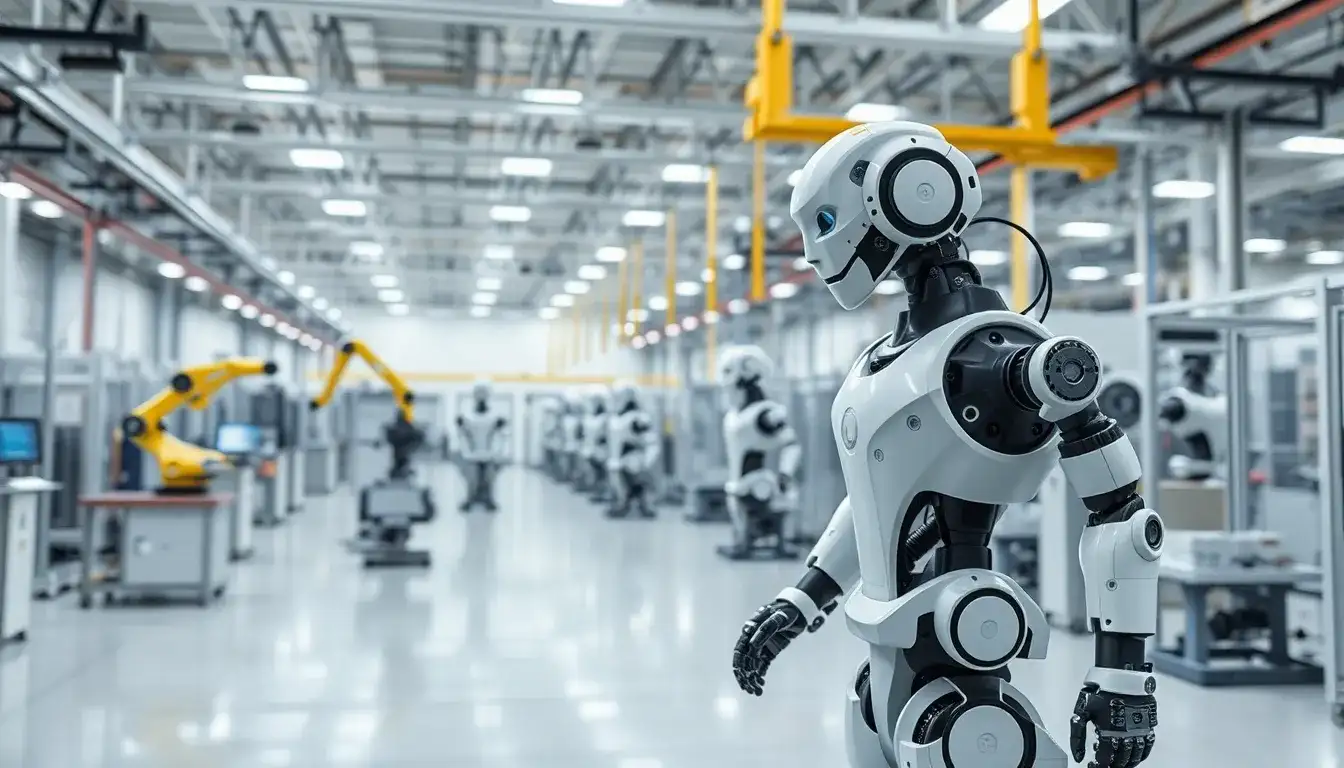
On March 30 of this year, Leju Robotics announced the official launch of its humanoid robot automated production line in Guangdong, which has an annual capacity of over 10,000 units. This production line, collaboratively built with Orient Precision Engineering, can deliver a humanoid robot every 30 minutes. The line features 24 precision assembly processes that are fully digitized, improving efficiency by over 50% compared to traditional methods. It also implements 77 inspection and testing measures to ensure the stability and reliability of the products.
Furthermore, the production line is designed with high flexibility, allowing for adjustments to workstations and line length, thus supporting mixed production of multiple models and products. On April 12, the trial production line in Longhua, Shenzhen, was officially put into operation. Currently, the production of humanoid robots faces challenges such as unstable processes, high costs, and varying quality. The trial production line from Leju Robotics aims to address these issues effectively.
According to Cao Yu, Assistant Vice President of Leju Robotics, the trial production phase serves as a critical checkpoint between research and small-scale production. It primarily tests process feasibility and the stability and capability of the supply chain. “The core aim of this phase is to establish standards and reduce costs. Without this trial phase, transitioning directly from research to mass production could lead to challenges such as inability to produce, high costs, poor quality, or instability,” Cao explained.
The trial line currently includes small-batch production of ROBAN 2, focusing on flexibility, standardization, and intelligence for pre-production testing and validation. The flexible production line, paired with manual operations, allows for quick adjustments and error correction advantages. As of now, this model has undergone two major version iterations, with over 170 process improvements to ensure readiness at each stage.
Combining modular assembly with independent testing ensures comprehensive coverage from process testing to trial production, establishing quality standards from components to the final product. The MES digital management system records assembly data throughout the process, ensuring traceability of quality and reproducibility of processes, ultimately forming an industry knowledge base.
The Longhua production line aims to achieve an annual capacity of 500 to 1,000 units. “Our primary task is to establish standardized operational processes through trial production for future mass production,” Cao stated. With the trial base now operational, Leju is accelerating the conversion of R&D achievements to mass production, laying the groundwork for humanoid robots to be utilized in industrial and home scenarios.
Currently, Leju’s humanoid robots have achieved mass delivery, covering areas such as research education, commercial services, and industrial manufacturing. Moving forward, Leju’s market expansion will focus on real-world applications. In commercial services, the company will promote scenarios such as showroom tours, group receptions, and patrol inspections. In industrial manufacturing, Leju robots have already developed skills for unloading plastic lunch boxes, unpacking cartons, and managing SMT material handling, with more functionalities under development.
Notably, the establishment of the trial production line in Longhua represents a significant release of synergies within the Greater Bay Area’s industry. Leju has constructed a complete manufacturing loop in the area, with Shenzhen focusing on R&D and trial production, while Foshan concentrates on manufacturing and mass production. Since its inception in 2016, Leju’s headquarters in Shenzhen has been the core R&D hub, accumulating deep technical expertise and talent. The trial base in Longhua facilitates process validation and pre-mass production refinement, while the collaboration with Orient Precision Engineering in Foshan has led to the creation of the first humanoid robot automated production line capable of mass production.
Humanoid robots have now entered high-end scenarios in automotive manufacturing, 3C electronics, and smart logistics, driven by substantial market demand for rapid technological iteration. According to the latest estimates from Morgan Stanley, humanoid robot sales in China are expected to reach 28,000 units by 2026, with the global market projected to exceed $5 trillion by 2050. The official operation of Shenzhen’s first humanoid robot trial production line aims to accelerate product iteration and refinement just before this market explosion, paving the way for subsequent mass production.
Original article by NenPower, If reposted, please credit the source: https://nenpower.com/blog/leju-robotics-completes-ipo-guidance-acceptance-and-launches-automated-production-line-for-humanoid-robots/

