

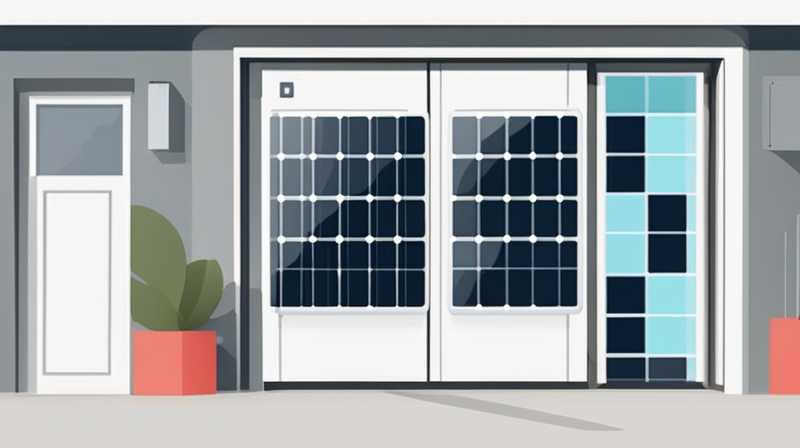
To install solar panels on a door, the following process should be adhered to: 1. Understand the requirements, 2. Select appropriate materials, 3. Prepare the door, 4. Install the solar panels, 5. Connect the electrical components. Thorough planning is crucial; you need to ensure the door can support the panels and that the installation doesn’t obstruct movement or access.
1. UNDERSTANDING REQUIREMENTS
Installing solar panels on a door is an innovative approach to harnessing solar energy. Before embarking on the project, it is essential to comprehend the requirements associated with solar panel installation. Education on local regulations is pertinent. Many regions have specific codes governing how solar panels can be installed, especially when the installation impacts a building’s structure or aesthetics.
Furthermore, it is essential to determine if the door can withstand the additional weight of solar panels. Standard solar panels range in weight, but combined with mounting hardware, the total load may require assessment of the door’s materials—wood, fiberglass, or metal—and structural integrity. The next step involves conducting a needs assessment to understand the power requirements. Calculate how much energy is needed and consequently, how many panels would suffice in fulfilling these requirements. It’s advisable to consult with professionals or perform simulations to assess the potential efficiency of the system based on the sunlight exposure the door receives.
2. SELECTING APPROPRIATE MATERIALS
Diving deeper into material selection, it’s vital to choose the right type of solar panels and mounting hardware. There are numerous options available, including monocrystalline, polycrystalline, and thin-film panels, each with unique characteristics regarding efficiency, cost, and aesthetics. Monocrystalline panels are often favored for their high efficiency and compact design, making them suitable for applications with limited space, such as a door.
Equally important is selecting the correct mounting system. Depending on the design of the door, different types of mounts can be utilized, including flush mounts or tilting systems to maximize solar exposure. Compatibility of the mounting solution with the door’s construction material is paramount for a stable and secure installation, ensuring that the solar panels remain firmly attached even under different weather conditions.
3. PREPARING THE DOOR
Prior to the installation process, adequate preparation of the door is mandatory. This involves cleaning the surface where the panels will be attached to ensure no dirt or debris interferes with the adhesive or mounting hardware. A thorough inspection of the door is essential; check for any damage or wear that could compromise the installation or lead to further issues down the line.
Utilizing a level and measuring tape is crucial in this phase. Marking the areas well allows for precise placement of the solar panels, ensuring they align correctly both for aesthetic purposes and functionality. Meticulous attention during this step can prevent misalignments that may cause complications during installation and reduce the system’s overall efficiency.
4. INSTALLING THE SOLAR PANELS
Once the door is adequately prepared, the next phase is the installation of the solar panels. Here, it’s recommended to wear safety equipment, including goggles and gloves, to protect against sharp edges or electrical components. Follow the manufacturer’s instructions meticulously, which often include detailed steps regarding mounting brackets, positioning, and securing the panels.
After positioning the panels, securing them with the selected brackets or mounting hardware is critical. Ensuring that they are fastened tightly but not overly tightened is vital to avoid damage. Double-checking the alignment at this stage can save considerable effort later on. Once secured, the next step involves connecting the electrical wiring. This phase can be daunting and hence requires a basic understanding of electrical systems—connecting wires from the solar panels to the charge controller and battery, if applicable—and care should be exercised to ensure all connections are insulated and secure, preventing short circuits or power loss.
5. CONNECTING THE ELECTRICAL COMPONENTS
The electrical aspect involves a significant number of considerations. First, select appropriate cables for the voltage and distance involved in the installation. Using thicker cables may minimize resistance and potential energy loss. Each connection must be securely attached, minimizing the risk of electricity leaking or circuit degradation over time.
A solar charge controller may be necessary to regulate the flow of electricity from the solar panels to the battery. Installation of this component is crucial to prevent overcharging batteries and ensure optimal use of the energy produced. During this phase, it might be beneficial to consult an electrician or a solar expert to guarantee that all components are installed correctly and safely, leading to a fully operational solar panel on your door.
6. MAINTAINING SOLAR PANELS
After installation, maintenance of the solar panels is an often-overlooked aspect of the overall system. Regular checks for dirt or debris accumulation can significantly affect solar efficiency; therefore, periodic cleaning is recommended. Depending on the installation location, cleaning may need to occur multiple times a year.
Monitoring the system’s performance is also important. Several solutions utilize monitoring systems that can provide real-time data on energy conversion efficiency, allowing for immediate action if performance declines. Regular inspections can help identify potential issues early, preventing costly repairs. An adequately maintained setup can significantly enhance energy production and longevity of the system installed on the door, providing sustainable energy for years.
7. COST ANALYSIS AND ROI
Investing in solar panel installation on a door warrants thorough consideration of the financial implications. Upfront costs include purchasing panels, installation materials, and any professional services. However, this investment can lead to substantial savings over time, with reduced electricity bills and potential rebates or incentives from local governments or energy providers.
Calculating the return on investment (ROI) involves considering overall energy production and savings. Estimating the IRR (internal rate of return) allows one to gauge financial viability, which is crucial for those debating long-term commitments. Particularly in areas with sunny climates, energy generation can be maximized, leading to payback periods that are attractive.
FREQUENTLY ASKED QUESTIONS
CAN SOLAR PANELS BE INSTALLED ON ANY DOOR?
Yes, solar panels can be installed on various types of doors, including wood, fiberglass, and metal. However, one must consider weight limits and structural integrity to ensure the door can support the additional load. Consulting with professionals can help determine whether the specific door is suitable for solar panel installation.
WHAT MAINTENANCE IS NEEDED FOR SOLAR PANELS ON A DOOR?
Regular maintenance includes cleaning the panels to remove dirt and debris and periodic checks to ensure all electrical connections are secure and functioning correctly. Monitoring the system’s performance can also help identify potential issues before they become significant problems.
HOW MUCH ENERGY CAN SOLAR PANELS ON A DOOR GENERATE?
The energy generation will depend on various factors, including the size of the panels, orientation, and sunlight exposure. On average, a well-installed solar panel can generate between 250 to 400 watts. It’s essential to calculate energy needs to determine how many panels are required to meet specific goals.
The journey of installing solar panels on a door offers a unique blend of creativity and sustainability. While the technicalities might seem daunting, the potential benefits—environmental and financial—can be substantial. A successful installation not only harvests solar energy efficiently but also champion innovation within residential projects. By thoroughly preparing, selecting the right materials, ensuring proper installation, and pursuing diligent maintenance, homeowners can harness clean energy effectively. Ample research, planning, and professional guidance maximize the likelihood of a successful project. In the long term, this endeavor contributes toward reducing carbon footprints, advocating renewable energy, and potentially lowering monthly energy expenses significantly. Thus, while the initial effort may be considerable, the rewards often justify the means. By actively participating in the movement towards sustainable living, individuals can make notable impacts on both personal and ecological levels, demonstrating how small actions can lead to meaningful change. Engaging with solar technology fosters a sense of empowerment, ultimately aligning with broader goals of environmental responsibility**.
Original article by NenPower, If reposted, please credit the source: https://nenpower.com/blog/how-to-install-solar-panels-on-the-door-video/

