

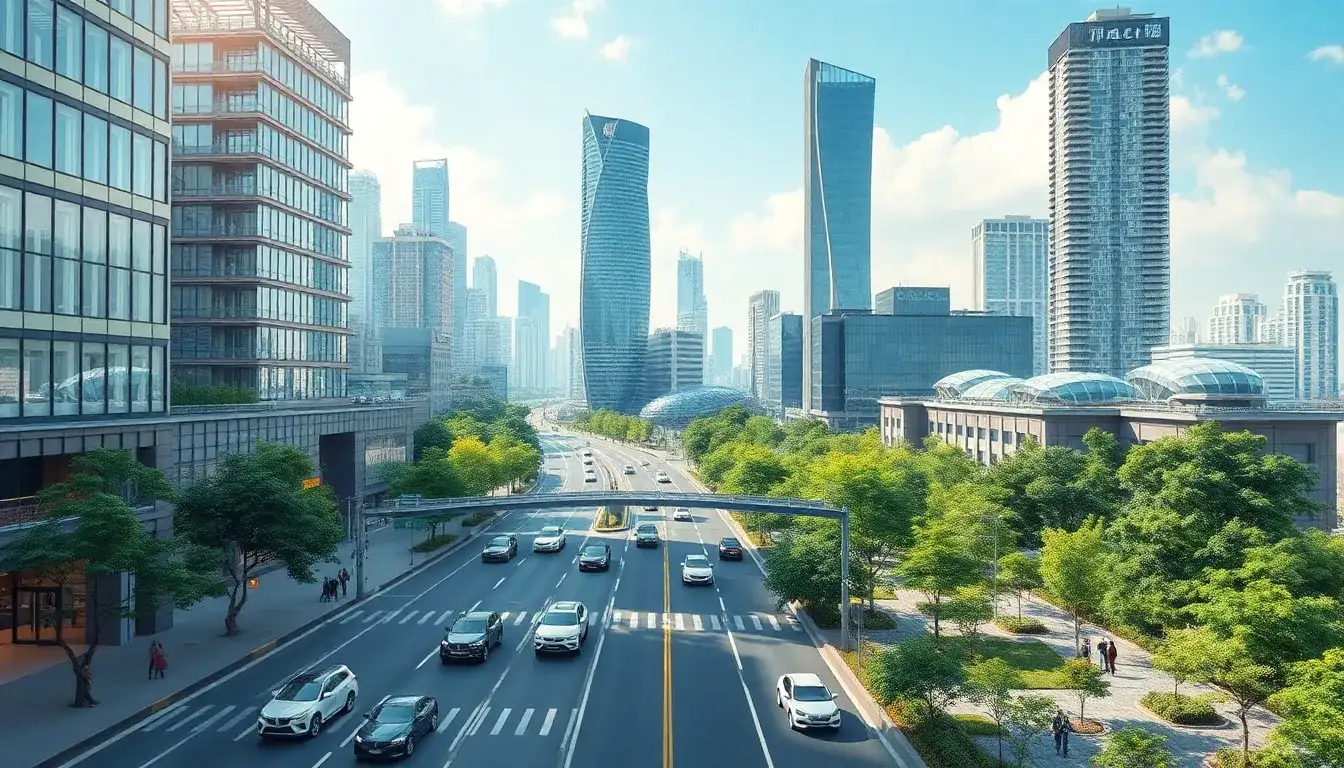
Guangzhou has issued the “Key Work Points for the Artificial Intelligence Industry in 2026,” which outlines the goals under the “Ten-Hundred-Thousand” framework. This initiative focuses on five major areas: platform support, model cultivation, scenario development, policy system improvement, and market entity enhancement.
On May 11, the Guangzhou Artificial Intelligence Industry Development Office released the “Work Points” document. It aims to advance key tasks outlined in the “Implementation Plan for Promoting High-Quality Development of the Artificial Intelligence Industry in Guangzhou,” with the goal of establishing Guangzhou as a hub for specialized AI models and a demonstration area for AI applications by 2026.
The “Work Points” document specifies the “Ten-Hundred-Thousand” goals for the AI industry, which include strengthening platform support, accelerating model development, deepening scenario openness, improving the policy system, and bolstering market entities.
Additionally, the document outlines the implementation of intelligent upgrades in key areas. For the “AI + Elderly Care Services” initiative, it aims to release no fewer than 20 application scenarios. These scenarios will focus on health monitoring and management, safety and care, convenience for daily living, and social connectivity for the elderly, as well as management of elderly care facilities and community services. Various organizations, including elderly care institutions, rehabilitation hospitals, community service centers, and suppliers of elderly products and services, are encouraged to adopt AI technology.
For the “AI + Intelligent Manufacturing” initiative, at least 70 application scenarios will be introduced. This involves a campaign for cultivating a hundred AI models, supporting collaborations between enterprises and research institutions, and focusing on industries such as automotive manufacturing, smart home appliances, high-end equipment, electronic information, and biomedicine. The aim is to develop specialized models for design, production, management, operation, and supply chain processes.
Under the “AI + Future Industries” initiative, a minimum of 20 application scenarios will be published. This effort will leverage universities, research institutions, various key laboratories, and new research and development organizations in Guangzhou to explore potential applications of AI in scientific discovery and groundbreaking technological innovation. The focus will be on AI technology’s application and integration in areas such as intelligent unmanned systems, embodied intelligence, cellular and genetic research, and advanced new materials.
The “Work Points” also emphasize the commitment to technological innovation. It supports tackling critical technological challenges through initiatives like “Challenge and Lead,” encouraging innovation entities to focus on all aspects of the industry chain, including fundamental theory, computing power, data, algorithms, and applications. Furthermore, the development of new intelligent terminals is prioritized, particularly in smart connected vehicles, intelligent unmanned systems, complete home smart terminals, wearable devices, industrial smart terminals, and brain-computer interfaces. The promotion of AIoT (Artificial Intelligence of Things) systems that integrate household appliances, central control, and sensors is also supported.
Original article by NenPower, If reposted, please credit the source: https://nenpower.com/blog/guangzhou-prioritizes-ai-development-in-autonomous-systems-embodied-intelligence-and-advanced-materials-by-2026/

