

In Beijing, a growing number of stores resembling space capsules have opened in the past year, selling snacks and beverages, with humanoid robots serving as cashiers. When a customer approaches the store, the robot engages in conversation, retrieves items from shelves, and even tells jokes to promote products. During quieter times, it proactively advertises.
Zhao Yuli, the Chief Strategy Officer of Galaxy General Robotics, which is developing these robots, stated that they are working on fully autonomous retail stores, which will handle inventory management, precise item retrieval, and restocking. She aims to expand the services offered by robots in convenience stores to include grilled sausages and freshly microwaved meals, with a vision of enabling 24-hour emergency shopping, including the ability to purchase medications.
Zhao emphasized that the retail landscape is not limited to convenience stores; they are also planning to implement smart pharmacies. Their goal is to deploy over a thousand robotic applications in these scenarios within the year. She noted that the demand for nighttime medication purchases is increasing, but there are still too few pharmacies operating around the clock, especially in remote areas. She believes robots can fill this gap and effectively manage medication expiration dates, ensuring that soon-to-expire items are removed from shelves in a timely manner.
Alibaba’s Gaode has introduced a self-developed “mechanical guide dog,” which is the world’s first embodied robot capable of autonomously performing tasks in open environments without pre-set routes. This innovation aims to address the shortage of guide dogs in China.
Tang Zixiao, Product Manager at Gaode’s Embodied Business Department, explained that the “mechanical guide dog” not only leads users but also needs to independently solve problems when encountering obstacles or unexpected situations. For instance, if the guide dog is assisting a visually impaired person in buying bottled water and finds the shelf empty, it will instantly search for nearby convenience stores and guide its owner to the next available location for purchasing water.
She expressed hopes to continuously refine their technological capabilities and update models to expand application scenarios, such as guiding children to parks or assisting elderly individuals with stairs. Tang believes that in the wave of artificial intelligence, embodied intelligence will showcase many unexpected capabilities, with the ultimate goal of integrating these products into households.
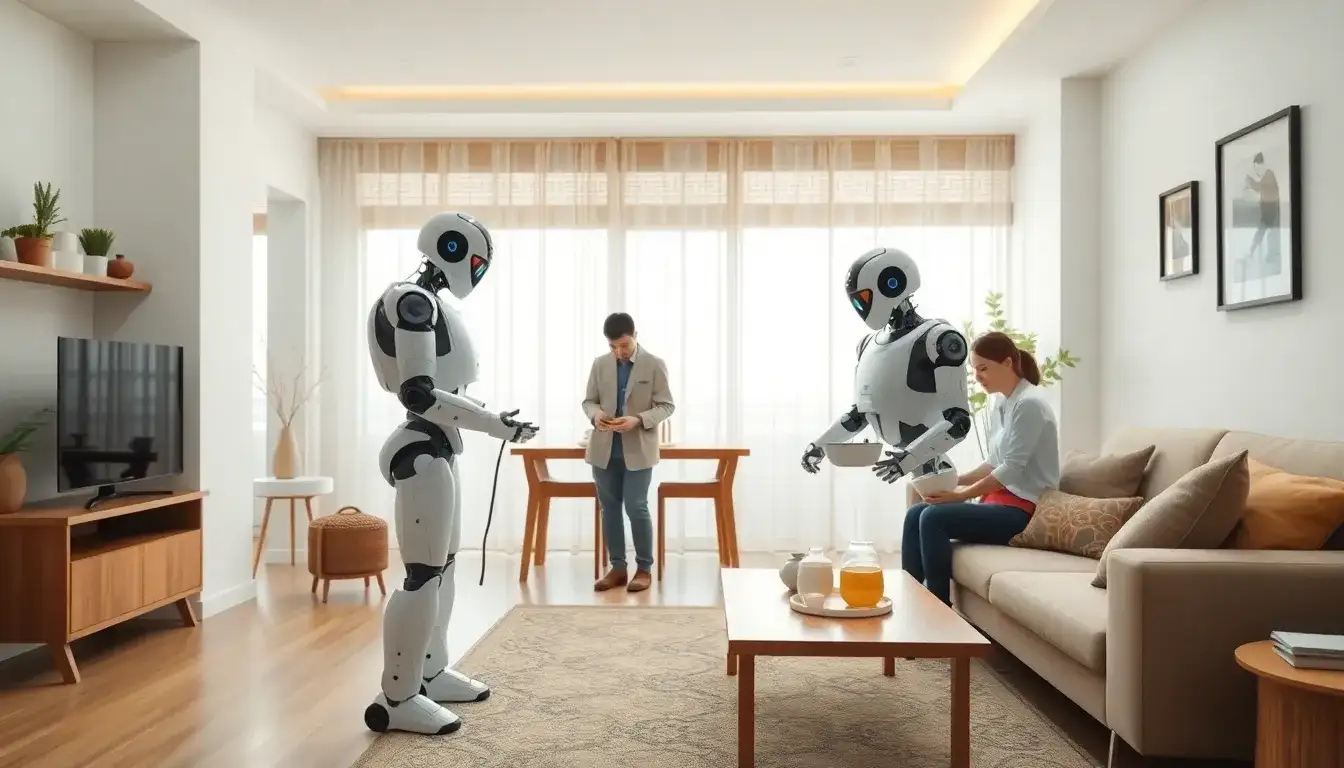
Jia Baoxiong, a researcher at the Beijing General Artificial Intelligence Research Institute’s Embodied Robotics Center, noted that for robots to enter home environments, they must be safer and more stable. Interaction with humans is critical, and he estimates that it may take an additional three years for robots to achieve this level of integration, as they need time to learn from human interactions.
He described the current market as being in its early stages, with many companies continuously updating their technologies. However, only those with genuine competitive advantages will survive. He views the current competition positively, believing that China’s complete robotics supply chain gives it an edge in international competition.
Original article by NenPower, If reposted, please credit the source: https://nenpower.com/blog/expanding-applications-of-humanoid-robots-in-mainland-china-expected-to-take-years-for-home-integration/

