

Mass Production of Manned Transformable Mechas! Is It Time for Domestic Robots to Surpass Tesla?
On May 14, 2026, the intelligent manufacturing sector witnessed a significant event as Yushu Technology unveiled the world’s first mass-produced manned transformable mecha, while two major robot exhibitions kicked off simultaneously in Hangzhou and Beijing. The countdown to the mass production of Tesla’s Optimus has begun, and the implementation of digital identities for humanoid robots has been rolled out across the board. This marks a pivotal moment for domestic smart manufacturing, indicating a possible reshaping of the industry landscape.
As of today, the intelligent manufacturing index stands at 6115.59 points, reflecting a slight decrease of 0.61%. However, the humanoid robot sector is showing resilience, with net inflows exceeding 3 billion yuan in core components. Furthermore, northbound funds continue to invest in leading servo companies like Yichuan Technology, indicating a surge in market expectations for the commercialization of embodied intelligence.
Dual Exhibition Blast!
Today, two major industry events kicked off, igniting a wave of enthusiasm in intelligent manufacturing. The Hangzhou International Humanoid Robot Exhibition opened its doors at the convention center, featuring an exhibition area of 30,000 square meters and showcasing nearly 600 enterprises. The exhibition highlights included advancements in bionic drives and brain-machine interfaces. Notably, Aliyun introduced a multimodal large model-driven solution that increased the success rate of long-sequence tasks for robots from 46% to 78%. Additionally, companies like Green Harmonic reported an 80% localization rate for core components, achieving life spans and precision that meet international standards.
Simultaneously, the 20th Beijing International Intelligent Manufacturing Equipment Exhibition commenced at the China International Exhibition Center, focusing on high-end equipment such as industrial robots and CNC machine tools. The total amount of signed projects exceeded 5 billion yuan, while smart factory cultivation plans were launched in cities like Beijing and Guangzhou, revealing vast market demand.
Technical Breakthrough!
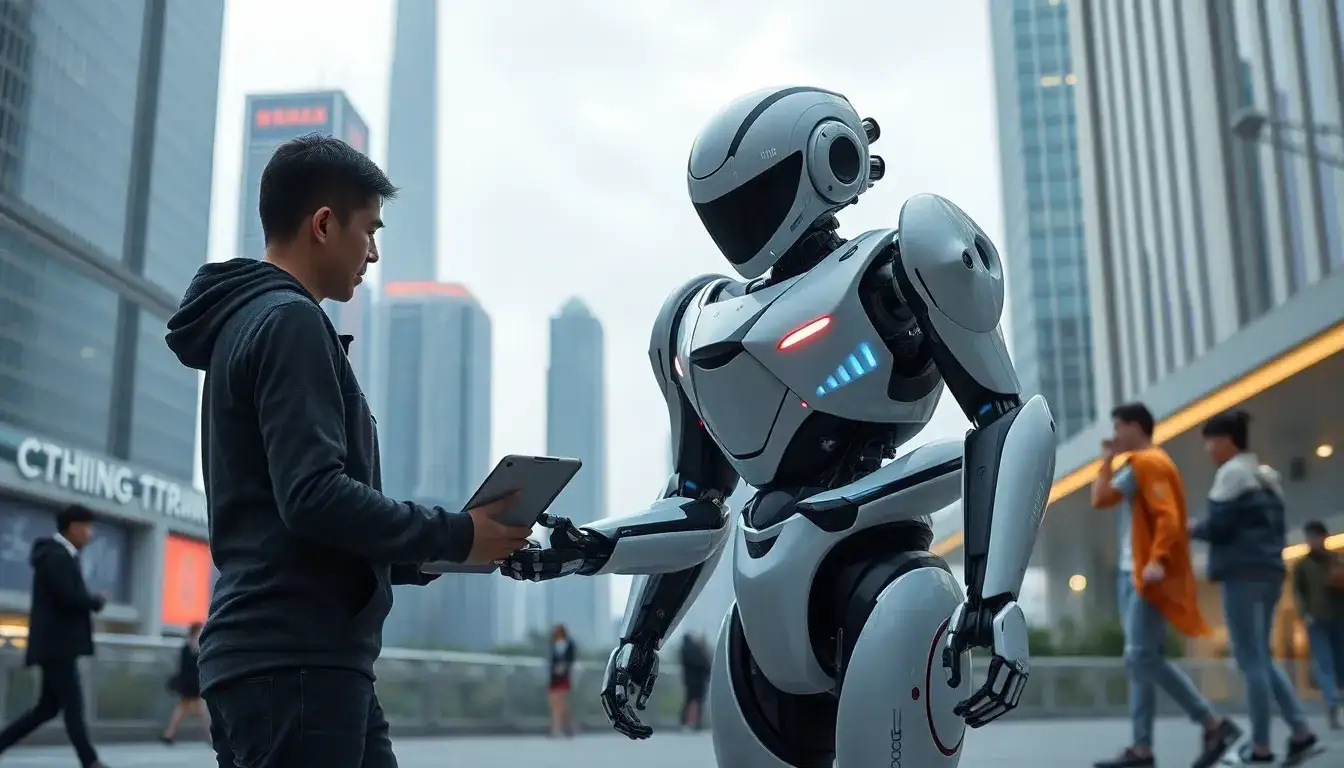
The most exciting technological advancement came from Yushu Technology, which officially released the world’s first mass-produced manned transformable mecha, the GD01, with a starting price of 3.9 million yuan. This mecha can walk upright like a “Transformers” character and possesses the ability to switch between multiple forms. It can punch through brick walls, signifying a significant breakthrough in the practical application of humanoid robots. The GD01 is equipped with a self-developed hydraulic drive system, boasting a response delay as low as 50ms and capable of handling over six composite tasks in unplanned scenarios. It will first be applied in special operations and emergency rescue missions. At the exhibition, domestic robots showcased their prowess, with the “Yuanqi Boy” humanoid robot demonstrating optimal gait technology, and Strong Brain Technology presenting a brain-machine interface integrated system with millimeter-level accuracy for precision assembly scenarios.
Accelerated Production and Policy Implementation
The mass production progress of Tesla’s Optimus Gen-3 has also accelerated, with the first batch of 50 units confirmed to be deployed at the Shanghai Gigafactory, handling tasks such as seat installation and interior assembly. They plan to officially begin mass production in July-August, with a unit price of $49,000 and an annual production target of 1 million units. In the face of strong competition from international giants, domestic robot manufacturers are not backing down: UBTech plans to produce 10,000 units by 2026, Yushu aims for 5,000 units, and Xiaopeng targets 3,000 units, focusing on vertical application scenarios and demonstrating significant cost-performance advantages.
On the policy front, a nationwide implementation of digital identities for humanoid robots was announced today, covering their entire lifecycle management, marking the first time embodied intelligent devices have been included in a registration-type identity management system. The Ministry of Industry and Information Technology previously released the “Humanoid Robots and Embodied Intelligence Standard System (2026 Edition),” which specifies a target of 95% localization for core components by 2026, ensuring support for industry development.
Industry Insights
Today’s industry highlights reveal three clear trends: domestic robots have transitioned from merely catching up technologically to achieving partial leadership, with innovative products such as manned transformable mechas paving new paths; the deep integration of AI and robots is enhancing their intelligence; and a dual drive of policy regulations and market demand is ushering the industry into a new phase of standardized development. In light of Tesla’s scale advantage, domestic robots should concentrate on vertical applications in industrial and special operations, leveraging cost advantages and customization capabilities to achieve differentiated competition. The year 2026 is poised to be the commercial milestone for humanoid robots; those who can conquer core technologies and achieve large-scale deployment first will gain a dominant voice in the industry.
Join the discussion in the comments about which domestic robot companies you think have the most potential!
Original article by NenPower, If reposted, please credit the source: https://nenpower.com/blog/chinas-first-mass-produced-human-centric-mecha-a-game-changer-for-domestic-robotics-against-tesla/

