

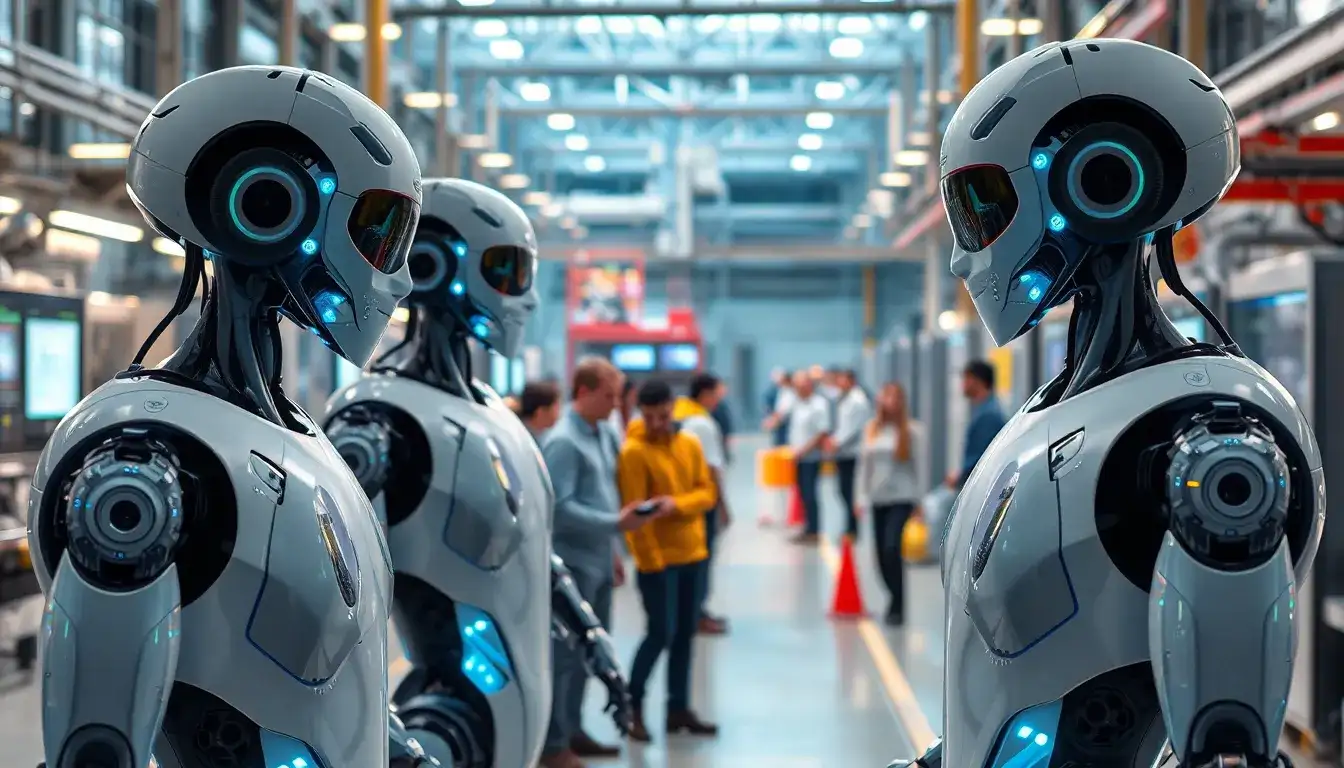
AI+ is making significant strides in the development of humanoid robots, marking a new era in artificial intelligence and robotics. The integration of AI with humanoid machines is set to redefine the landscape of technology, with implications for various industries.
This advancement is particularly notable as countries work towards establishing a robust infrastructure for AI and robotic production, with an emphasis on innovation and efficiency. By 2026, we can expect to see humanoid robots that are not only more advanced but also capable of performing complex tasks with greater precision.
Recently, AI has been employed to enhance the capabilities of humanoid robots, allowing them to interact more seamlessly with their environments. This includes advancements in machine learning, which enables these robots to learn from their experiences and improve their functionality over time.
Companies are increasingly investing in AI technologies to drive the development of humanoid robots, recognizing the potential for these machines to revolutionize industries such as healthcare, education, and customer service. The combination of AI and robotics is expected to yield significant improvements in productivity and efficiency, leading to a more competitive market.
As these technologies continue to evolve, we anticipate a future where humanoid robots can perform a wide range of tasks, from assisting in daily activities to providing support in complex scenarios. The integration of AI will allow these robots to understand and respond to human emotions, making them more effective in their roles.
Moreover, the ongoing research and development in this field are paving the way for breakthroughs that could transform our approach to technology. Innovations in AI-driven humanoid robots will not only enhance operational capabilities but also improve interactions with humans, creating a more intuitive experience.
The drive towards creating advanced humanoid robots reflects a broader trend in technological advancement, where AI plays a crucial role in shaping the future of industries. With ongoing investments and research, the potential applications for these robots are limitless, promising a future where they are an integral part of our daily lives.
In conclusion, as AI technology continues to evolve and integrate with humanoid robotics, we are on the brink of a transformation that could redefine how we interact with machines and the world around us. The future holds exciting possibilities for the development and application of AI-powered humanoid robots.
Original article by NenPower, If reposted, please credit the source: https://nenpower.com/blog/ai-integrated-humanoid-robots-set-to-revolutionize-future-industries/

