

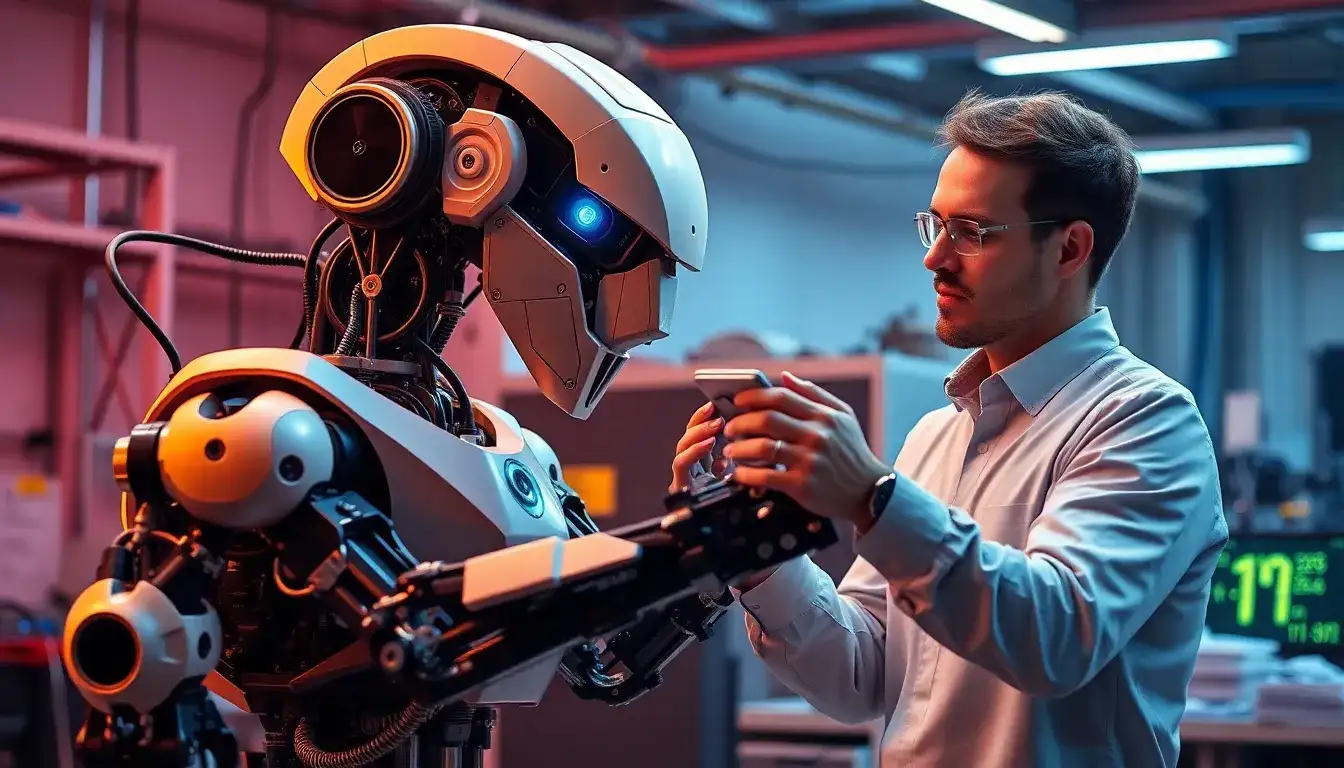
Science Robotics recently showcased several advancements in motion intelligence for autonomous robots, emphasizing the significance of transferring skills to enhance their functionality. As robotics becomes more integrated into daily life, the challenge is to enable expert users to quickly teach new skills to robots, making them a valuable asset.
The Learning from Demonstration (LfD) approach provides a straightforward solution. Users simply need to demonstrate a task, such as grasping, manipulating, or following a trajectory, allowing the robot to learn from that demonstration. However, a fundamental limitation of most LfD methods is that the learned skills are tightly coupled with the specific robot used during the demonstration. Variations in robot configurations or environments can lead to ineffective learning and require reevaluation or re-demonstration of skills.
Currently, research is exploring various strategies to address these challenges, including transfer learning, which can adapt skills learned from one robot to another. However, these methods often require extensive data and fine-tuning, making it difficult to ensure safety and reliability.
Despite the advancements, existing autonomous robots still exhibit significant limitations in terms of adaptability and flexibility. For example, when faced with unexpected changes in their environment or task requirements, they often fail to perform effectively. This indicates the need for further development in motion intelligence to improve their operational capabilities.
One proposed concept is “motion intelligence,” which emphasizes the ability of robots to learn and adapt their skills across different configurations and scenarios. This involves programming the robot to understand and navigate variations in its environment, thereby enhancing its versatility and functionality.
The ongoing research aims to create a framework that allows robots to operate effectively in diverse settings while maintaining high levels of safety and reliability. The goal is to develop a new paradigm of motion learning that makes robots not only capable of performing tasks but also adaptable to changing conditions and user requirements.
In summary, while significant progress has been made in the field of robotics, the journey towards fully autonomous robots capable of learning from their environments and users continues. Future work will focus on enhancing the adaptability and reliability of robots, paving the way for more widespread use in various sectors.
Original article by NenPower, If reposted, please credit the source: https://nenpower.com/blog/advancements-in-motion-intelligence-for-robot-skill-transfer-demonstrated-by-science-robotics/

