

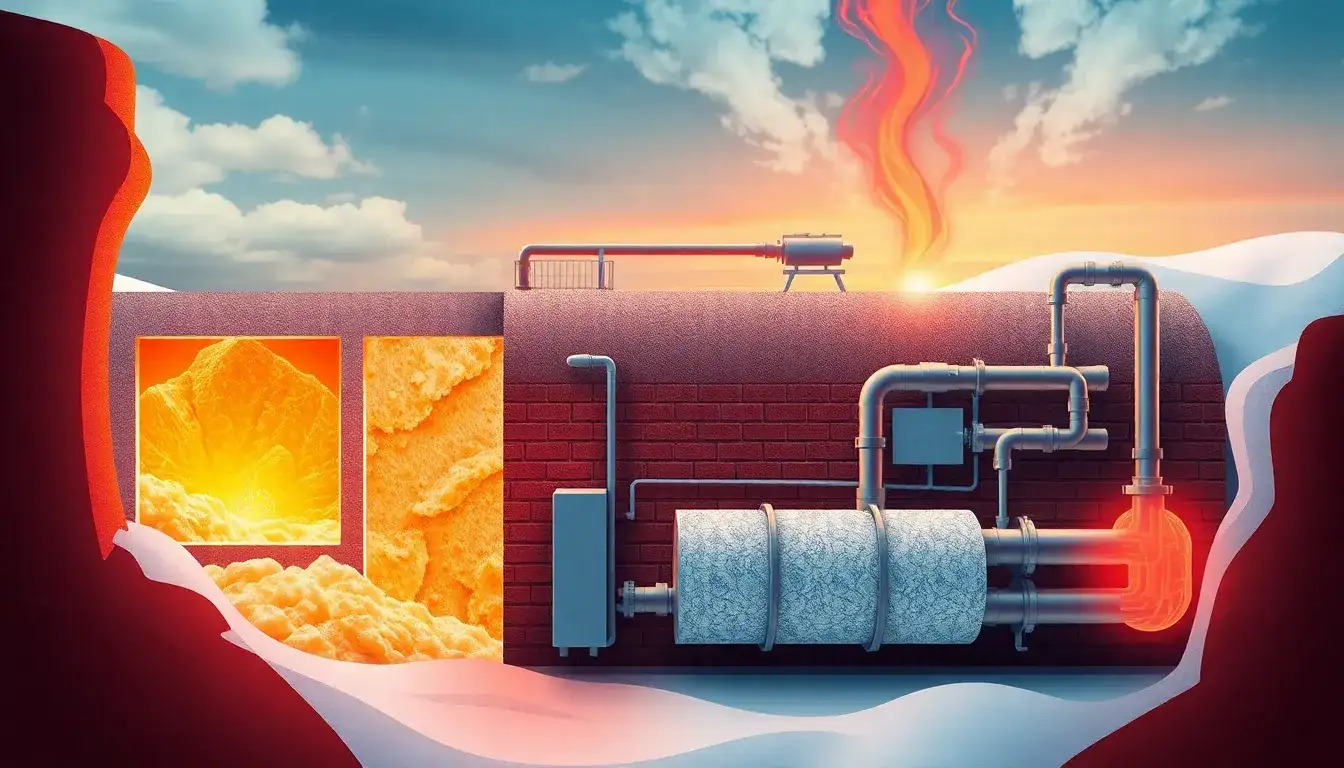
Common materials used for storing heat in Compressed Air Energy Storage (CAES) systems primarily include solids and fluids capable of sensible heat storage, as well as phase change materials in some designs.
Typical Heat Storage Materials in CAES
- Solids: Concrete, stone, ceramic, and natural rock materials are commonly used due to their good heat capacity and thermal stability. Packed beds of these materials are often utilized in adiabatic CAES systems as thermal storage units, efficiently capturing the heat generated during air compression and releasing it during expansion.
- Fluids: Hot oils (which can be heated up to around 300 °C) and molten salt solutions (which can reach temperatures up to about 600 °C) are used as fluids for storing thermal energy because of their high heat capacity and ability to store heat at high temperatures.
- Water: Hot water is another option, with an approximate storage efficiency of 65%, though it is less common for very high-temperature applications compared to molten salts or hot oils.
- Phase Change Materials (PCMs): Some CAES designs explore using phase change materials for thermal energy storage to achieve higher energy density and better control over thermal exchange processes, though detailed specifics depend on the system design and temperature ranges.
Storage Medium Selection Factors
The choice of a heat storage material depends on several criteria including:
- The operational temperature range of the storage medium.
- Compatibility with heat exchange fluids and system components.
- Thermal energy loss rates during storage.
- Cost, availability, and longevity of the storage medium and containment system.
Summary
| Material Type | Examples | Typical Temperature Range | Characteristics |
|---|---|---|---|
| Solid | Concrete, stone, ceramic, rock | Ambient to several hundred °C | Good thermal stability, inexpensive, robust |
| Fluid | Hot oil, molten salt | Hot oil ~300 °C, Molten salt ~600 °C | High heat capacity, suitable for high-temp storage |
| Water | Hot water | Lower temperatures (~100 °C) | Moderate efficiency, lower temperature limit |
| Phase Change Materials | Various PCMs | Depends on PCM | High energy density, phase transition storage |
These materials help improve the efficiency of CAES by capturing and reusing the heat generated during the compression phase, allowing adiabatic or near-adiabatic operation modes to significantly increase round-trip efficiency, often reaching around 70% or more in advanced systems.
Thus, concrete, stone, hot oil, molten salts, and sometimes phase change materials form the core thermal energy storage mediums in current and experimental CAES systems.
Original article by NenPower, If reposted, please credit the source: https://nenpower.com/blog/what-materials-are-commonly-used-for-storing-heat-in-caes-systems/

