

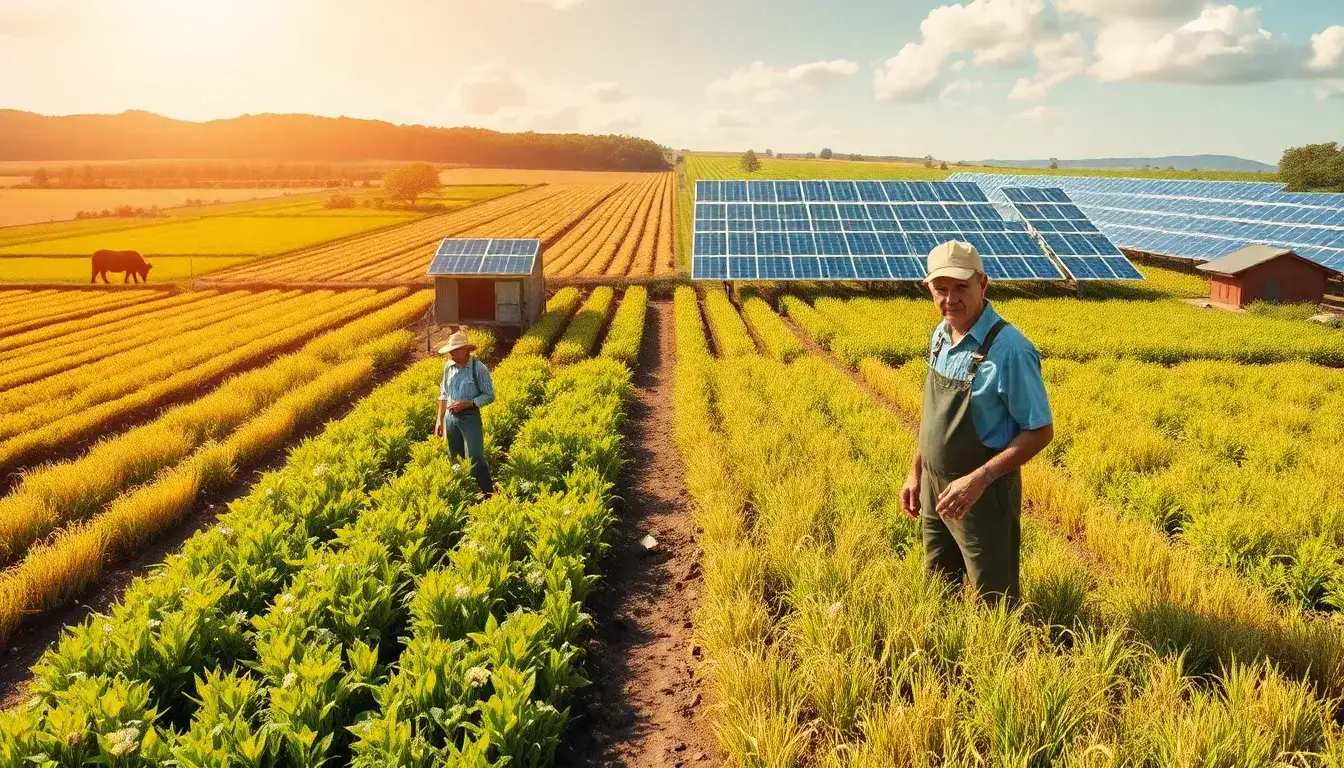
Farmers face several significant challenges when adopting agrivoltaic systems, which combine solar photovoltaic (PV) panels with agricultural production:
Economic and Design Challenges
- Higher Installation Costs: Agrivoltaic systems often cost more to install than traditional large-scale solar projects because they may require elevated panel mounting or wider panel spacing to accommodate farming activities, leading to higher material and construction expenses.
- Specialized Design Expertise Needed: Many solar developers lack experience with agrivoltaic system design, resulting in additional time and costs to design or subcontract specialized expertise for these hybrid systems.
Agricultural and Land Use Challenges
- Reduction in Cultivable Land: Some agrivoltaic configurations, especially vertical systems, occupy ground space that could otherwise be used for crops, effectively reducing the total area available for cultivation.
- Difficulty Using Agricultural Machinery: Panels installed close to the ground or in dense rows can hinder access and operation of farm machinery, complicating routine crop management and cultivation.
- Challenges in Panel Height and Crop Compatibility: Vertical or low-height panel installations may not optimize solar capture and can limit the types of crops that can be grown underneath. Elevating panels (e.g., as canopies or greenhouse roofs) improves sunlight but increases costs.
Environmental and Climatic Considerations
- Microclimate Impacts: Agrivoltaic systems alter microclimates, potentially affecting crop yields positively or negatively, and there is uncertainty about their full impact on biodiversity and ecosystem services on farmland.
- Lack of Crop Protection in Some Designs: Vertical agrivoltaics do not protect crops from extreme weather events such as hail, strong winds, or heavy rain, which may limit their suitability in regions prone to such conditions.
Broader Considerations
- Long-Term Economic Return: Wider spacing between panels to allow crop growth reduces energy density and potentially lowers the return on investment for the solar component, presenting an economic trade-off for farmers and developers.
- Integration Complexity: Combining solar infrastructure with active farming requires new management practices and integration strategies, which some farmers and developers find challenging to implement effectively.
In summary, the primary challenges for farmers adopting agrivoltaics include higher initial installation costs, design complexity, loss of cultivable land or difficulty using machinery, and environmental concerns such as microclimate changes and insufficient crop protection depending on system type. Addressing these issues involves careful system design, economic analysis, and adaptation of farming practices to optimize the dual use of land.
Original article by NenPower, If reposted, please credit the source: https://nenpower.com/blog/what-challenges-do-farmers-face-when-adopting-agrivoltaic-systems/

