

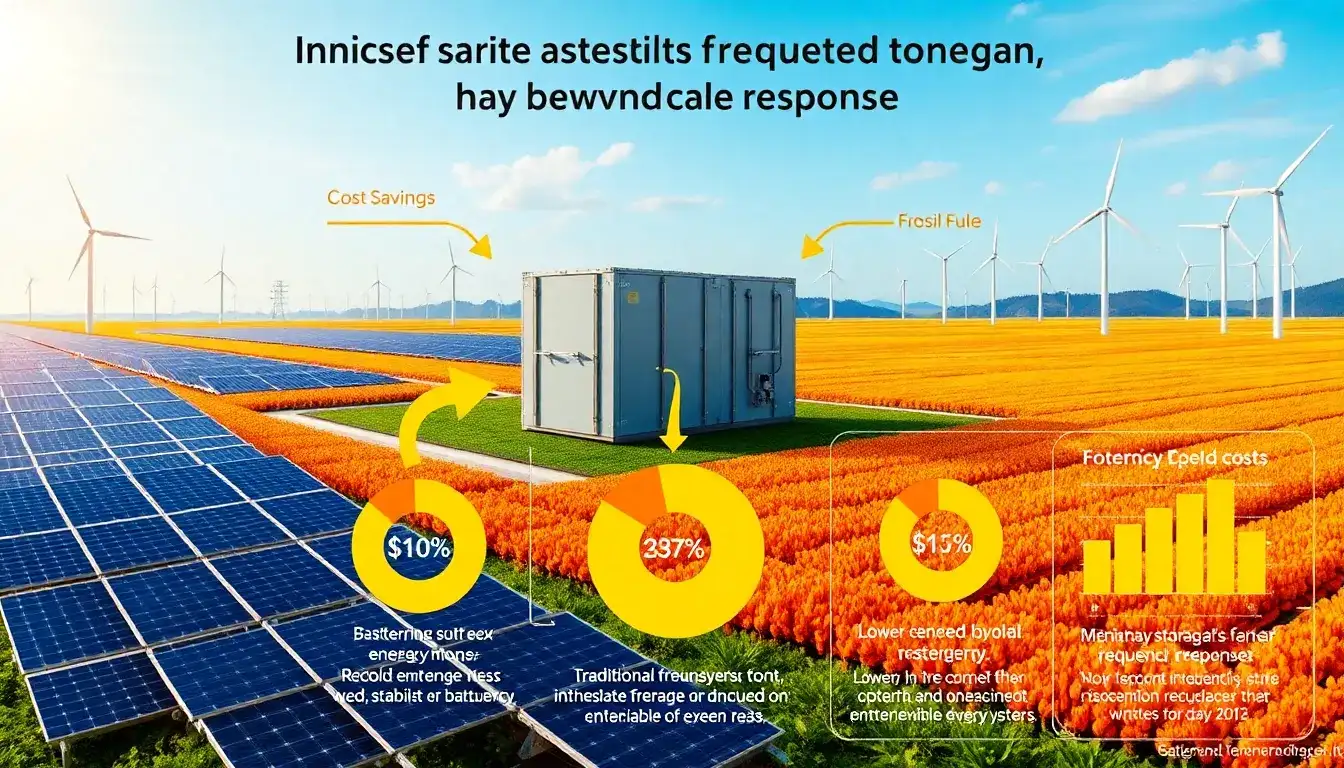
Cost Benefits of Utility-Scale Batteries for Frequency Response
- Reduced Fuel Costs and Increased Efficiency:
- Traditional thermal power plants often operate inefficiently to provide frequency control by being on standby or running at lower capacities. This results in higher fuel costs.
- Utility-scale batteries can rapidly adjust to grid conditions within milliseconds, which reduces the need for inefficient operation of traditional plants.
- Minimized Grid Congestion Costs:
- By quickly adjusting power levels, battery storage systems can prevent grid congestion, which can save costs associated with managing congestion.
- Potential Revenue Streams:
- Utility-scale batteries can capture ancillary services revenue by providing frequency response, dynamic response, and other grid stability services.
- They enable operators to participate in energy markets, offering services such as frequency regulation, which is a major revenue source for battery storage systems.
- Improved Grid Resiliency and Reduced Outages:
- By stabilizing grid frequency, batteries help prevent power outages caused by frequency deviations, which can lead to costly repairs and service interruptions.
- Optimized Energy Dispatch:
- Batteries allow for optimized energy dispatch by absorbing excess energy during low-demand periods and releasing it during high-demand times, reducing peak pricing pressures and optimizing energy costs.
Overall, the use of utility-scale batteries for frequency response offers both direct financial benefits and indirect savings through improved grid efficiency and reliability.
Original article by NenPower, If reposted, please credit the source: https://nenpower.com/blog/what-are-the-cost-benefits-of-using-utility-scale-batteries-for-frequency-response/

