

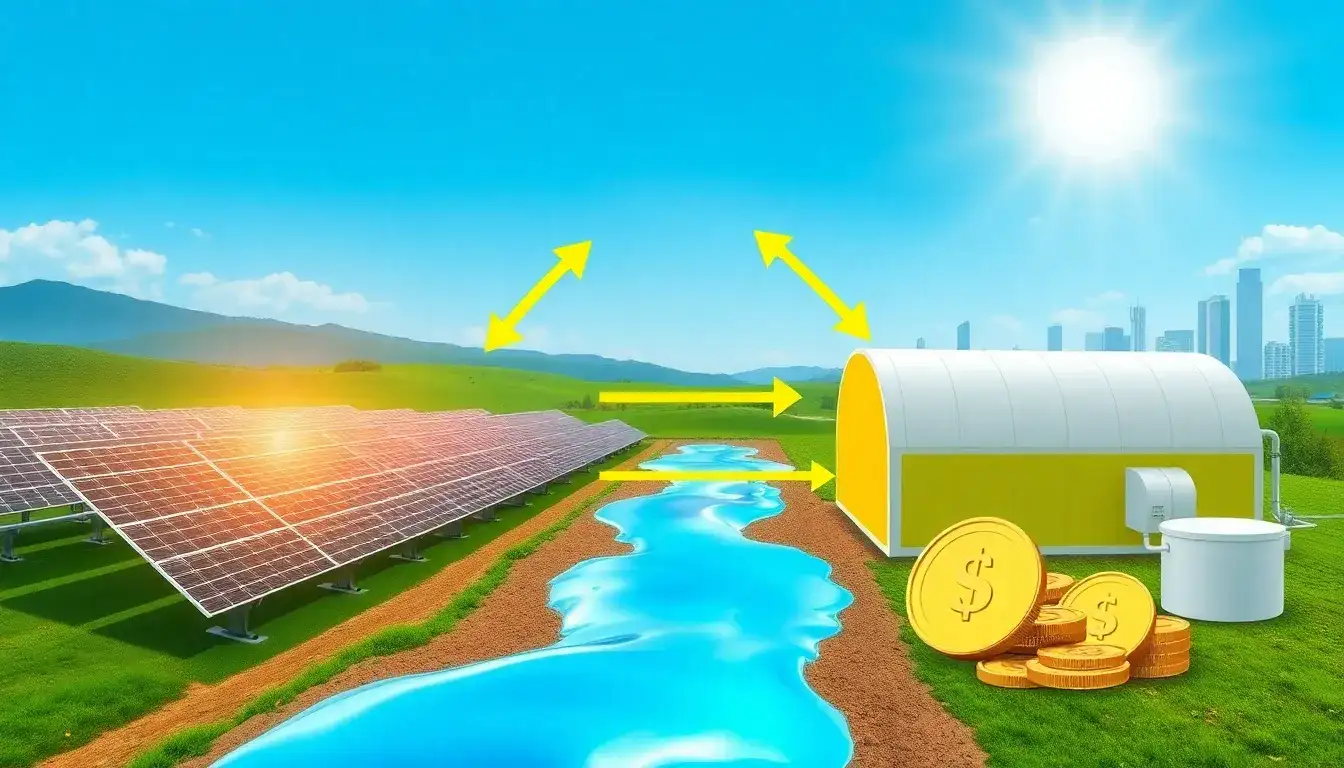
Integrating thermal energy storage (TES) with solar energy offers several cost benefits, making it a viable and efficient approach for energy storage and grid management:
Cost Benefits of Thermal Energy Storage with Solar
1. Lower Costs Compared to Electrical Storage
- Cost Efficiency: Storing thermal energy is generally less complicated and less expensive than storing electrical energy. This is because TES systems do not require the conversion of electricity to heat and vice versa, thereby reducing energy losses associated with such conversions.
- High-Energy Density and Availability: TES systems can store large amounts of thermal energy in a relatively small volume over extended periods, which is cost-effective compared to electrical storage methods like batteries.
2. Peak Shaving and Demand Response
- Efficient Energy Management: TES allows for efficient peak shaving by storing heat produced during periods of low demand for use during peak hours. This strategy reduces the reliance on conventional energy sources during peak times, thereby lowering energy costs.
- Renewable Energy Integration: TES can be integrated with renewable energy sources like solar thermal systems to capture and store excess energy for later use, ensuring a consistent supply of power during low production periods.
3. Increased Resilience and Flexibility
- Reliability: By providing a buffer against variable solar energy production, TES enhances grid resilience and flexibility. This is crucial for maintaining a reliable power supply even during weather-related disruptions.
- Multi-Use Capabilities: Thermal energy can be converted back to electricity if needed, offering flexibility in how stored energy is utilized. This capability ensures that TES can support both heat and electricity demands.
4. Reduced Infrastructure Need
- Reduced Grid Stress: By allowing utilities to manage energy storage more effectively, TES reduces stress on the grid, minimizing the need for additional infrastructure during peak demand periods.
- Long Duration Storage: The ability of TES to store energy for extended periods can support long-duration energy needs without requiring extensive grid upgrades.
5. Environmental and Operational Benefits
- Low Environmental Impact: TES has a minor environmental footprint since it uses readily available materials and doesn’t rely on geo-politically sensitive raw materials. It also doesn’t require large land areas for deployment.
- Operational Efficiency: TES systems are generally easier to manage and maintain than other forms of energy storage, such as pumped hydro storage. They also have a longer lifespan than batteries, reducing maintenance costs over time.
Overall, integrating thermal energy storage with solar energy enhances the economic viability of renewable energy systems by providing efficient, cost-effective, and reliable energy storage solutions.
Original article by NenPower, If reposted, please credit the source: https://nenpower.com/blog/what-are-the-cost-benefits-of-integrating-thermal-energy-storage-with-solar-energy/

