

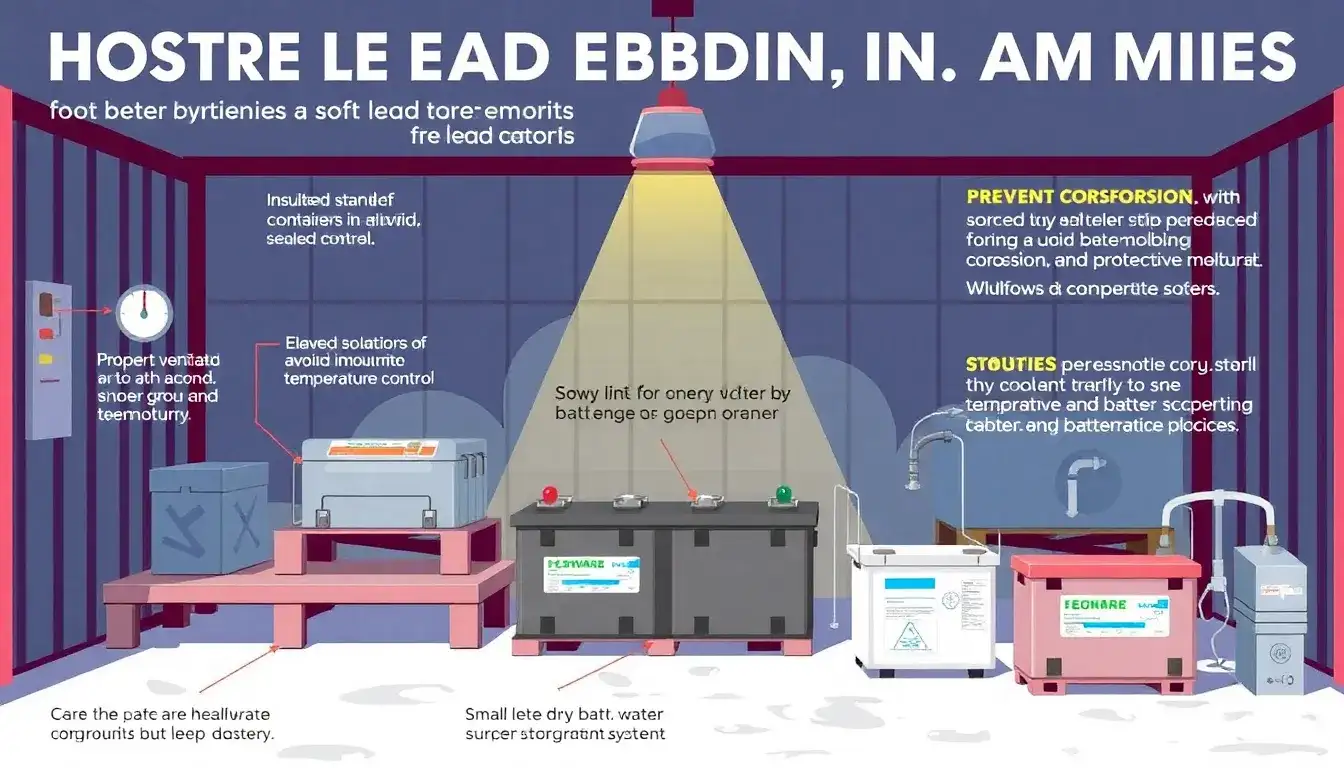
Storing lead batteries in hot climates requires careful management to prevent damage and extend their lifespan. Here are the best practices:
Best Practices for Storing Lead Batteries in Hot Climates
1. Temperature Management
- Cool Storage Location: Store batteries in a well-ventilated, cool location. If possible, use climate-controlled areas or keep them under a garage or shaded area to reduce direct sun exposure.
- Avoid High Temperatures: For every 8°C (about 15°F) rise above 25°C (77°F), the battery’s design life may halve.
2. Proper Charging and Storage Conditions
- Charge Before Storage: Store lead-acid batteries at a full charge to prevent sulfation, which reduces capacity.
- Avoid Direct Charging in Extreme Heat: Allow batteries to reach room temperature before charging to avoid further stress.
3. Battery Type Selection
- Use AGM or Specialized Batteries: Absorbed Glass Mat (AGM) batteries are more resistant to extreme temperatures and can be a good choice for hot climates. Consider using specialized batteries designed for high temperatures, such as Crown Battery’s Severe Duty Batteries.
4. Maintenance and Monitoring
- Regular Inspections: Regularly inspect batteries for damage or wear, especially during hot weather.
- Monitor State of Charge: Use a battery management system to monitor state of charge and prevent deep discharges.
By following these practices, you can significantly extend the lifespan of lead batteries in hot climates and ensure they perform optimally.
Original article by NenPower, If reposted, please credit the source: https://nenpower.com/blog/what-are-the-best-practices-for-storing-lead-batteries-in-hot-climates/

