

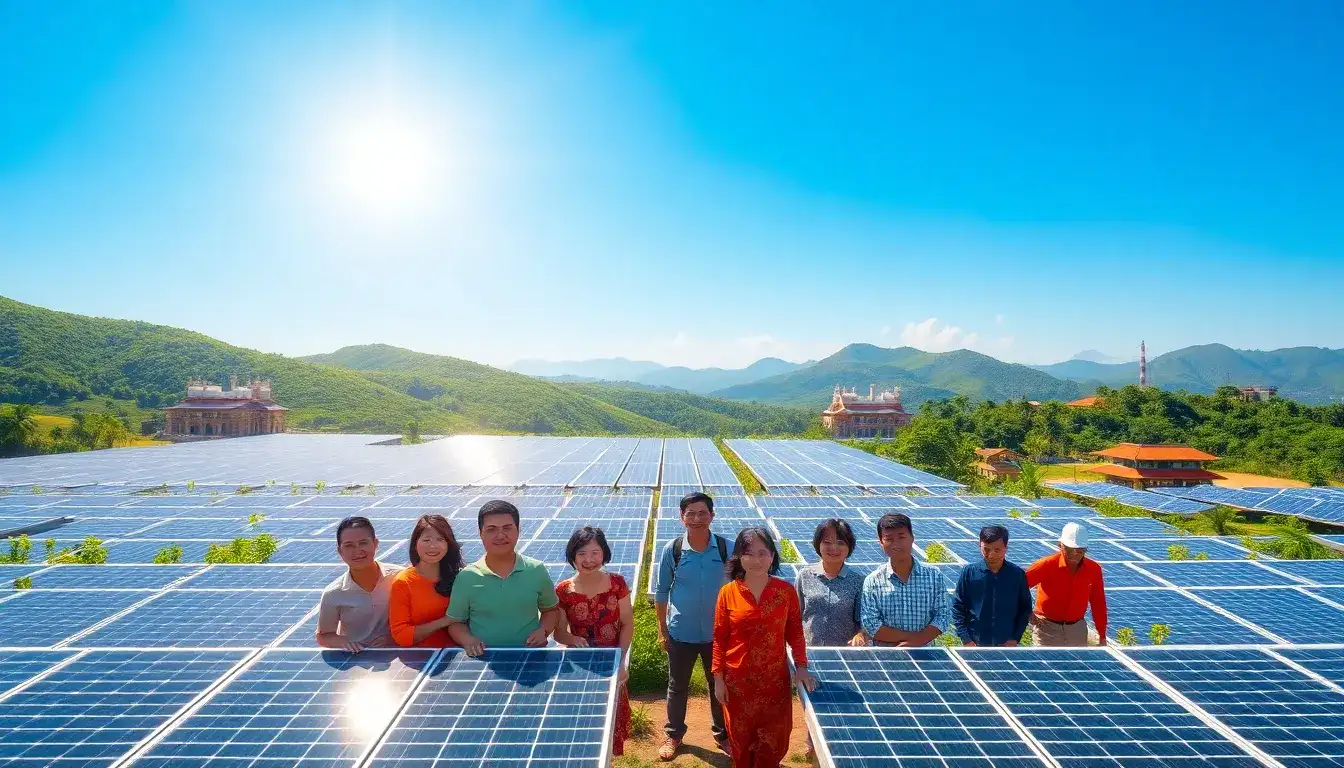
HANOI – Vietnam is updating its energy plans to prioritize the development of large solar farms while reducing its dependence on coal and natural gas. The country’s rapidly expanding economy now aims to derive 16% of its energy from solar sources, significantly increasing from its previous target of just 5%. A draft of the new policy, expected to be finalized in the upcoming weeks, has abandoned plans for offshore wind turbines in favor of enhancing onshore wind capacity, rooftop solar installations, and energy storage solutions.
The shift towards large solar farms comes as Vietnam faces a surge in electricity demand. The nation anticipates the need for over 211 gigawatts of energy by 2030, which is 40% more than previously estimated and exceeds the current total capacity of Germany. “This reflects both an overall increase in potential power demand by 2030 and the reality that LNG (liquefied natural gas) projects are not on track for completion by that time,” stated Giles Cooper, a partner at the international law firm Allens in Hanoi, specializing in energy policy.
Vietnam experienced rapid solar power expansion from 2018 to 2020, driven by supportive government policies that propelled it ahead of its regional neighbors and even some wealthier nations, such as the United Kingdom. However, the growth of new solar capacity stalled in 2020 when authorities recognized that the aging electricity grid was becoming overloaded, as power was only available during sunlight hours. “It was as if the market almost stopped,” remarked Dimitri Pescia from the Berlin-based think tank Agora Energiewende.
The use of coal, which contributes to greenhouse gas emissions, has surged, positioning Vietnam to become one of the world’s top five coal importers, overtaking Taiwan, according to the International Energy Agency. Similar to many other countries, Vietnam still needs to upgrade its outdated grid, which has struggled to keep pace with the rapid growth of clean energy generation. However, improvements have been made, and the country has gained experience in managing energy sources that are not always available, Cooper noted.
Last year, authorities permitted energy-intensive factories to purchase power directly from producers, aiming to alleviate pressure on the strained grid and assist major manufacturers like Samsung Electronics in meeting their climate targets. Unfortunately, this initiative was hampered by a lack of available land for clean energy projects near factories. Solar energy is regarded as the most promising technology to facilitate these direct purchases, according to Cooper.
Despite the push for clean energy, Vietnam is simultaneously increasing its use of coal. This is partly due to a decrease in hydropower capacity resulting from drought conditions and the need to meet rising demand as businesses relocate factories from China to Vietnam. Currently, Vietnam is Southeast Asia’s second-largest coal producer, following Indonesia. It imported 50 million tons of coal during the first three quarters of 2024, marking a 31% increase, according to government data. Pescia noted that Vietnam’s coal-fired power plants are relatively new, and operators have yet to recover their investments, suggesting that phasing out coal will take longer in the country.
Original article by NenPower, If reposted, please credit the source: https://nenpower.com/blog/vietnam-embraces-solar-energy-revolution-reducing-dependence-on-coal-and-gas/

