

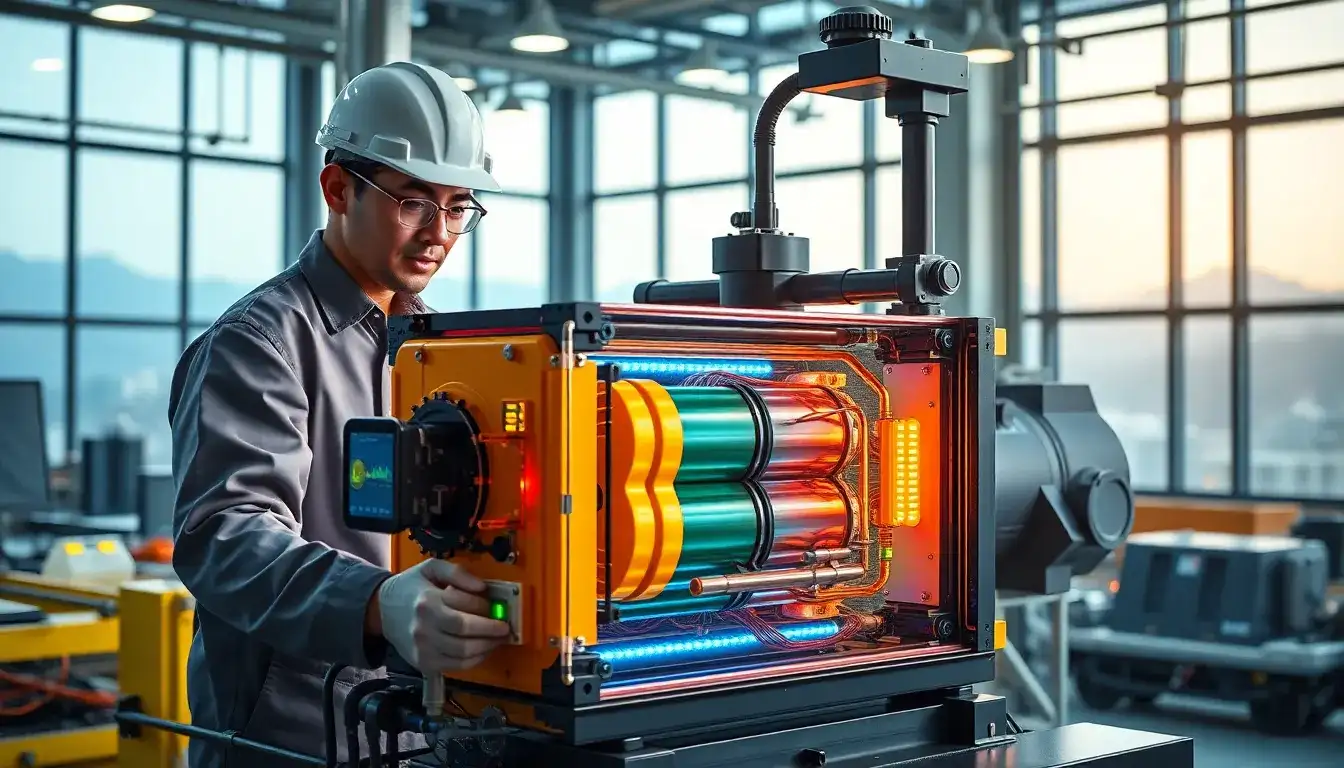
On May 24, 2025, a significant milestone was reached in the lithium battery energy storage sector when Panzhihua’s Yanbian County signed a contract with Zhengzhou Tianhui Vanadium Fusion and Starlink Energy for a short-flow process vanadium electrolyte production project. This project marks the establishment of the first large-scale vanadium electrolyte production line in the southwestern region of China. The total investment for the project is 1 billion yuan, with a planned annual production capacity of 80,000 cubic meters of vanadium electrolyte, potentially generating an annual output value of 3 billion yuan upon reaching full capacity. This development fills a significant gap in the southwestern region’s vanadium electrolyte preparation and energy storage system integration technology, effectively addressing the high costs previously faced by the vanadium battery industry in Sichuan due to reliance on externally sourced electrolytes.
As the “lifeblood” of all-vanadium flow batteries, vanadium electrolyte constitutes over 50% of the total cost of the battery. Panzhihua holds 11.6% of the world’s vanadium resource reserves, yet its previous electrolyte production capacity was only 3,000 cubic meters per year, which could not meet the demand of the locally planned 100MW/500MWh energy storage station. The new project will facilitate the transition of Sichuan’s vanadium resources from primary smelting to high-value-added energy storage materials, contributing to the creation of a complete industrial chain from “vanadium ore—electrolyte—energy storage station.”
Cost Reduction Revolution: Short-flow Process Rewrites the Economic Logic of Vanadium Batteries
The project employs a short-flow preparation technology that utilizes solvent extraction methods for efficient purification of vanadium electrolyte, achieving a vanadium recovery rate of 99.9% and reducing production costs by 30% compared to traditional methods. This technological breakthrough directly addresses the primary pain point of vanadium battery commercialization—high initial investment costs. Currently, the initial cost of all-vanadium flow battery energy storage systems is approximately 3.5-4 yuan/Wh, with electrolyte costs accounting for more than 50%. The new process can lower the comprehensive cost of energy storage systems to below 2.8 yuan/Wh, approaching the economic viability threshold of lithium battery storage.
Panzhihua is also pioneering an innovative electrolyte leasing model. By establishing China’s first vanadium-titanium metal storage company, businesses can adopt an “electrolyte bank” model, replacing one-time procurement costs with rental fees, thereby reducing initial investment for storage projects by 40%. This exploration of “resource financialization” provides a commercial pathway for Sichuan to achieve its goal of 3.2 million kilowatts of new energy storage capacity by 2025.
Emergence of Industrial Clusters: From “City of Vanadium and Titanium” to “China’s Vanadium Battery Capital”
The establishment of this project accelerates Panzhihua’s construction of a dual-driven vanadium battery industrial cluster, integrating “equipment manufacturing + materials”:
- Upstream Resource Integration: Leveraging Panzhihua Iron and Steel Group’s annual production capacity of high-purity vanadium pentoxide to ensure raw material supply for electrolyte production;
- Midstream Technological Breakthroughs: Major companies like Dalian Rongke and State Power Investment Corporation are establishing local production capabilities for core components such as stacks, membranes, and electrodes;
- Downstream Application Demonstration: Once the 100MW/500MWh all-vanadium flow energy storage station is completed, it will be able to store 500,000 kWh of electricity, providing 4.5 hours of power support for clean energy peak shaving.
By 2030, Panzhihua plans to establish a 4GWh vanadium battery capacity, capturing 35% of the national market, and driving the scale of the vanadium energy storage industry to exceed 28 billion yuan. This goal is supported by Sichuan’s integrated energy strategy, which includes “water, wind, solar, hydrogen, and storage”—the province aims to install 3.2 million kilowatts of new energy storage by 2025, with vanadium batteries taking the lead due to their long-duration storage capabilities.
Regional Economic Restructuring: The “Energy Leap” of Resource-Based Cities in the West
Panzhihua’s transformation reflects a new development logic for resource-based cities in the West:
- Industrial Upgrade: The value addition of vanadium resources has increased tenfold, rising from traditional steel additives (20,000 yuan/ton) to energy storage materials (200,000 yuan/ton);
- Employment Restructuring: The project is expected to create 500 high-end R&D positions and 2,000 technical jobs, shifting the local workforce from “miners” to “engineers”;
- Ecological Synergy: The complementary construction of wind and solar power installations reaching 7.07 million kilowatts effectively addresses the volatility of renewable energy, increasing the clean energy proportion to 91%.
This shift has also attracted attention from the capital markets—on May 28, 2025, the market capitalization of the A-share vanadium battery sector surpassed 521.3 billion yuan, with leading companies like Shanghai Electric and Longbai Group receiving increased investments from institutions.
Future Challenges: Balancing Technological Iteration with Overcapacity
Despite promising prospects, the industry faces two major challenges:
- Technological Risks: The energy density of all-vanadium flow batteries (30-50 Wh/kg) remains significantly lower than that of lithium batteries (150-200 Wh/kg), necessitating ongoing efforts to enhance electrolyte concentration and optimize stack efficiency;
- Capacity Bubble: The national planned capacity for vanadium electrolyte has already exceeded 500,000 cubic meters. If demand growth fails to meet expectations, overcapacity may emerge after 2026.
In response, Panzhihua has established over 100 innovation platforms, including a national key laboratory for comprehensive utilization of vanadium-titanium resources, and is exploring the establishment of an electrolyte recycling system, aiming for a 30% replacement rate of reclaimed electrolyte by 2030.
Original article by NenPower, If reposted, please credit the source: https://nenpower.com/blog/revolutionizing-vanadium-flow-battery-production-a-new-era-for-energy-storage-in-southwest-china/

