

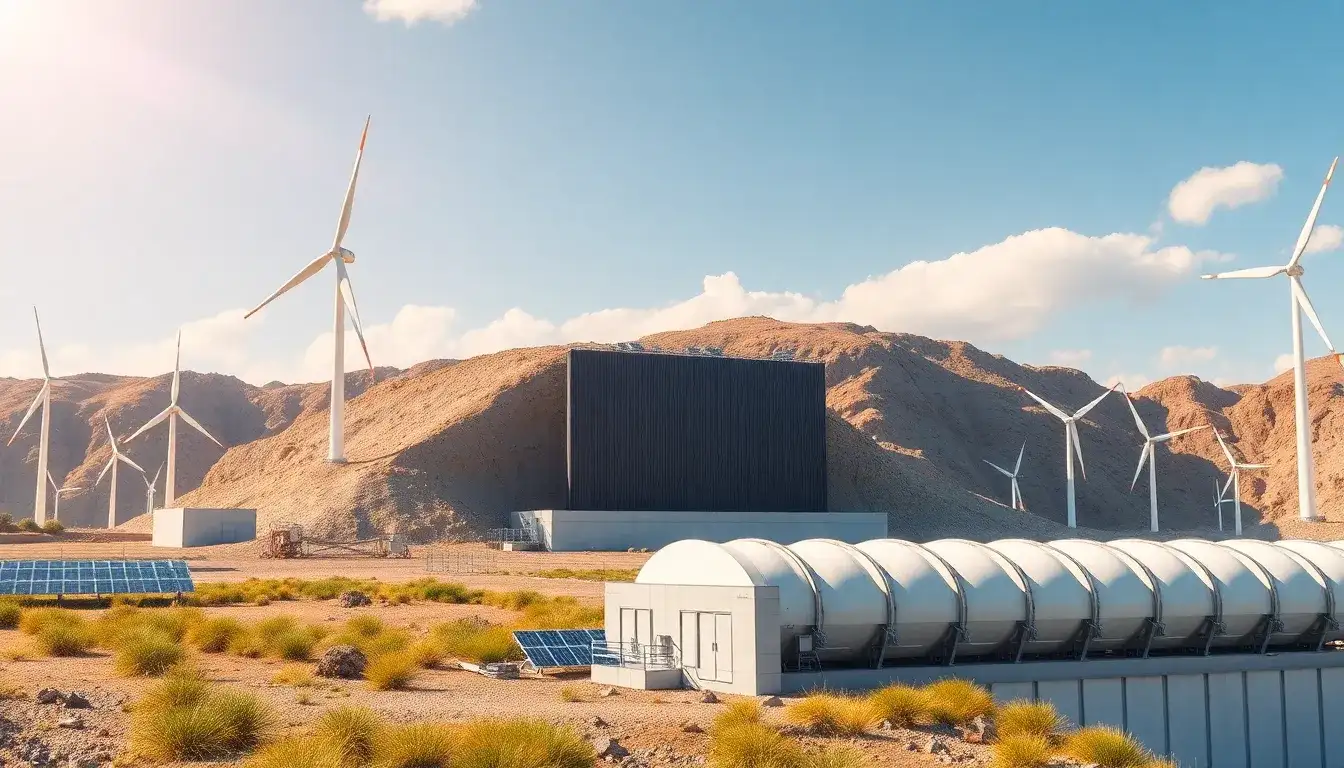
New Energy Storage Capacity Surpasses Pumped Hydro Storage! With the support of favorable policies, new energy storage is experiencing explosive growth, although reliance on lithium resources poses the greatest challenge.
In recent years, China's power industry has made significant strides towards green and low-carbon development. By the end of 2024, the installed capacity of new energy sources is set to surpass that of thermal power for the first time. However, the intermittent nature of renewable energy generation presents challenges to grid stability. In this context, new energy storage technologies, which offer flexibility and rapid responsiveness, are becoming essential for enhancing the resilience of the power system. This article outlines key policies in the new energy storage sector, analyzes the current development status, and identifies the opportunities and challenges facing the industry.

<h2>Policy Landscape</h2>
Since 2021, a series of supportive policies have been introduced to foster the growth of new energy storage. These policies set clear development goals, establish the independent market status of new energy storage, and optimize the layout across power generation, grid, and user sides. As a result, a clear direction has been established for the sector. It is expected that future policies will provide further specific guidance and institutional support for various sub-sectors and key aspects of new energy storage.

The policy framework for energy storage in China dates back to 2017, when the government issued important documents such as the <i>Guiding Opinions on Promoting the Development of Energy Storage Technologies and Industries</i>. These documents laid the groundwork for the advancement and industrialization of energy storage technologies. Between 2021 and 2023, the sector entered a rapid development phase, with policies addressing technology innovation, pilot demonstrations, large-scale development, market mechanisms, and policy guarantees. By 2024, over 700 policies related to energy storage have been published, covering development plans, electricity pricing reforms, and demonstration applications, accelerating the high-quality development of the energy storage industry.

In 2024, the phrase "develop new energy storage" was included in the government work report for the first time, underscoring its importance. The formal release of the <i>Energy Law of the People's Republic of China</i> promotes high-quality development in new energy storage. Additionally, new energy storage has been recognized as a national advanced manufacturing cluster, suggesting that its industrialization will gain momentum under favorable policies.

<h2>Current Development Status</h2>
In recent years, new energy storage in China has experienced rapid growth, with the installed capacity surpassing that of pumped hydro storage by the end of 2024. Geographically, new energy storage projects are primarily located in regions rich in renewable resources and high electricity demand. Major developments have occurred in provinces such as Inner Mongolia and Xinjiang, while provinces like Shandong and Jiangsu also show significant capacity.

<h3>1. Significant Growth in Installed Capacity</h3>
Data from the National Energy Administration indicates that by the end of 2024, the cumulative installed capacity of new energy storage projects reached 73.76 million kilowatts, marking a 130% increase from the end of 2023. The average storage duration is approximately 2.3 hours.

<h3>2. Regional Distribution</h3>
The distribution of new energy storage capacity is closely linked to the availability of renewable resources and storage needs. By the end of 2024, the top five provinces in new energy storage capacity account for about 33% of China's total renewable energy capacity, with Inner Mongolia and Xinjiang leading in various metrics.

<h3>3. Rapid Development in North and Northwest Regions</h3>
Most new energy storage projects are concentrated in North China, Northwest, and East China, accounting for over 72% of the total installed capacity. North China's dependence on traditional energy sources has driven the rapid development of new energy storage in response to load balancing needs.

<h3>4. Accelerated Establishment of Large-Scale Storage Stations</h3>
Large new energy storage stations are increasingly being established, with 62.3% of projects having a capacity of 100,000 kilowatts or more by the end of 2024. This trend aligns with the demands of large renewable energy bases.

<h3>5. Optimized Storage Duration Structure</h3>
The demand for long-duration energy storage has increased significantly as new energy capacity surpasses that of thermal power. By the end of 2024, projects with a duration of four hours or more accounted for 15.4% of installed capacity, a notable increase from the previous year.

<h2>Opportunities and Challenges</h2>
The new energy storage sector in China is at a pivotal moment, transitioning from policy-driven growth to market-oriented development. While there are numerous opportunities, challenges persist. The increasing demand for renewable energy consumption and grid balancing, coupled with technical advancements and cost reductions, are driving growth. However, reliance on lithium resources, safety risks, slow industrialization of non-lithium technologies, imperfect revenue mechanisms, and a complex global trade environment present significant challenges for the sector.

<h3>1. Strategic Opportunities</h3>
The ongoing policy support and expanding market demand are creating new momentum for development. With the growing scale of renewable energy installations, the demand for energy storage solutions is strong. The decreasing costs of commercial storage systems further enhance the potential for user-side storage.

<h3>2. Real Challenges</h3>
The high dependency on lithium resources for current storage technologies poses a risk, as domestic self-sufficiency is low and imports are needed. Additionally, safety concerns regarding lithium batteries require investment in technology and risk management systems. The slow industrialization of non-lithium technologies and various market issues including low utilizations of some projects need addressing to ensure healthy development in the sector.
Original article by NenPower, If reposted, please credit the source: https://nenpower.com/blog/new-energy-storage-capacity-surpasses-pumped-hydro-for-the-first-time-explosive-growth-driven-by-policy-benefits-and-challenges-of-lithium-dependency/

