

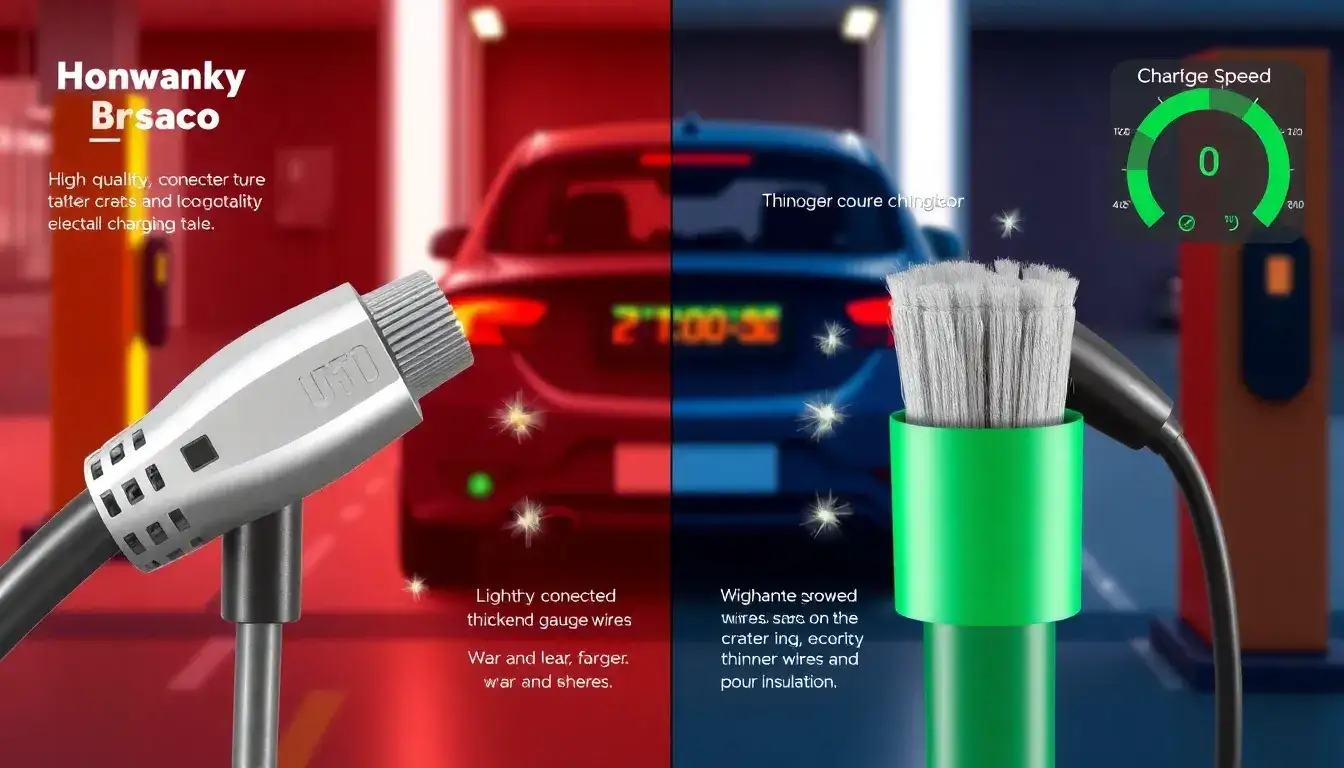
The quality of charging cables significantly impacts the efficiency of electric vehicle (EV) charging primarily due to factors related to electrical resistance, heat generation, and the cable’s ability to handle high power transmission.
How Cable Quality Affects Charging Efficiency
- Electrical Resistance and Heat Generation: Lower quality or longer cables tend to have higher electrical resistance. Higher resistance causes more heat to be generated when current flows through the cable, which leads to energy loss during charging. This means that some of the electricity from the charger is dissipated as heat rather than being used to charge the EV battery, reducing overall charging efficiency.
- Charging Speed: The cable quality influences the charging speed since cables with inadequate conductive ability or smaller cross-sectional area cannot stably transmit high power electricity required for fast charging. High-quality cables with proper materials and sufficient thickness enable faster charging by reducing resistance and associated losses.
- Durability and Safety: High-quality cables tend to be more durable and better designed to withstand frequent use, high currents, and temperature fluctuations. Poor quality or damaged cables can overheat or fail, leading to slower charging, increased energy losses, and safety hazards such as electric shocks or fires.
- Cable Thickness and Length: Thicker cables reduce resistance and heat generation, improving efficiency. Using cables with thickness and current-carrying capacity matched or exceeding the intended charging power (e.g., for 22 kW charging rather than 11 kW) lowers energy losses. Similarly, shorter cables reduce power loss compared to longer ones due to less resistance.
Summary
| Factor | Impact on EV Charging Efficiency |
|---|---|
| Cable Quality (Material) | High-quality materials reduce electrical resistance and heat loss, improving efficiency. |
| Cable Thickness | Thicker cables carry higher current with less resistance, reducing heat and energy loss. |
| Cable Length | Longer cables have higher resistance, causing more energy loss; optimal length is preferred. |
| Durability & Maintenance | Well-maintained cables ensure consistent efficiency and safety, preventing energy loss from damage. |
| Power Handling Capacity | Cables designed for higher power (fast charging) reduce losses compared to under-rated cables. |
In essence, using a high-quality, appropriately thick, and well-maintained charging cable designed for the required charging power is crucial to maximizing charging efficiency, reducing energy loss, speeding up charging times, and maintaining safety during EV charging.
Original article by NenPower, If reposted, please credit the source: https://nenpower.com/blog/how-does-the-quality-of-charging-cables-impact-ev-charging-efficiency/

