

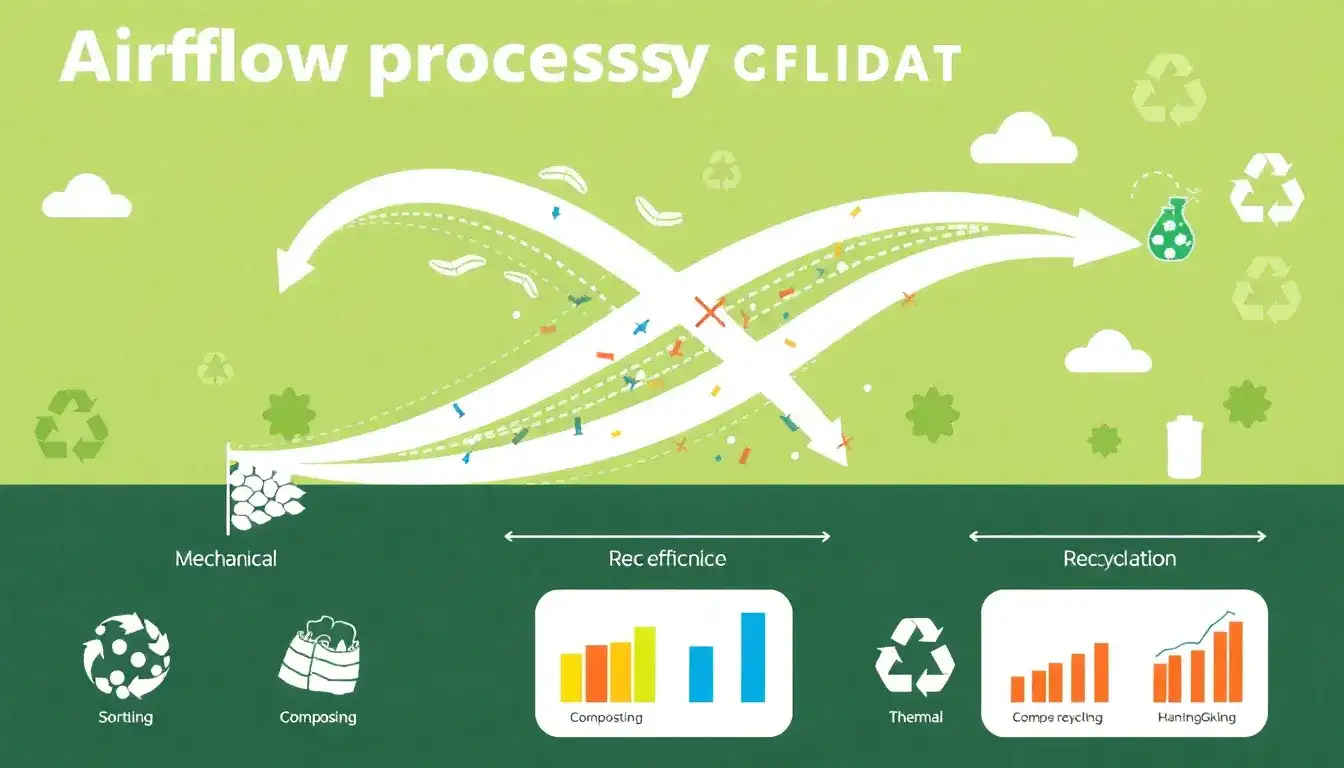
When comparing airflow processing in bulk material handling systems to other recycling methods in terms of efficiency, several factors come into play:
1. Airflow Processing in Bulk Material Handling
- Efficiency: Airflow plays a crucial role in the efficient transport, handling, and processing of bulk materials by ensuring effective dust collection, ventilation, and cooling.
- Energy Efficiency: Optimizing airflow can significantly reduce energy costs by minimizing resistance in ducts and leveraging technologies like advanced filtration and heat recovery.
- Maintenance: Regular maintenance, such as cleaning and replacing filters, is essential to maintain system efficiency.
2. Other Recycling Methods
- Mechanical Sorting: This method involves physical separation based on properties like size, shape, and density. It is efficient for certain materials but may not be as effective for fine or similar-sized particles.
- Hydrodynamic Separation: Uses water to separate materials based on density differences. It is efficient for materials with distinct density differences but requires significant water resources.
- Electrostatic Separation: Separates materials based on electrostatic charges. It is highly efficient for certain plastics and organic materials but requires specialized equipment.
Comparison of Efficiency
| Method | Efficiency Features |
|---|---|
| Airflow Processing | Efficient for handling bulk materials with low energy costs when optimized; requires advanced filtration and regular maintenance. |
| Mechanical Sorting | Generally efficient for separating materials by physical properties; less effective for fine particles. |
| Hydrodynamic Separation | Highly efficient for materials with distinct densities; requires significant water resources. |
| Electrostatic Separation | Highly efficient for specific materials; requires specialized equipment. |
In conclusion, airflow processing is highly efficient for bulk material handling when optimized with proper maintenance and technology. However, its comparison to other recycling methods depends on the specific materials being processed and the goals of the recycling operation. For instance, electrostatic separation is more efficient for certain plastic types, while hydrodynamic separation excels with materials of distinct densities.
Original article by NenPower, If reposted, please credit the source: https://nenpower.com/blog/how-does-airflow-processing-compare-to-other-recycling-methods-in-terms-of-efficiency/

