

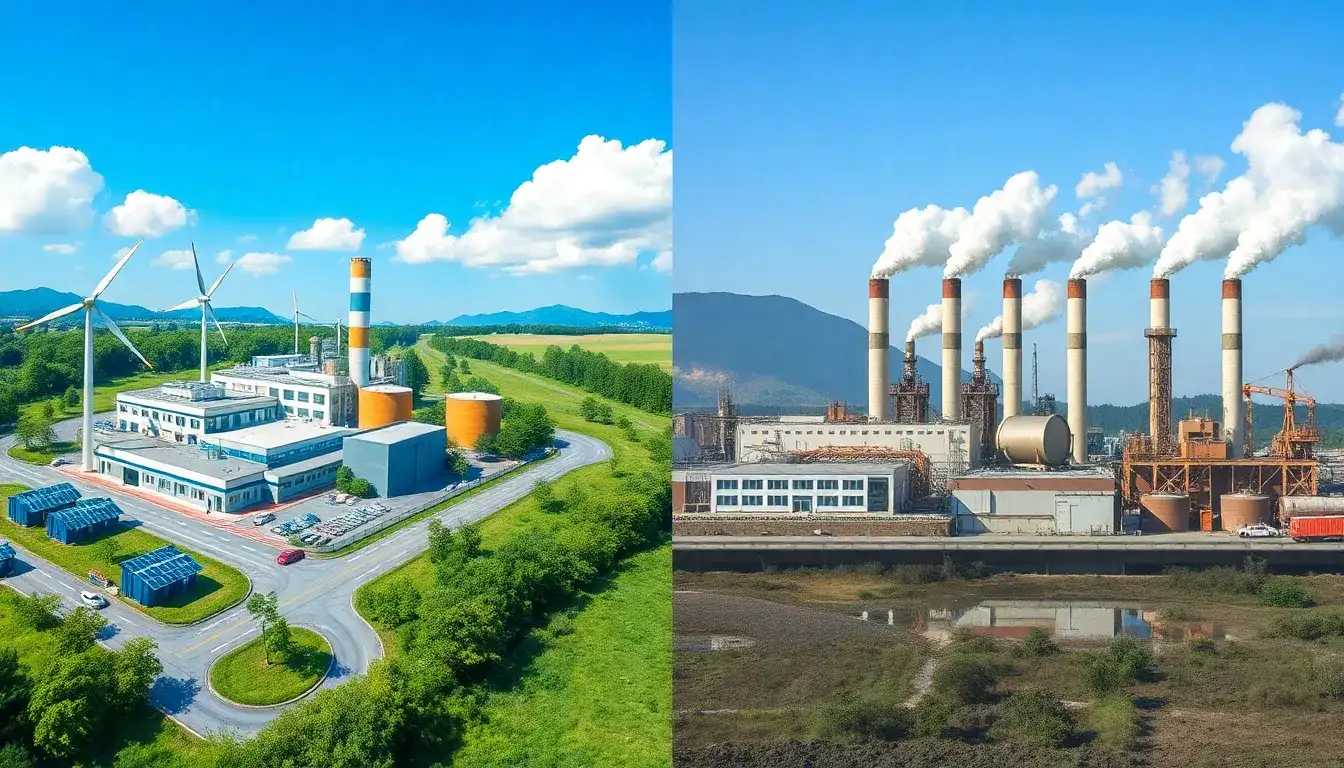
Electric vehicle (EV) manufacturing has distinct environmental trade-offs compared to traditional gasoline cars, primarily centered around battery production and energy sources. Here’s a detailed comparison:
Manufacturing Emissions
- EVs: Up to 46% of total lifecycle emissions occur during production due to energy-intensive battery manufacturing (lithium, cobalt, nickel extraction and processing). Producing a Tesla Model S battery, for example, emits CO₂ equivalent to driving a gasoline BMW 320d for 60,000 miles.
- Gasoline cars: While manufacturing emissions are lower overall (gasoline vehicles rely on less energy-intensive components), their lifetime emissions are dominated by tailpipe exhaust, which accounts for ~80% of their total impact.
Energy Mix Dependency
- EV charging: Emissions depend on local electricity sources. In regions using coal or natural gas, charging increases indirect emissions. However, even with fossil-heavy grids, EVs typically reduce lifetime emissions by ~50% compared to gasoline cars.
- Gasoline cars: Emissions are unavoidable during operation, with only 16–25% energy efficiency from fuel conversion.
Material and Resource Concerns
- EVs: Require rare-earth metals and large batteries, raising issues around mining pollution and supply chain ethics.
- Gasoline cars: Depend on oil extraction, which poses risks like spills and habitat destruction, but avoids battery-specific material demands.
Lifetime Efficiency
EVs use 87–91% of battery energy for movement (including regenerative braking), while gasoline cars waste ~75% of energy as heat. This efficiency gap widens with cleaner grids, making EVs progressively less polluting over time as renewables expand.
Conclusion
While EV manufacturing has a higher initial carbon footprint due to batteries, their operational efficiency and renewable energy compatibility ultimately result in lower lifetime emissions than gasoline counterparts. Critics argue that grid reliance on fossil fuels and mining impacts diminish these advantages, but long-term decarbonization trends favor EVs.
Original article by NenPower, If reposted, please credit the source: https://nenpower.com/blog/how-do-the-environmental-impacts-of-ev-manufacturing-compare-to-those-of-traditional-gasoline-cars/

