

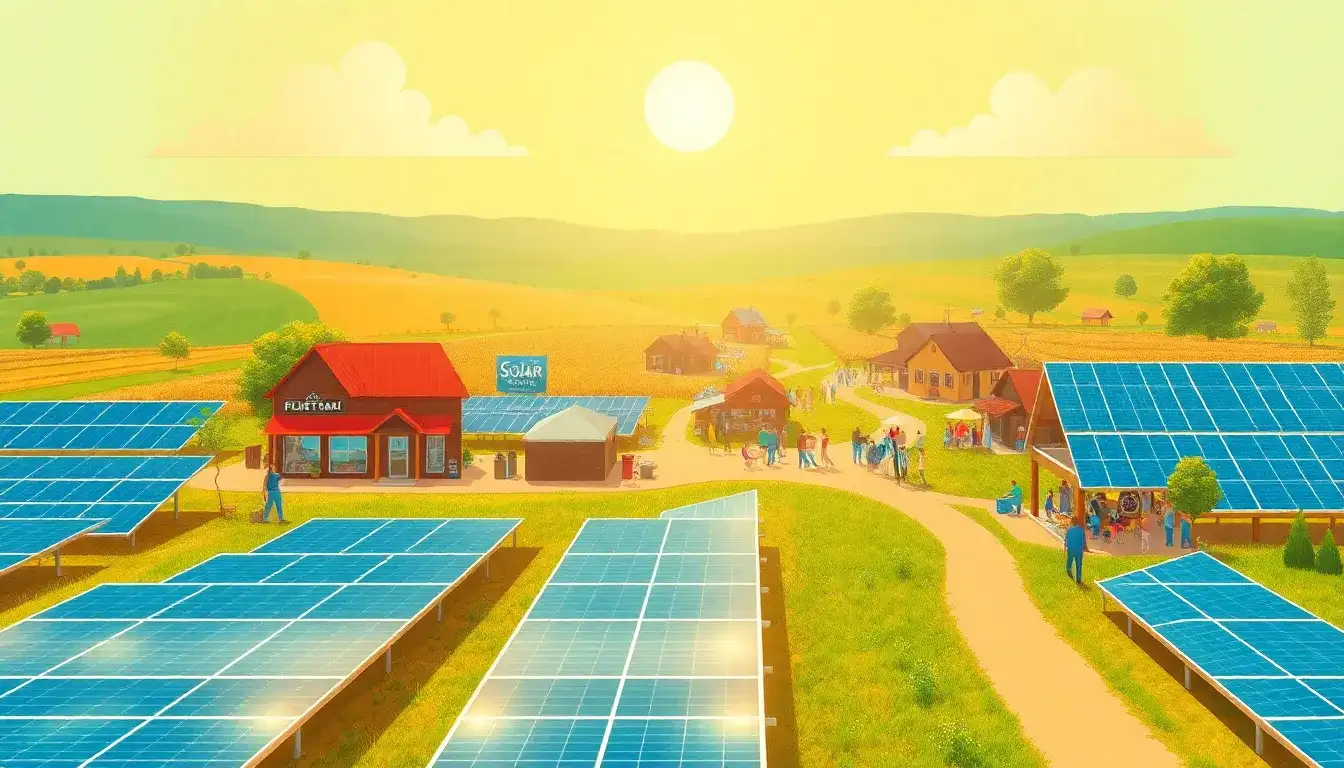
Solar installations significantly impact local economies in rural areas through various channels, both positive and challenging.
Economic Benefits to Rural Communities
- Job Creation and Local Spending: The construction, installation, and ongoing maintenance of solar farms create employment opportunities for local workers and contractors. This influx of labor and related activities leads to increased spending in the community, benefiting local businesses such as construction firms, service providers, and suppliers of materials like solar panels and wiring. As a result, local enterprises can expand and hire more staff, amplifying economic activity in the area.
- Direct Financial Contributions: Large-scale solar projects often generate substantial payments to local governments and communities. For example, a utility-scale solar farm in Brown County, Ohio, is expected to contribute $63 million over the project’s lifetime. These funds support public services including schools, healthcare, and emergency services, providing a vital economic boost especially for rural areas that typically struggle to attract investment.
- Economic Empowerment and Entrepreneurship: By providing affordable and reliable electricity, solar power enables greater self-sufficiency in rural areas, reducing dependency on external energy sources. This energy access can stimulate entrepreneurial ventures such as solar-powered charging stations, water pumping systems, and small businesses reliant on solar energy. Such developments foster sustainable economic growth and community empowerment.
- Environmental and Climate Benefits: Solar developments help rural communities reduce their carbon footprint, contributing to broader efforts to mitigate climate change, which can indirectly support long-term economic sustainability.
Challenges and Considerations
- Land Use and Price Increases: The demand for land to develop solar farms drives up land values and rental prices in rural areas. This increase can lead to higher input costs for farmers and create competition between traditional agricultural uses and solar development. Such dynamics may cause concern among local landowners and impact traditional farming livelihoods.
- Potential Social and Environmental Impacts: Some rural residents and farmers may experience disruptions or feel unease due to changes in landscapes and family farming traditions caused by the solar energy boom, although this varies by community and project scale.
In summary, solar installations in rural areas often act as catalysts for local economic development by generating jobs, increasing local spending, contributing financially to community services, and enabling new business opportunities through improved energy access. However, these benefits come with challenges such as rising land costs and potential impacts on agricultural practices and local landscapes. Careful planning and community involvement are essential to maximize positive outcomes and mitigate negative effects.
Original article by NenPower, If reposted, please credit the source: https://nenpower.com/blog/how-do-solar-installations-impact-local-economies-in-rural-areas/

