

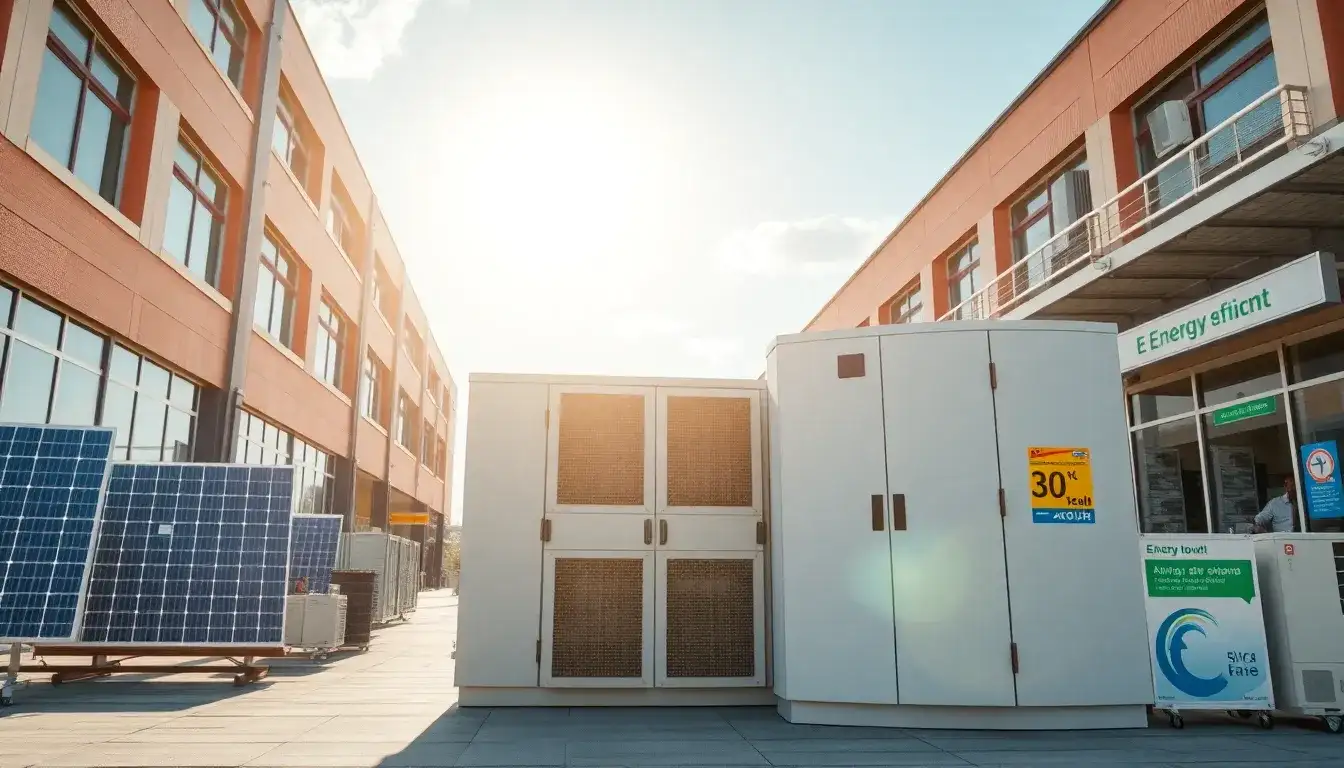
Navigating Summer Demand Peaks: How Energy Storage Systems Can Provide Flexible Solutions for Businesses
1. Background and Analysis of Summer Demand Peaks
In recent years, China has experienced a characteristic “double peak” in electricity load during winter and summer. During summer, the cooling load accounts for as much as 30% of total electricity consumption, with some provinces exceeding 40%. In July 2024, the national maximum electricity load surpassed 1.451 billion kilowatts, a year-on-year increase of over 100 million kilowatts, highlighting the growing electricity supply-demand imbalance. This fundamental issue can be summarized in two main aspects:
- Structural Demand Imbalances: The surge in air conditioning load is significant; according to the Ministry of Housing and Urban-Rural Development, building energy consumption accounts for over 55% of total societal energy use, with HVAC systems representing about 60% of this energy. This segment is growing at an annual rate of 3.2%.
- Rigid Industrial Electricity Demand: The manufacturing PMI index indicates that peak-to-valley differences in electricity load for key industries reach 40-60%. The rapid growth of new energy loads, such as electric vehicle charging stations and data centers, also contributes to this challenge. Currently, there are over 30 million electric vehicles in China, with typical fast-charging powers exceeding 100 kW, leading to significant impacts on local grids during peak charging periods. Moreover, AI development has increased energy consumption in data centers, with AI-related computing now accounting for over 10% of total electricity use in these facilities. It is predicted that by 2030, AI and machine learning could drive data center energy consumption to exceed 25% of global totals.
Supply-side Bottlenecks: The existing design of distribution networks has a load margin of only 15-20%, making it difficult to cope with overload demands during extreme weather. Additionally, the variability of renewable energy sources, such as solar power, which can peak in midday summer but drop by over 60% during evening peak hours, exacerbates the issue. Furthermore, the lack of sufficient adjustment resources is evident, as pumped storage capacity nationwide is only 46 million kilowatts, accounting for less than 2% of total installed power.
In response to these challenges, China’s “Summer Peak Regulation” strategy was developed to ensure electricity supply security and maintain grid stability. The National Energy Administration collaborates with State Grid and Southern Power Grid during the summer and winter seasons to implement various measures, including optimizing electricity dispatch, advancing key projects, enhancing infrastructure, and managing load variability. Policies emphasize detailed regulation and encourage energy-consuming units to cooperate with overarching control principles to arrange their electricity usage responsibly. The Summer Peak Regulation policy is not only a response to short-term pressures but also crucial for energy security, economic growth, and social stability.
2. Grid Response Strategies: From “Hard Expansion” to “Soft Regulation”
To ensure stable electricity supply, grid companies typically adopt multi-faceted approaches:
- Infrastructure Reinforcement: This includes expanding substations and upgrading transmission lines to enhance grid capacity.
- Cross-regional Resource Allocation: Utilizing ultra-high voltage corridors to balance supply and demand across provinces.
- Demand-side Management Optimization: Techniques such as optimizing air conditioning strategies, implementing time-of-use pricing, guiding users to shift their electricity usage, and limiting peak electricity consumption for high-energy-use businesses.
- New Energy Storage Deployment: As of the end of 2024, the cumulative installed capacity of new energy storage projects in China reached 73.76 GW/168 GWh, an increase of over 130% from 2023, roughly 20 times the capacity at the end of the 13th Five-Year Plan (2020).
3. Real Challenges for Businesses: Conflicts Between Production Plans and Electricity Constraints
The implementation of the Summer Peak Regulation policy often presents numerous challenges for businesses:
- Electricity Limitation Pressures: Key industries must ensure power supply, while non-key industries may face strict control measures, impacting production plans and schedules, thereby increasing operational costs.
- Risk of Production Continuity: Manufacturing companies may need to adjust their schedules, potentially disrupting order fulfillment and leading to longer delivery times, which can affect profitability and market competitiveness.
- Increased Energy Costs: High energy-consuming sectors like steel and chemicals are subject to strict load controls, and power restrictions may risk interrupting continuous production processes, leading to equipment downtime and economic losses, particularly during peak pricing periods.
- Complex Energy Planning: Fluctuating policy requirements compel businesses to continuously monitor and adjust energy usage, making it challenging to coordinate demands and control strategies across various departments.
4. Energy Storage Systems: From “Passive Response” to “Active Regulation”
Energy storage technology, with its ability for “flexible charging and discharging” and “bidirectional regulation,” is emerging as a crucial tool for companies facing electricity management challenges. By employing dynamic load enhancement and optimization strategies, energy storage systems can discharge during peak periods, reducing the need for transformer capacity and avoiding penalties for exceeding limits.
The increasing sophistication of intelligent algorithms enables EMS (Energy Management System) controllers, equipped with AI, to optimize charging and discharging strategies automatically based on electricity price signals and production plans. As the dual carbon targets advance and extreme weather events become more frequent, the Summer Peak Regulation will evolve from a temporary measure to a long-term challenge. For businesses, integrating energy storage systems is not just a temporary fix; it is a core strategy for building resilient supply chains and reducing energy costs and risks. Through intelligent management via EMS controllers, companies can transition from reactive to proactive management, finding an optimal balance between electricity supply security and operational efficiency.
5. EMS Controllers: The “Smart Brain” of Energy Management
As the central control unit of energy storage systems, EMS controllers are capable of creating intelligent electricity usage logic during peak periods through three main capabilities:
- Dynamic Load Enhancement: By real-time monitoring of load status, the system can intelligently switch between charging and discharging modes to enhance power supply capacity, akin to flexible transformer expansion.
- AI Load Forecasting Engine: This engine uses neural network algorithms to accurately predict load curves for the remainder of the day. It automatically controls the optimal state of charge (SOC) for the storage system and generates an optimal all-day charging and discharging strategy, prioritizing dynamic load enhancement while balancing peak shaving and valley filling.
- Multi-objective Optimization Models: These models ensure compliance with Summer Peak Regulation directives while catering to scenarios such as “maximum demand control,” “peak-valley arbitrage,” and “emergency backup,” all while maintaining safety margins and economic benefits.
The intelligent EMS controller from Jianjie IoT adapts to A to F grade orderly electricity consumption schemes, offering clients configurable intelligent control modes that ensure compliance with orderly electricity usage during the Summer Peak Regulation while also addressing economic safety goals like peak shaving and demand control, allowing energy storage systems to do more while users worry less.
Original article by NenPower, If reposted, please credit the source: https://nenpower.com/blog/enhancing-power-supply-how-energy-storage-systems-offer-flexible-solutions-for-businesses-during-peak-summer-demand/

