

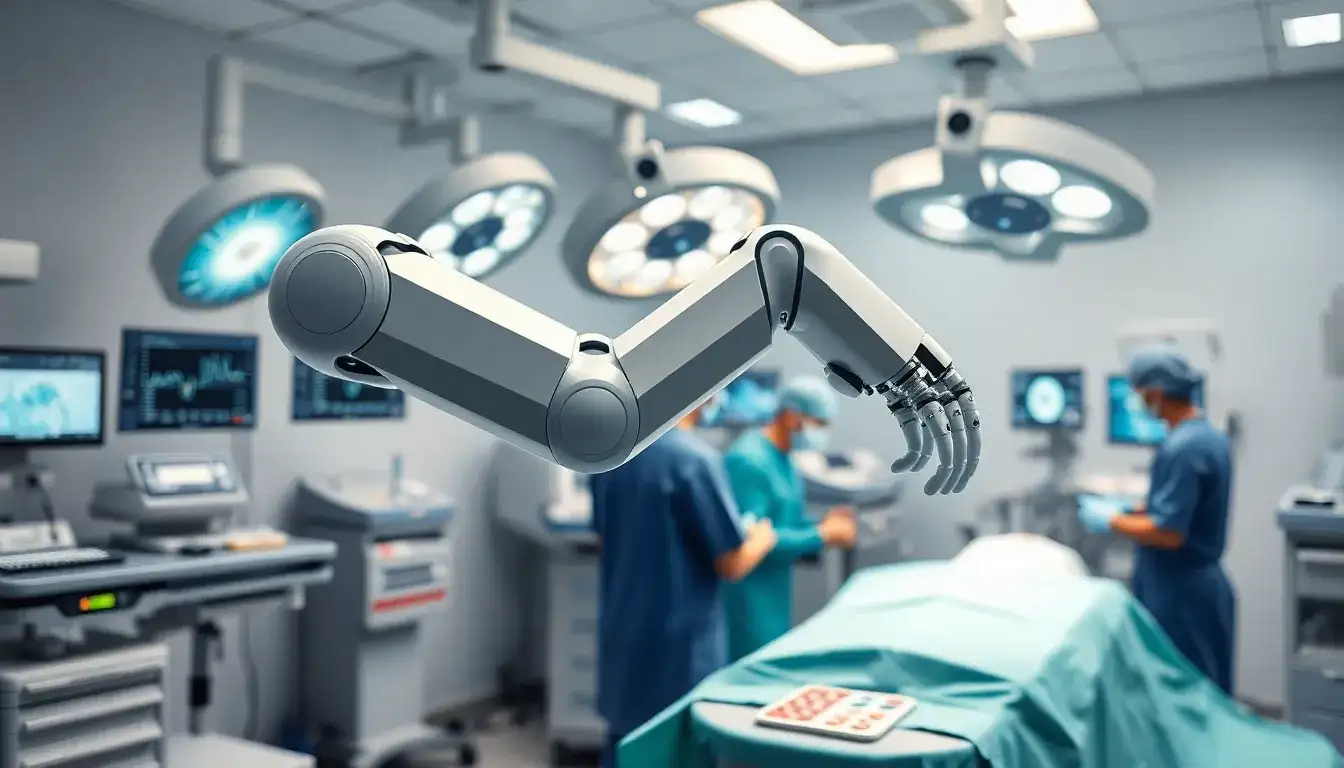
China’s first fully independently developed robotic arm orthopedic surgical robot has officially been put into operation, marking a significant milestone in medical innovation. As of February 12, 2026, the CSI Medical and Medical Device Innovation Index (931484) saw a slight increase of 0.05%. Among the constituent stocks, WuXi AppTec rose by 3.39%, Kanglongda increased by 1.37%, Huatai Medical by 0.27%, Enhua Pharmaceutical by 0.25%, and Tebao Biological by 0.14%. The latest quote for the Healthcare Innovation ETF (516820) is 0.37 yuan. In terms of liquidity, the ETF had a turnover rate of 0.42% during the day, with a transaction volume of 7.944 million yuan. Looking at a longer timeframe, as of February 11, the average daily trading volume for the Healthcare Innovation ETF over the past month was 65.1423 million yuan.
On February 11, the HX robotic arm orthopedic surgical robot, which is entirely self-developed, successfully completed its first operation. Professor Zhou Zongke, the Director of Orthopedics and Joint Surgery at West China Hospital, Sichuan University, led a team to perform a robot-assisted total knee replacement surgery on a 66-year-old woman.
CITIC Construction Investment believes that surgical robots represent one of the best business models in the medical device sector. After installation, these devices will drive continuous growth in consumables, creating a stable income and cash flow. The global market value of comparable leader Intuitive Surgical has exceeded 1 trillion yuan, and there remains significant growth potential in market penetration and overall market size. While foreign leaders hold a dominant market position due to their early advantages, domestic leaders are accelerating product iterations, achieving performance close to global standards, and leading in remote surgery. International business has already accounted for a substantial portion of revenue and continues to grow rapidly, with significant potential for revenue and market value increases. AI is expected to empower surgical robots to perform autonomous operations, further assisting or even replacing certain surgical procedures performed by doctors, which would benefit industry penetration and enhance the valuations of related companies.
The Healthcare Innovation ETF closely tracks the CSI Medical and Medical Device Innovation Index, which selects 30 publicly traded companies from the pharmaceutical and healthcare sectors that show good profitability, growth potential, and research and innovation capabilities. This index reflects the overall performance of publicly listed companies in the pharmaceutical and medical device sectors that achieve a balance of profitability and growth.
As of January 30, 2026, the top ten weighted stocks in the CSI Medical and Medical Device Innovation Index (931484) were WuXi AppTec, Mindray Medical, Heng Rui Medicine, Aier Eye Hospital, Pian Zai Huang, New Hope Liuhe, Huadong Medicine, Kanglongda, Ailis, and Ganli Pharmaceuticals, with the top ten stocks accounting for 63.9% of the total weight.
Original article by NenPower, If reposted, please credit the source: https://nenpower.com/blog/china-launches-first-fully-self-developed-robotic-arm-for-orthopedic-surgery-boosting-medical-innovation-etf-activity/

