

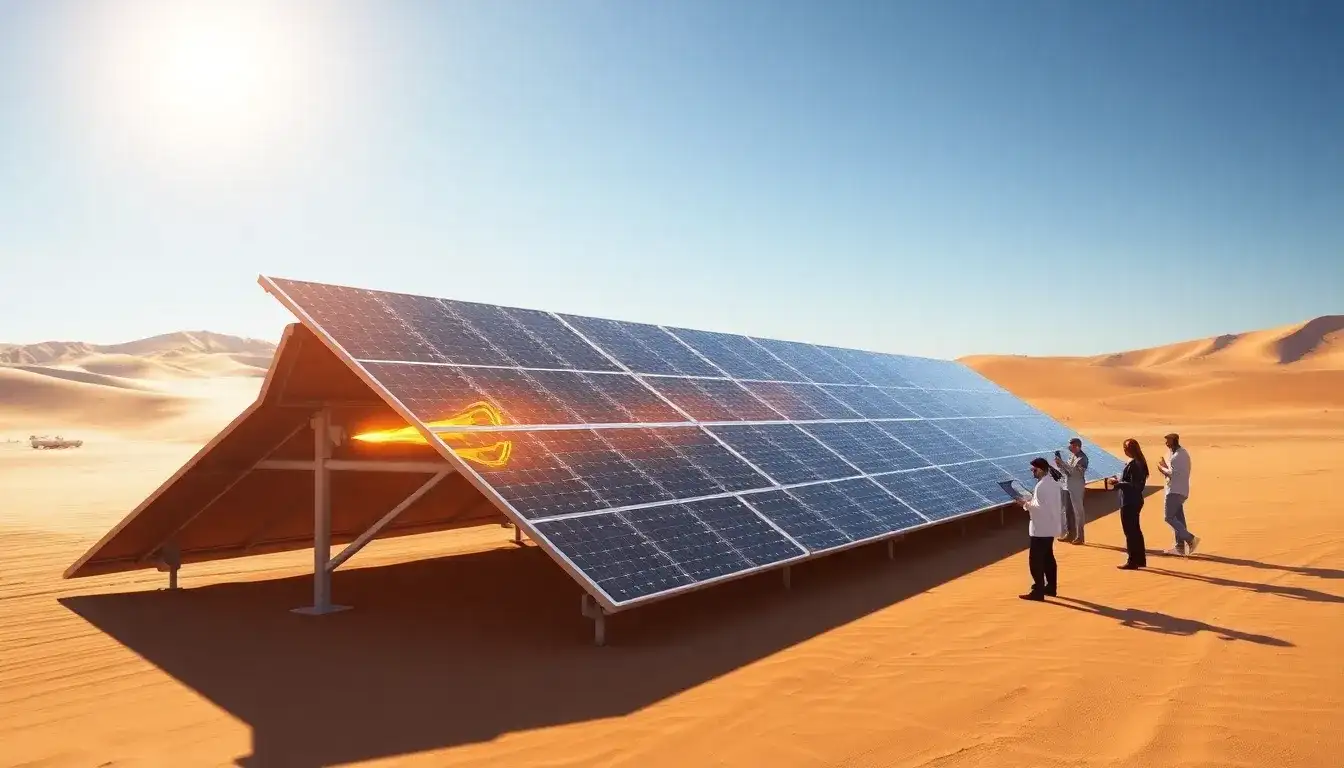
Solar panels can indeed be designed with features to improve performance in extreme heat, though their inherent temperature coefficient remains a physical limitation. Here’s how design and operational strategies address heat challenges:
Temperature Coefficient Optimization
Modern panels often specify a temperature coefficient (typically -0.3% to -0.5% per °C above 25°C/77°F) to quantify efficiency loss. Manufacturers can improve this metric by using materials with lower thermal resistance, though gains are incremental due to photovoltaic physics.
Cooling and Installation Techniques
- Airflow spacing: Mounting panels a few inches above surfaces allows passive cooling via airflow, reducing surface temperatures.
- Reflective materials: Light-colored or reflective backsheets minimize heat absorption.
- Optimal angles: Adjusting tilt angles to balance sunlight exposure and heat dissipation.
Material and Structural Innovations
- Bifacial panels: These dual-sided panels absorb light from reflections below, reducing concentrated heat on the front surface.
- Advanced cell technologies: Heterojunction (HJT) or thin-film cells may offer better thermal performance, though specific advancements here are implied rather than detailed.
System-Level Adjustments
- Microinverters: These minimize efficiency loss from partial shading and can mitigate localized heating.
- Hybrid systems: Pairing solar with cooling technologies (e.g., PVT systems that use heat for water heating) is a frontier area not explicitly covered in results but aligns with heat mitigation.
Practical Limits
Panels already operate in extreme ranges (-40°F to 185°F), but efficiency losses in heatwaves (10–25% reductions in some cases) remain unavoidable. Seasonal output often compensates, as summer’s longer daylight offsets efficiency dips.
Key Takeaway
While design tweaks improve heat resilience, sunlight availability—not temperature—remains the dominant factor in energy production. Panel efficiency losses in high heat are typically offset by longer daylight hours during summer months.
Note: Some strategies (e.g., hybrid cooling systems) are inferred from industry trends beyond the provided sources. The results emphasize that current solutions focus on airflow, material selection, and inverter technology to address heat-related inefficiencies.
Original article by NenPower, If reposted, please credit the source: https://nenpower.com/blog/can-solar-panels-be-designed-to-operate-more-efficiently-in-extreme-heat/

