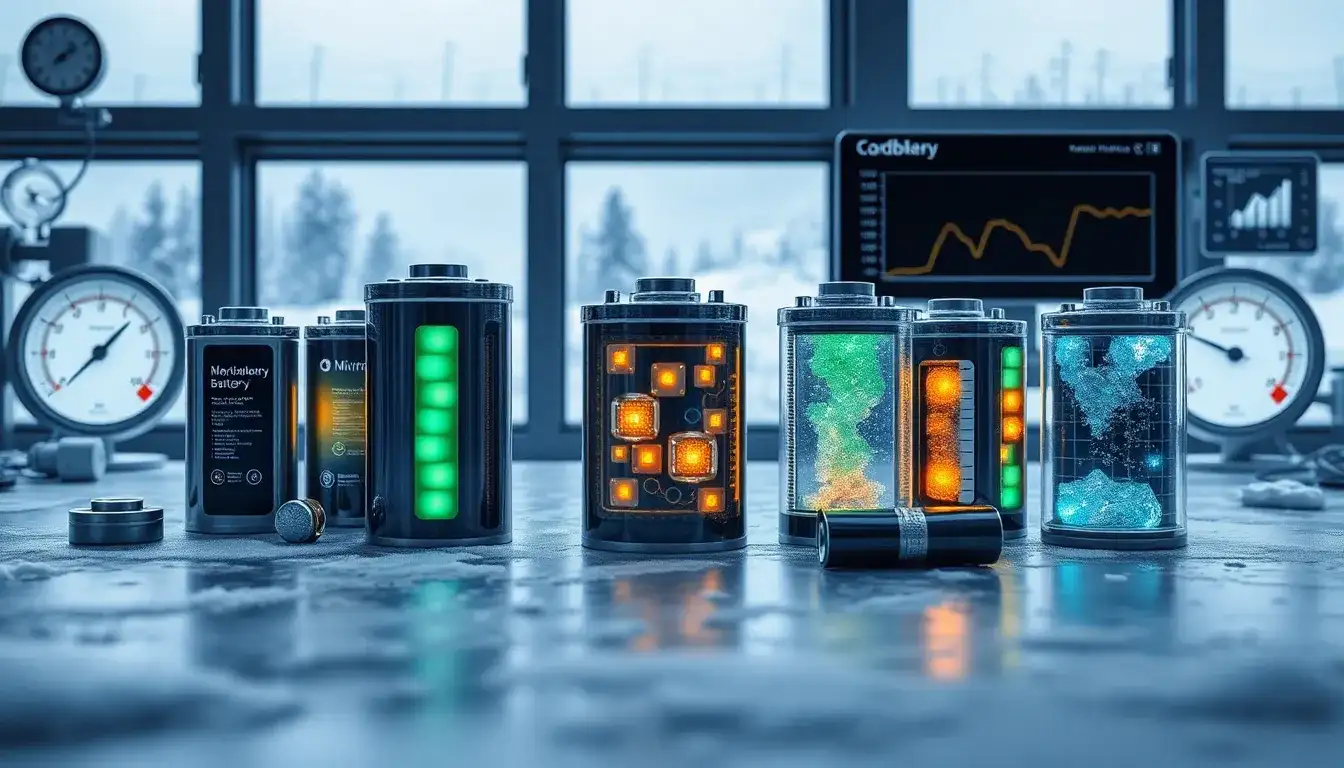
Yes, certain battery chemistries perform better in cold climates than others. Here is an overview of some of the most relevant battery types:
Battery Chemistries for Cold Climates
1. Lithium Iron Phosphate (LiFePO4)
- Performance in Cold Weather: LiFePO4 batteries are known for their robust performance in cold temperatures. They can operate effectively from -20°C to 60°C (-4°F to 140°F), making them a top choice for harsh winter conditions.
- Advantages: They retain a high percentage of their capacity in cold temperatures, typically delivering 95-98% of their rated capacity even below 0°C (32°F).
2. Lithium-Ion (Standard)
- Performance in Cold Weather: Standard lithium-ion batteries can struggle in cold conditions, with their performance degrading below freezing. However, newer technologies and thermal management systems can improve their cold-weather performance.
- Challenges: Cold temperatures slow down the movement of lithium ions, reducing efficiency and increasing the risk of damage if charged improperly.
3. Absorbent Glass Mat (AGM)
- Performance in Cold Weather: AGM batteries are more robust in cold conditions compared to traditional lead-acid batteries, with higher cold cranking amps (CCA) and lower self-discharge rates.
- Advantages: They maintain their charge well but still require proper maintenance and storage in cold temperatures.
4. Lead Acid
- Performance in Cold Weather: Lead-acid batteries experience a significant drop in capacity in cold temperatures, often retaining only 70-80% of their rated capacity below 32°F (0°C).
- Challenges: They are prone to freezing if not adequately charged, potentially leading to irreversible damage.
5. Betavoltaic Batteries
- Performance in Extreme Temperatures: These batteries are unique in that they generate power through radioactive decay, making them resilient to extremely cold temperatures without sustaining damage, although they are less common and not widely used.
Recommendations for Cold Climates
- For Continuous Power Needs: LiFePO4 batteries are highly recommended due to their reliability and minimal capacity loss in cold conditions.
- For Lower Cost and Robustness: Lead-acid batteries can still be suitable with proper maintenance and precautions.
- For Specific Applications: AGM batteries are a good choice for applications requiring higher CCA values, like starting engines in cold weather.
Overall, when choosing batteries for cold climates, LiFePO4 offers superior performance and reliability.
Original article by NenPower, If reposted, please credit the source: https://nenpower.com/blog/are-there-specific-battery-chemistries-that-perform-better-in-cold-climates/