

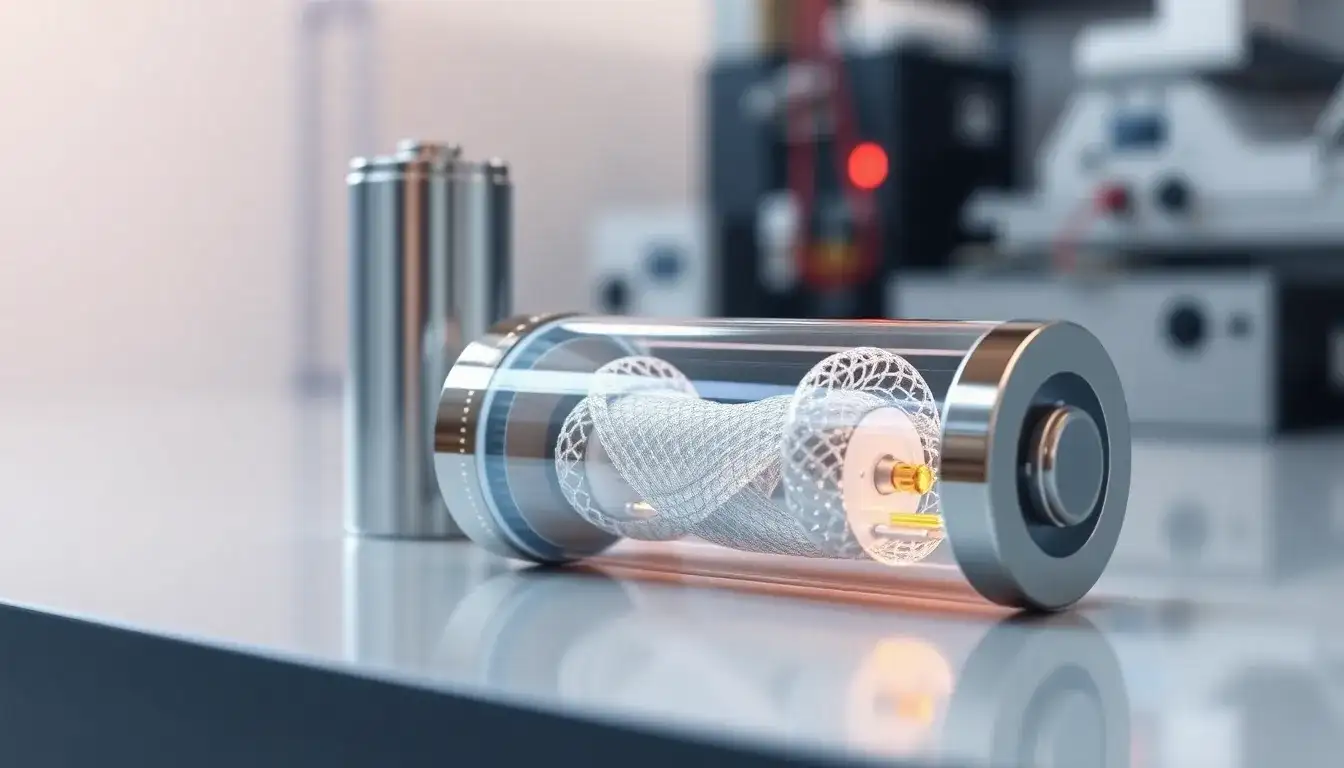
A significant advancement in the field of energy storage has been achieved with the development of a new type of lithium-ion battery based on modified lithium sulfide. This innovative battery technology was recently announced by a team of researchers from a prominent university in China, which has successfully demonstrated a conversion efficiency of 10.7%, marking a new record for this category of materials.
This accomplishment was highlighted in a recent issue of the journal Nature Energy, illustrating the potential of these modified lithium-sulfur batteries to enhance energy storage capabilities. The study indicates that lithium-sulfur batteries, which combine various forms of sulfur with lithium, have been included in the national “Solar Energy Battery Performance Index” for the first time, paving the way for the next generation of high-performance batteries.
Currently, the technology is on the verge of entering what is known as the “post-silicon era,” with many manufacturers exploring different wave bands of solar energy to maximize the absorption of sunlight. However, the challenge remains in determining which materials are most compatible with traditional silicon-based solar cells.
The modified lithium-sulfur batteries present several advantages: they demonstrate high energy density, reduced costs, and longer life cycles. As a type of non-mechanical battery, they are more efficient than conventional lithium-ion batteries, requiring only 300 nanometers of thickness to achieve high levels of solar energy absorption. They can efficiently store solar energy even in low light conditions, making them suitable for large-scale production.
Despite their promising characteristics, this type of battery technology has faced challenges since 2020, with performance improvements struggling to surpass 10%. Recent findings have raised concerns regarding the distribution of key materials—sulfur and lithium—leading to what is termed a “resource bottleneck,” which inhibits effective energy transfer and can result in energy loss.
To address these issues, researchers have proposed the integration of small amounts of sulfur with lithium, which has shown to enhance energy transfer rates. In laboratory tests, these batteries have achieved an efficiency of 11.02%, as confirmed by CSIRO, a reputable research organization that oversees various testing protocols.
However, there is still a shortage of critical materials, and performance potential remains untapped. Through surface treatment and optimization processes, researchers aim to further reduce energy loss, with a goal of reaching 12% efficiency in the near future.
The application of modified lithium-sulfur batteries is not limited to traditional solar panels. Their unique properties make them suitable for use in smart devices, electronic display systems, and renewable energy storage equipment.
In conclusion, while challenges persist, the advancements in modified lithium-sulfur battery technology hold great promise for the future of energy storage solutions.
Original article by NenPower, If reposted, please credit the source: https://nenpower.com/blog/advancements-in-sulfur-based-lithium-ion-battery-efficiency-set-for-2026/

