

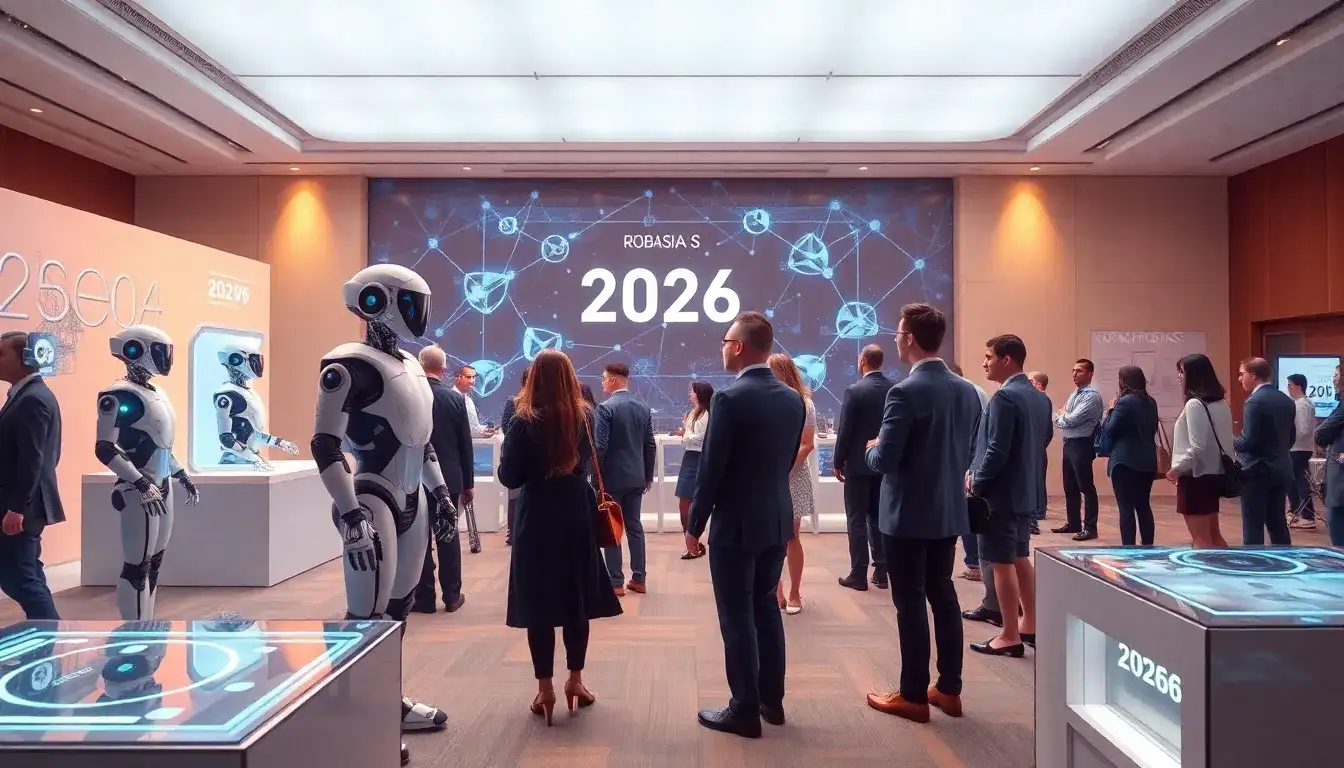
2026: A Year of Potential Awakening for Embodied Intelligence
In 2026, the presence of robots in factories, shopping malls, stages, and streets may no longer surprise us, as this is becoming the norm. The embodied intelligence and humanoid robot industry is at a historic crossroads, where the convergence of technology, industry, and capital is expected to propel the sector over significant hurdles to widespread implementation.
How should we view the embodied intelligence and humanoid robot industry in 2026? What new opportunities and challenges arise for researchers, industry professionals, and investors?
01 Global Opportunities for Embodied Intelligence
Reflecting on 2025, technologies in embodied intelligence have surpassed critical thresholds. The industry has transitioned from individual intelligence to collective intelligence and from pre-programmed actions to autonomous decision-making. Technologies such as world modeling have emerged as new solutions. By the end of 2025, over 140 leading teams released 330 next-generation humanoid robots, achieving stability in operation, adaptability to complex environments, and generalized multitasking, nearing the threshold for commercial applications. Notably, certain robots equipped with the VLA large model have developed closed-loop capabilities for observation, reasoning, and action.
The industry ecosystem has completed crucial pieces of the puzzle. Key bottlenecks that previously hindered industrialization—cost of core components, software development ecosystems, and verification standards—saw significant breakthroughs in 2025. The cost of domestically produced high-torque-density servo motors has decreased by 50% compared to three years ago. Operating systems such as Harmony M-Robots OS, Lingqu OS, and OpenWBT have become open-source, providing native support for embodied intelligence models. The establishment of the humanoid robot standardization technical committee, led by the Ministry of Industry and Information Technology, has cleared standardization barriers for mass production in 2026.
Investment strategies have shifted from broad outreach to deep-rooted engagement. According to statistics from Lide Think Tank, over 70% of global venture capital flowing into the embodied intelligence sector during the fourth quarter of 2025 and the first quarter of 2026 is directed towards B-round companies with clear pathways for implementation. Capital is now focused on solving real problems and creating measurable value rather than just showcasing technology. Industrial capital and strategic investors are beginning to dominate later funding rounds, providing substantial support through orders, production lines, and market channels.
The global landscape for embodied intelligence in 2026 is expected to be characterized by a strong U.S.-China dual-engine model, with Europe and Japan-Korea focusing on niche segments. In this arena, the U.S. continues to define the technological frontier due to its leadership in foundational large models and chip computing power. However, China is demonstrating unique competitive advantages in industrialization speed, supply chain costs, and depth of application deployment. China boasts the most comprehensive and responsive manufacturing supply chain network globally, with robot industry clusters in the Yangtze River Delta and Pearl River Delta capable of rapid design changes and small-batch production.
Moreover, China offers the richest and most demanding application scenarios for training. From noisy 3C electronics factories to high-purity semiconductor workshops, and from cold chain warehouses at minus 20 degrees to construction sites with complex terrains, the diversity of scenarios compels Chinese embodied intelligence robot companies to address robustness, reliability, and usability from the outset. This scenario-driven innovation path often imbues Chinese solutions with stronger engineering genes. At the policy level, the “Robot +” action plan continues to deepen, paving the way for embodied intelligence to enter various industries. Several provinces and cities have designated humanoid robots as key cultivation targets for future industries, employing measures such as insurance compensation for first-time applications, open scenario challenges, and targeted support from industrial funds to establish a comprehensive support system from R&D to market.
The year 2026 is poised to be the starting point for mass procurement of domestic humanoid robots and embodied intelligence solutions.
02 The VLA Model Reshaping the Body and Soul of Robots
The most significant breakthrough in embodied intelligence technology in 2026 lies in achieving an end-to-end integration of perception, cognition, planning, and control capabilities. Traditionally, the robotics technology stack has been fragmented: the vision module identifies objects, the planning module calculates paths, and the control module executes movements. Any minor error in one segment can be magnified at the end of the chain, leading to task failure. The VLA-based embodied intelligence large model is becoming the ultimate architecture to address this issue. It acts like a unified brain, receiving information from multimodal sensors and directly outputting joint-level control commands. This process is highly compressed and abstract, allowing the model to learn vast physical laws of the world and action knowledge during training, enabling it to make optimal decisions that align with physical reality and task objectives.
However, a smart brain alone is insufficient; embodied intelligent robots require a dexterous control system akin to a human’s. In 2025, advancements in motion control technology focused on full-body coordinated dynamic control and high-dynamic environment adaptability. Algorithms based on reinforcement learning and model predictive control (MPC) enable robots to maintain dynamic balance and resist external disturbances like humans. For instance, when a humanoid robot performs a backflip or engages in high-dynamic actions, it no longer falls stiffly; instead, it can execute a series of coordinated movements—swinging its arms, twisting its waist, and adjusting its feet—to regain stability after staggering.
The closed-loop feedback from tactile and force sensing endows embodied intelligence with a sense of touch. Next-generation bionic skin and six-dimensional force sensors allow robots to detect millimeter-level positional deviations and precise force changes. This capability enables embodied intelligence to perform tasks requiring fine force control, such as screwing, connecting plugs, and stacking fragile items.
By 2025, the demand for self-controllable components in the industrial chain has become a rigid necessity for commercial competition. In the context of trade and technological competition, domestic core components have made significant progress. For example, in the joint sector, leading domestic manufacturers have released next-generation integrated joint modules that combine motors, reducers, drivers, and sensors, achieving a 35% increase in torque density while reducing costs by 40%. More crucially, these components provide standardized communication interfaces and open parameter interfaces, allowing manufacturers to configure joint dynamics easily, significantly lowering integration difficulty. In the visual domain, domestic 3D vision and lidar technologies are beginning to merge, achieving new levels of precision, speed, and resistance to ambient light interference. In the tactile field, several domestic startups have introduced flexible electronic skin that not only breaks through spatial resolution but can also sense pressure, temperature, and material simultaneously, providing robots with nearly human-like embodied information.
As technology matures, the embodied intelligence market in 2026 will likely exhibit clear scenario differentiation. Companies in industrial settings emphasize high load capacity, precision, and reliability, primarily targeting applications in automotive manufacturing and high-end equipment assembly, complementing collaborative robots and AGVs. In contrast, embodied intelligence aimed at commercial services focuses on dexterous operations, long endurance, safe interactions, and human-friendly design, with applications in hotel receptions, mall guidance, and eldercare. A more human-like appearance and seamless interaction are key selling points. Additionally, pioneers are developing embodied intelligence products for emergency rescue, power inspections, and bomb disposal scenarios, emphasizing extreme environmental adaptability, autonomous navigation, and operational capabilities.
03 Challenges Amidst Celebration
The trends are set, and the wave is upon us. In 2026, we will witness not only what embodied intelligence and robots can achieve but also how human-robot relationships will be reshaped and how paradigms of social productivity will be reconstructed. However, amidst the excitement, we must calmly assess the challenges. As the humanoid robot and embodied intelligence industries transition from technological exploration to large-scale commercial applications, enterprises face multiple real challenges including strategic choices, scene implementation, ecosystem collaboration, and resource acquisition.
1. Industry Analysis: Anticipating the Future
Currently, the rapid iteration of embodied intelligence and humanoid robot technology routes and the complexity of market information make it challenging for enterprises to distinguish long-term trends from short-term noise. Decisions regarding R&D investments and strategic layouts may be hindered by hesitation or misjudgment. How can we bridge the reliability gap from 99% to 99.999%, and how can we address performance degradation and lifespan issues caused by sensor failure, algorithm corner cases, and mechanical wear? In critical strategic decisions—whether to prioritize “hardware first” or “algorithm-defined,” or to choose “general platforms” versus “vertical deep dives”—decision-makers often lack authoritative and systematic trend analysis as a basis, which can lead to mismatched R&D resources and missed strategic windows. Which path in embodied intelligence genuinely leads to the future? This conference aims to systematically analyze the core landscape of 2026 by releasing authoritative industry reports, hosting top experts’ keynote speeches, and organizing prestigious award selections. We aim to provide decision-makers with a data-driven and insightful “industrial nautical chart” to help them make precise strategic anchors during critical investment periods and present a clear picture of industry evolution and technological development.
2. Scene Empowerment: Bridging the Gap to Implementation
The year 2026 is expected to be the turning point for positive ROI across multiple niche scenarios. However, a significant “implementation gap” exists between embodied intelligence technological solutions and commercial applications. For downstream users purchasing robots, they are essentially acquiring a form of productivity. Yet many embodied intelligence companies often struggle to communicate directly with end-users who have real budgets and clear needs, leading to a disconnect between product development and market realities. Companies frequently find themselves in dilemmas of “having technology but lacking scenarios” or “having solutions but lacking validation,” where expensive prototypes lack genuine testing grounds, hindering rapid iterations to a deployable state and slowing commercialization. Currently, the price of a high-performance humanoid robot ranges from tens of thousands to hundreds of thousands. What price range is acceptable across different markets? This conference will feature a “Supply and Demand Matching Conference for Embodied Intelligence Application Scenarios,” inviting benchmark users from industrial manufacturing, commercial services, and healthcare sectors to engage in closed, precise one-on-one discussions with solution providers, aiming to align technology with scenarios and help embodied intelligence companies match their needs with solutions, effectively shortening the commercialization path.
3. Chain Integration: Co-creating the Future
The paths to reducing the costs of humanoid robots and embodied intelligence products are clear, but large-scale production, core component localization, and design simplification require time. However, the industry chain of embodied intelligence, from core components and perception systems to body integration, is long and specialized. Companies spend significant time and effort searching for reliable, performance-capable, and cost-effective suppliers. Difficulties in aligning technical standards between upstream and downstream hinder the formation of an efficient, agile, and trustworthy collaborative network, severely limiting product iteration speed and the ability to scale down costs. How many manual jobs have been replaced by embodied intelligence? To what extent has efficiency and quality improved? What risks have been reduced? In which scenarios has the comprehensive cost of robots fallen below that of humans? This conference will feature specialized exhibition areas for core components and key technologies and host multiple industry chain dialogues to bring together dispersed high-quality suppliers, manufacturers, and system integrators in a concentrated space, providing a high-density platform for sourcing, technology integration, and business negotiations. This aims to help companies quickly build or optimize their supply chain systems, reduce collaboration costs, and create industrial synergy.
4. Industry Benchmarking: Seizing Opportunities
More important than cost are the value anchors. Enterprises understand the importance of policy direction, industrial capital, and composite talent, but there exists a significant information asymmetry and channel barriers in acquiring precise policy interpretations, connecting with patient long-term capital, and recruiting core technical talent that bridges hardware and software. Single-point breakthroughs are inefficient and hinder the speed and scope of enterprise development. This conference will gather representatives from relevant national ministries to interpret cutting-edge policies, organize top industrial investment funds to engage in closed-door meetings with innovative companies, and simultaneously host a “Robot Industry Talent Recruitment Fair.” We aim to establish the conference as a multi-dimensional resource aggregation “super node,” efficiently facilitating the connection of critical development elements, such as policy, capital, and talent, to inject core momentum into sustainable growth.
04 Gather in Beijing, Create a Vision for the Future
Conference Details:
Date: April 28-29, 2026
Location: Haidian, Beijing
Theme: “Competing in the Trillion-Yuan Embodied Humanoid Market: Reshaping the New Era of Industry”
Scale: Over 2000 industry professionals
Business Cooperation: Follow the official platform of the Robotics Lecture Hall for the latest agenda and registration channels. Seats are limited, and registration is by invitation and review.
We look forward to embarking on the awakening year of humanoid robots with you. The conference is actively seeking sponsors; for more details, please contact us!
Contact: Dr. Tang: 13810423387, 19560423866 (WeChat same number)
Past Highlights:
Click the links to view highlights from the previous two conferences!
1. The First Humanoid Robot Industry Conference and Embodied Intelligence Summit in 2024: Link
2. The Second China Humanoid Robot and Embodied Intelligence Industry Conference in 2025: Link
Original article by NenPower, If reposted, please credit the source: https://nenpower.com/blog/2026-the-year-of-bodily-intelligence-awakening-and-global-robotics-conference-launch/

