

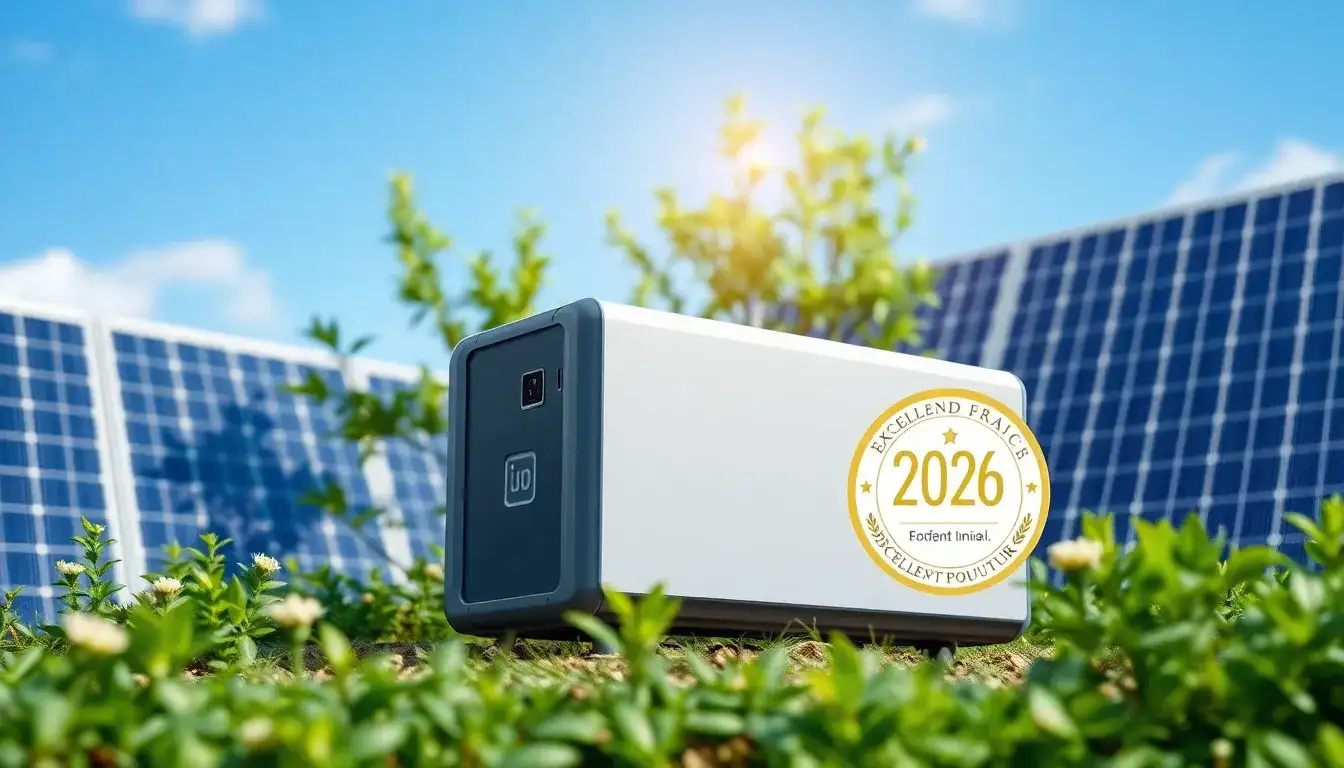
Yun境 Tianhe Photovoltaic Environmental Monitoring Instrument Recognized as Outstanding Product in Photovoltaic Equipment Category for 2026
On January 19, 2026, the Yun境 Tianhe Photovoltaic Environmental Monitoring Instrument was awarded as an outstanding product in the photovoltaic equipment category. This intelligent monitoring device is specifically designed for distributed photovoltaic systems. It provides essential data support for efficient operation and maintenance management of photovoltaic power plants by measuring and recording various environmental parameters in real time.
The instrument monitors meteorological parameters such as wind speed, wind direction, temperature, humidity, and atmospheric pressure, offering a comprehensive reflection of the weather conditions affecting photovoltaic plants. For instance, high temperatures can lead to decreased efficiency of photovoltaic modules, while high humidity levels may cause condensation or frost, impacting power generation performance.
It also measures radiation parameters, including total solar radiation, horizontal radiation, tilted plane radiation, and daily cumulative radiation, which are directly linked to the power generation efficiency of photovoltaic modules. Additionally, a spectral analysis module assesses spectral matching, indicating potential risks of module aging.
Module parameters are monitored via non-contact infrared temperature measurement technology, which records the temperature of the photovoltaic module backsheet. This data, combined with current and voltage readings, helps identify issues such as hot spots or micro-cracks. For example, a particular power plant detected a micro-crack 30 days in advance through hot spot detection, preventing potential power generation losses.
The device allows users to set safety ranges for parameters like illumination, temperature, and humidity. For instance, when the module temperature exceeds 85°C, a high-temperature alert is triggered, and warning messages are sent via SMS or an app. Real-time environmental data can also be used to adjust theoretical power generation estimates; for example, a 1°C increase in temperature results in a 0.5% drop in output power, enhancing the accuracy of energy efficiency evaluations.
By utilizing an array of light sensors, the device can create shading distribution maps to optimize the arrangement angles of modules. A specific rooftop power plant achieved an 8% increase in annual power generation by adjusting the tilt angle of its panels.
Technical Advantages: Emphasizing Precision and Intelligence
The monitoring technology combines high-precision sensor measurement with intelligent systems. It employs silicon photovoltaic sensors (accuracy ±2%), thermopile sensors (high anti-interference capability), and NTC thermistors (accuracy ±0.5°C) to ensure data accuracy. The multispectral monitoring system integrates multiple channel filters and photodetectors to decompose visible and infrared light ratios, assessing spectral matching. For example, a high proportion of infrared light indicates potential module aging.
Non-contact temperature measurement utilizes infrared thermal imaging to generate temperature distribution maps for modules, identifying hot spots (with temperature differences exceeding 10°C triggering alerts) and improving detection efficiency by three times compared to point sensors. The analog signals collected by the sensors are processed via analog-to-digital conversion (ADC) and then denoised, calibrated, and filtered by a microprocessor to ensure data reliability.
Cloud computing and machine learning algorithms analyze historical and real-time data to predict power generation conditions and equipment status. For instance, one power plant optimized its cleaning cycle through data analysis, reducing annual water costs by 40%. By combining BIM models with light sensor data, real-time adjustments can be made to module output power. In one case, a rooftop photovoltaic system under tree shade used dynamic compensation to reduce power generation losses by 12%.
The device also supports long-term storage of environmental parameter historical data, allowing for statistical analysis of maximum, minimum, and average values across various time dimensions (yearly, monthly, daily, hourly), generating trend analysis reports.
Application Scenarios: Comprehensive Coverage and Efficient Operation
In distributed photovoltaic power generation systems, both residential and commercial buildings utilize rooftop photovoltaic systems to monitor environmental parameters in real time, optimizing power generation strategies. For example, a monitoring station on a commercial complex’s rooftop detected localized shading, resulting in a 30% decrease in output power. By adjusting the inverter’s MPPT algorithm, power was restored to 95%.
In industrial parks and large ground-mounted power stations, a multi-node layout strategy covers all critical areas of the power plant, ensuring comprehensive data collection. For instance, a 50MW power station discovered that the southeastern area was underperforming by 15% due to an incorrect angle of the support structure.
Agricultural photovoltaic projects, including fish-solar complementary systems, integrate sensors for dissolved oxygen and pH levels to assess the impact of photovoltaic panels on water quality. One fish pond power plant optimized feeding amounts through monitoring, reducing the risk of water quality deterioration. Agrivoltaic stations monitor soil temperature and humidity, combining light data to optimize crop planting and irrigation plans, achieving a dual harvest of “photovoltaic power generation + agricultural planting.”
Real-time data support provides crucial references for grid dispatch and energy management, optimizing grid connection quality. For instance, data from a monitoring instrument helped enhance inverter efficiency, increasing conversion efficiency from 95% to 98%. Dust storm alerts that combine wind speed and dust sensor data enable proactive shutdown of power plants and activation of dust protection measures. One power station in the northwest avoided a loss of 500,000 yuan by shutting down operations ahead of a dust storm warning.
Original article by NenPower, If reposted, please credit the source: https://nenpower.com/blog/yun%e5%a2%83%e5%a4%a9%e5%90%88s-photovoltaic-environmental-monitoring-instrument-recognized-as-an-excellent-product-for-2026/

