

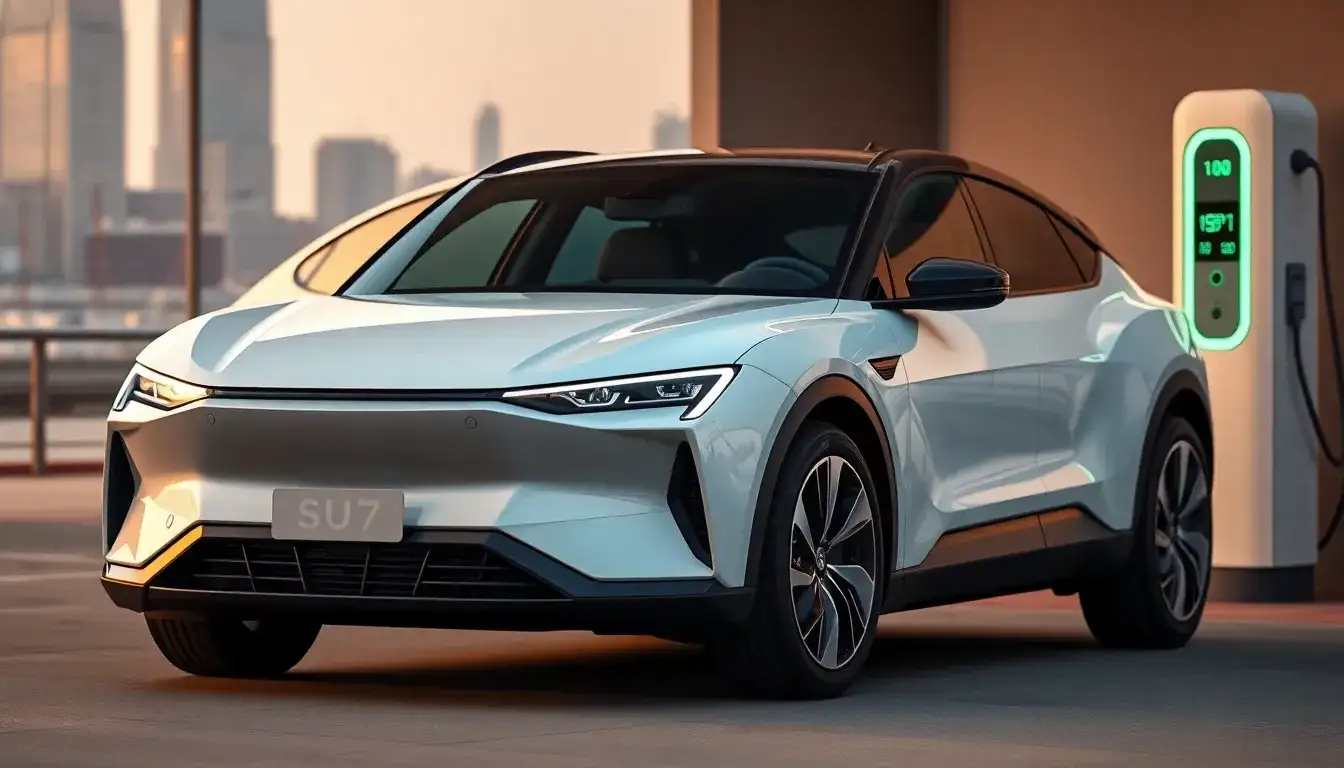
When it comes to the resale value of electric vehicles, the Xiaomi SU7 has surprisingly emerged as a leader in the market. According to the April 2025 China Car Resale Value Research Report, published by the China Automobile Circulation Association and Jingzheng Estimate, the Xiaomi SU7 boasts an impressive resale value rate of 88.7% after just one year, surpassing market expectations.
This unexpected result has left many wondering, as some might have guessed that Tesla vehicles would take the top spot. Notably, a Xiaomi SU7, which is the founding version (in the color Sunset Purple), was reported to have been driven for 20,000 kilometers over the course of a year. Originally priced at ¥299,000, it was resold for ¥267,000, with resale prices for dealers not dropping below ¥275,000, resulting in a remarkable 91% retention rate.
The high resale value of the Xiaomi SU7 can be attributed to several factors. Currently, the delivery cycle for these vehicles spans between 37 to 46 weeks, creating a significant imbalance between supply and demand in the market, which in turn fuels higher prices in the second-hand market. However, as production capacity ramps up, these market premiums may normalize.
Additionally, Xiaomi vehicles benefit from advantages in performance, ecosystem integration, and marketing strategies. The limited availability of certain models has also contributed to their strong resale value.
The report further highlights the stark differences in performance between one-year and three-year old electric vehicles. In the one-year category, the Xiaomi SU7 ranks first with an 88.7% resale value, followed by the Wenjie M9 at 85.2%. The Li Auto MEGA and Tesla Model X follow closely behind with retention rates of 79.3% and 77.8%, respectively. Tesla’s popular models, the Model 3 and Model Y, have lower one-year retention rates of 75.7% and 72.2%.
Interestingly, microcars like the Wuling Hongguang MINI EV and smart #1 also showed unexpected resilience, with one-year resale values of 72.7% and 72.2%.
In terms of three-year resale values, the Porsche Taycan leads the pack with a 59.9% retention rate, followed by the Tesla Model 3 at 56.8% and the NIO ET5 at 54.9%. The Model Y saw a significant drop, with a three-year resale value of just 49.1%, reflecting a decline of over 20 percentage points compared to its one-year retention.
However, many models fall below the 50% mark after three years. For example, the Leap C11 stands at 49.6%, the NIO ET7 at 48.1%, and the Yuanzhi Pro at 47.6%. This trend reveals the challenges faced by electric vehicles in terms of technology, market acceptance, and service systems.
Rapid advancements in features such as range and smart driving functionalities have rendered older models obsolete. Furthermore, certain brands restrict warranties and free charging benefits to the first owner, diminishing the appeal for second-hand buyers and impacting market competitiveness.
Additionally, the traditional fuel vehicle market benefits from a well-established residual value assessment system, while the electric vehicle sector lacks standardized battery testing methods, leading to cautious attitudes from both dealers and consumers.
Overall, the rapid depreciation of electric vehicles can be attributed to multiple factors, including the accelerated pace of technological innovation and the short lifecycle of these vehicles. The explosive growth of the electric vehicle market has altered existing market rules, creating a gap in the established pricing system.
In 2021, China produced 3.545 million electric vehicles and sold 3.521 million, marking a year-on-year increase of 152.5% and 157.6%, respectively, capturing 13.4% of total vehicle sales. By 2024, production and sales figures soared to 12.888 million and 12.866 million, with a growth rate of 34.4% and 35.5%, respectively, and a market share exceeding 40% for the first time.
As of the first four months of 2025, over 4.4 million electric vehicles were produced, achieving a market penetration rate of 43%. The rapid growth of electric vehicle models is closely linked to frequent product upgrades and technological advancements.
While this swift iteration enhances consumer experience and attracts market interest, it also confuses potential buyers, leading to a negative perception of second-hand electric vehicles and contributing to their price decline. The aim of electric vehicles is to disrupt traditional fuel vehicles, which has inevitably destabilized the previously accepted pricing structures.
As data shows, the resale value of electric vehicles drops significantly with age due to factors such as battery lifespan, range improvements, and updates to intelligent systems. In contrast, traditional fuel vehicles maintain an overall retention rate of 55%-60%, significantly higher than that of electric vehicles.
Japanese brands typically hover around 56%-57%, while German luxury cars, like the Mercedes-Benz E-Class and BMW 5 Series, boast rates of 78.96% and 72.05%, respectively.
In summary, the electric vehicle market faces challenges due to excessive innovation and shortened life cycles, alongside trust issues related to smart driving features. If this trend continues, it could lead to a fractured industry ecosystem, with the second-hand market bearing the brunt of the pressure.
Original article by NenPower, If reposted, please credit the source: https://nenpower.com/blog/xiaomis-su7-tops-resale-value-rankings-in-the-electric-vehicle-market/

