

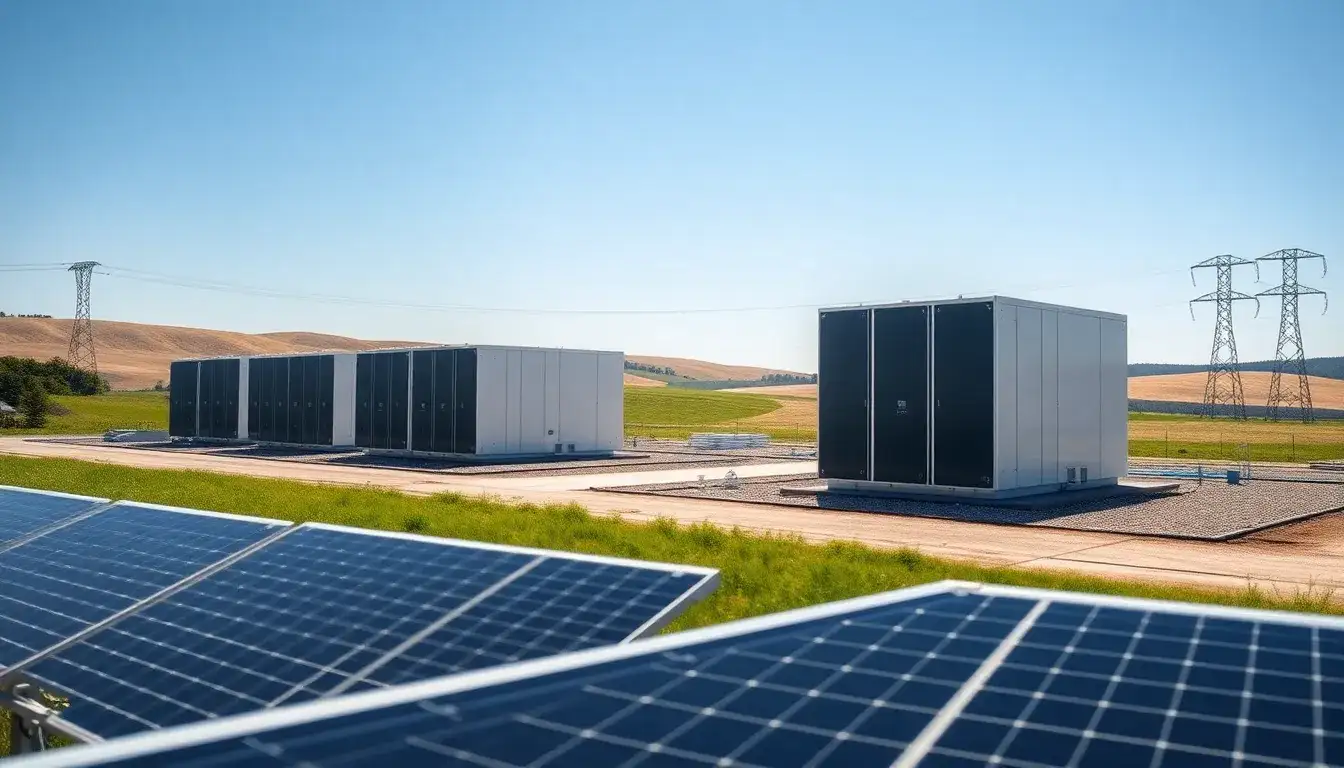
Wisconsin’s First Large-Scale Battery Storage System Goes Live in Kenosha County
================================================================================
We Energies has launched Wisconsin’s first large-scale battery storage project at the Paris Solar-Battery Park in Kenosha County, which became operational in June 2025. This innovative system can store enough energy to power over 130,000 homes for four hours.
The project features 110 megawatts of battery storage, which complements the park’s capacity to generate 200 megawatts of solar energy. The solar facility itself began operations in December and produces enough energy to supply more than 55,000 homes annually.
We Energies President Mike Hooper emphasized the significance of this milestone, stating, “Bringing Wisconsin’s first large-scale battery storage project online is historic and continues our commitment to provide customers reliable and affordable energy.” We Energies is the primary owner of the Paris site, with Wisconsin Public Service and Madison Gas and Electric also holding stakes in the project.
However, the project’s costs exceeded initial estimates by over $100 million. Initially projected to cost $400 million when proposed to the Public Service Commission in 2021, the total expenditure reached more than $574 million by the end of March 2025. Brendan Conway, a spokesperson for We Energies’ parent company WEC Energy Group, attributed some of the cost overruns to inflation following the COVID-19 pandemic, while others were due to delays in importing solar panels. He noted, “We were impacted by the supply chain issues with COVID, the cost increases, some of the labor increases, and that’s reflected in what happened here.”
Tom Content, executive director of the Citizens Utility Board of Wisconsin, expressed concern over the potential for utility companies to seek reimbursement for these overruns through rate increases. He stressed the importance of balancing costs between shareholders and customers, stating, “There should be a balance between how much shareholders have to pay and how much customers have to pay, so that customers aren’t stuck with the whole thing.” Recently, state utility regulators initiated a statewide investigation into the issue of cost overruns in utility construction projects.
Conway indicated that solar energy and battery storage will remain central to the company’s energy strategy in the coming years. He explained that while solar energy is highly reliable on sunny days, generation drops significantly at night. The battery storage system is designed to help stabilize the grid by utilizing excess solar energy generated during the day. “We’re able to use excess solar throughout the day to fill those batteries,” he added. “When we release it, it’s just excess sunshine that’s going back into the grid.”
Ciaran Gallagher, energy and air manager for the nonprofit Clean Wisconsin, welcomed the new battery storage but noted her disappointment that it followed the utility’s approval for two new natural gas plants. “We’re happy to celebrate more battery storage coming online, but we just want to note that We Energies is still doubling down on gas,” she said.
Beyond the Paris project, WEC Energy Group is developing several additional battery storage projects ranging from 50 to 165 megawatts, expected to be operational between 2026 and 2028. Conway stated that the company anticipates a $2 billion savings for customers over the next two decades by decommissioning aging coal plants while integrating new renewable energy sources, battery storage, and natural gas generation into the grid. However, he noted that this estimate includes savings from federal clean energy tax credits.
Recent developments in Congress could impact these tax credits. The U.S. House of Representatives recently passed a budget reconciliation package that would significantly reduce clean energy tax credits included in the Inflation Reduction Act of 2022. In May, labor and climate groups in Wisconsin warned that cutting these credits could jeopardize thousands of jobs and lead some companies to abandon projects. Conway remarked that it is still unclear how the loss of tax credits would affect the utility’s future renewable energy initiatives, adding, “We’re keeping a close eye on it. We’re talking with people in D.C. and here in Wisconsin.”
Original article by NenPower, If reposted, please credit the source: https://nenpower.com/blog/wisconsin-launches-first-large-scale-battery-storage-system-in-kenosha-county/

