

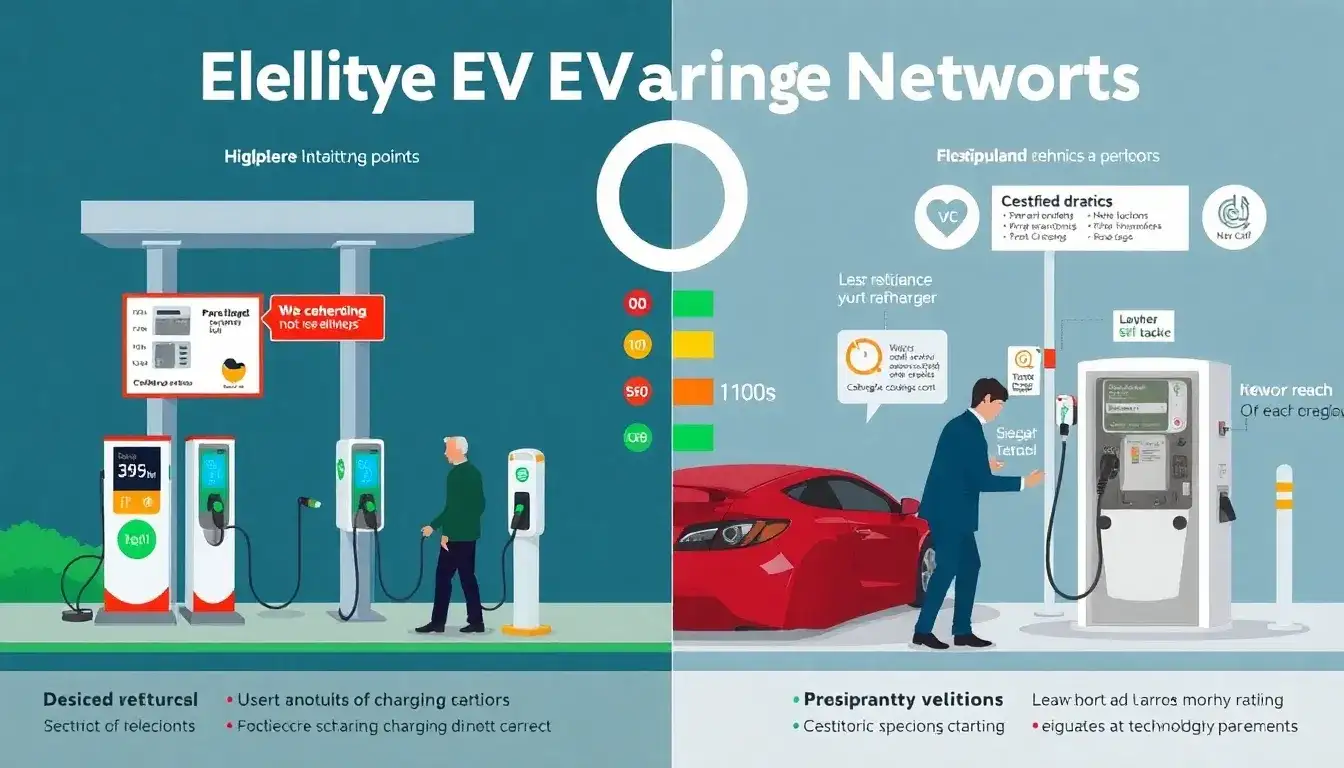
Some electric vehicle (EV) charging networks experience higher reported problems compared to others due to several key factors:
Factors Contributing to Higher Reported Problems
- Hardware Issues: Many problems with non-automaker networks, such as Shell Recharge, EVgo, and Blink, stem from hardware-related issues. These include broken or unresponsive screens, error messages, and chargers not starting even after payment is made. In contrast, Tesla and Rivian’s networks, which are run by automakers, have fewer hardware-related issues.
- Payment System Issues: Payment problems are common, with issues including failed payments and problems with the payment process even when drivers are able to pay. This is prevalent in networks like EVgo and Blink.
- Network Management and Maintenance: Networks managed by automakers like Tesla and Rivian tend to have better maintenance and management practices. This results in fewer problems compared to third-party providers, which often struggle with maintaining large numbers of charge points efficiently.
- Charger Reliability and Age: The reliability of chargers varies across networks. Older models, particularly those used by networks like BP Pulse, are more prone to failures, contributing to higher problem rates.
- Network Design and Integration: Networks that are well-integrated with vehicle systems, like Tesla’s Superchargers, tend to work more seamlessly. Non-automaker networks may lack this integration, leading to compatibility and operational issues.
- User Experience and App Quality: The ease of use and quality of charging network apps can also impact the user experience. Networks with difficult-to-use apps or charging systems can lead to frustration and reported problems.
Overall, the differences in reported problems among EV charging networks are largely due to variations in hardware quality, management practices, and the integration of charging technology with vehicle systems.
Original article by NenPower, If reposted, please credit the source: https://nenpower.com/blog/why-do-some-ev-charging-networks-have-higher-reported-problems-than-others/

