

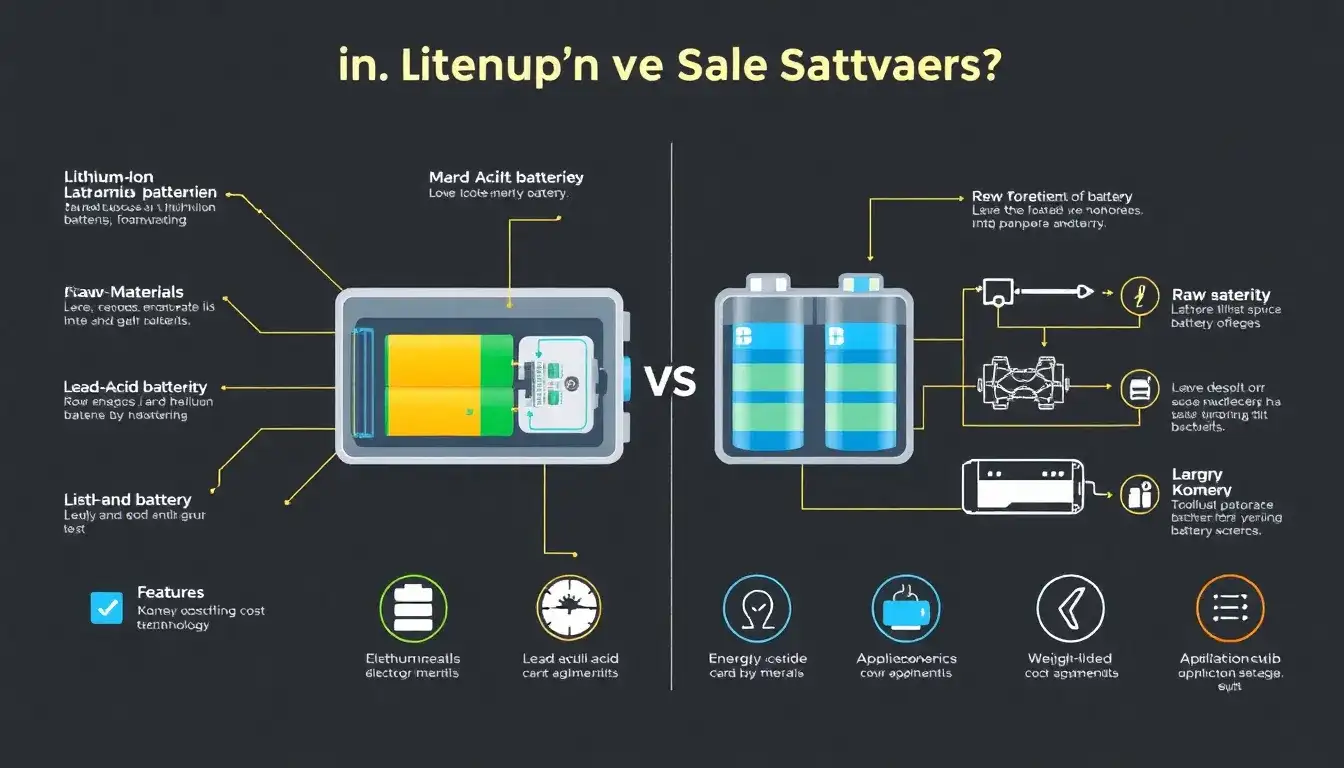
Lithium-ion batteries are more expensive than lead-acid batteries primarily due to several factors:
- Material Costs: Lithium-ion batteries contain expensive materials such as lithium cobalt oxide, lithium iron phosphate, or lithium manganese oxide, which are more costly than the lead and sulfuric acid used in lead-acid batteries.
- Energy Density and Performance: Lithium-ion batteries have a higher energy density, meaning they can store more energy per unit of weight or volume compared to lead-acid batteries. This efficiency and increased capacity contribute to their higher cost.
- Cycle Life and Longevity: Lithium-ion batteries have a significantly longer lifespan and cycle life, often lasting 10 years or more, compared to the 3-5 year lifespan of lead-acid batteries. While this results in higher initial costs, it offers long-term savings due to reduced replacement needs.
- Manufacturing Complexity: The production of lithium-ion batteries involves complex processes that require sophisticated equipment and technology, contributing to their higher production costs compared to lead-acid batteries.
Overall, although lithium-ion batteries are more expensive upfront, their longevity, efficiency, and reduced maintenance requirements make them more cost-effective over their lifespan.
Original article by NenPower, If reposted, please credit the source: https://nenpower.com/blog/why-are-lithium-ion-batteries-more-expensive-than-lead-acid-batteries/

