

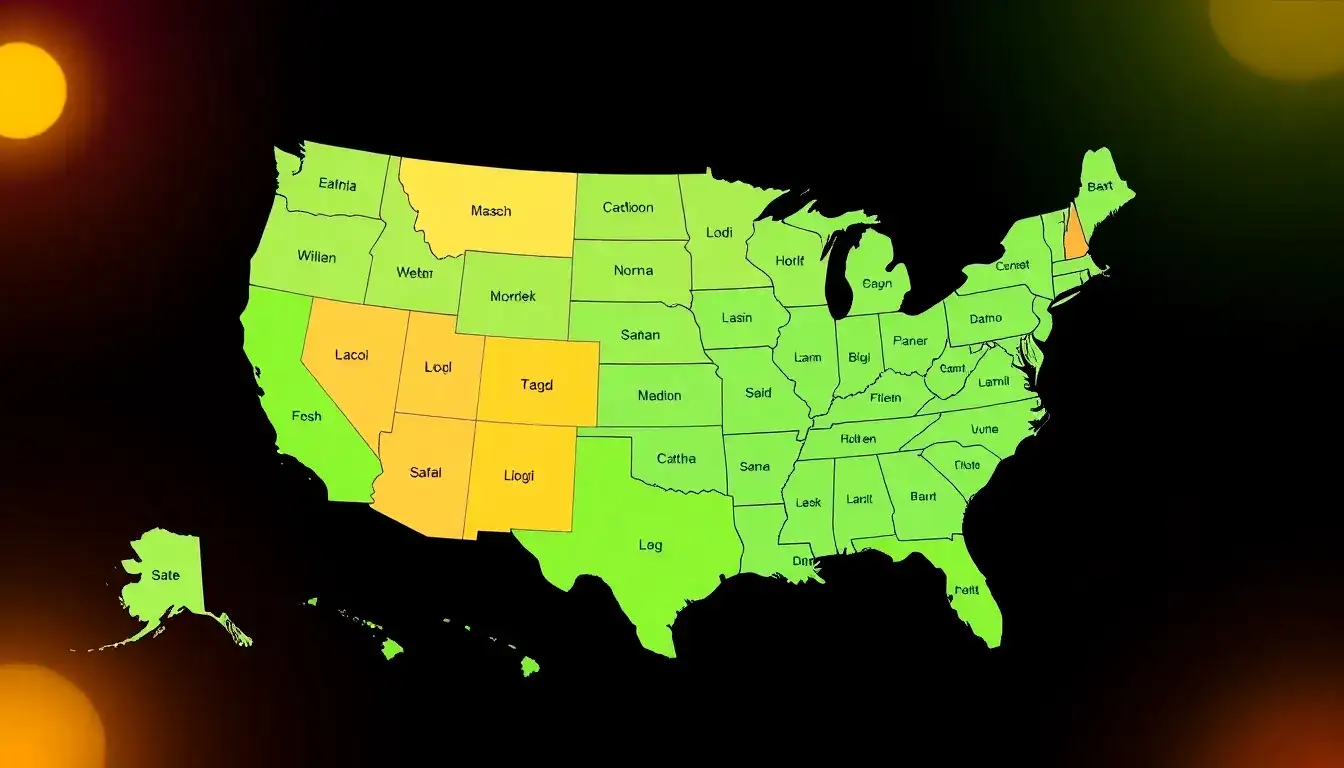
States with Favorable Full Retail Rate Net Metering
- Massachusetts: Offers net metering for various generation technologies up to high capacity limits (up to 60 kW for general systems and larger for solar, wind, anaerobic digestion). It also caps net metering at a high level of 7-8% of historic peak load depending on ownership type, which supports substantial solar deployment.
- Ohio: Provides competitive policies with retail-rate credits for surplus energy, beneficial for both residential and commercial solar customers.
- Nevada: After initially cutting net metering rates to wholesale levels, it restored retail-rate net metering through legislation (AB405) in 2017, returning to a much more favorable rate for solar customers and promoting market growth.
- Rhode Island, New Jersey, Connecticut, Colorado, Oregon, Washington: These states maintain traditional net metering programs that credit exported solar power at the retail electricity rate, fostering favorable economics for solar panel owners.
States Using Modified or Net Billing Approaches
Some states have moved away from full retail rate net metering toward alternative models like net billing or feed-in tariffs, which compensate solar exports at rates closer to wholesale prices. These policies are less favorable to solar owners but still provide some compensation.
- California: Employs a Net Billing Tariff (NBT) compensating excess generation at wholesale rates rather than retail. This hybrid model encourages self-consumption but reduces credit value compared to full net metering.
- Arizona and Utah: Use similar net billing systems paying wholesale or avoided-cost rates for excess energy, emphasizing solar self-consumption rather than export incentives.
- Oklahoma: Compensates excess energy at the utility’s avoided energy cost with limits on system size and production but ensures timely crediting.
States with Limited or No State-Mandated Net Metering
- Alabama, South Dakota, Tennessee: Do not have state-mandated net metering policies. Some utilities may offer programs, but there is no consistent statewide framework.
- Idaho and Texas: Do not have mandatory statewide net metering but allow utility-specific programs offering net metering or similar compensation.
Summary Table
| Category | States Examples | Compensation Model | Notes |
|---|---|---|---|
| Most Favorable (Full Retail) | Massachusetts, Ohio, Nevada, Rhode Island, New Jersey, Connecticut, Colorado, Oregon, Washington | Full retail rate net metering | High caps, retail-rate credits maximize savings |
| Modified/Net Billing | California, Arizona, Utah, Oklahoma | Wholesale/avoided cost rates | Lower credit rates, incentives focus on self-consumption |
| No State Mandate | Alabama, South Dakota, Tennessee | None or utility-specific | No uniform policy, limited incentives |
| Utility-Only Programs | Idaho, Texas | Utility-specific programs | Varying compensation depending on utility |
Regarding Tennessee and TVA
Tennessee does not have state-mandated net metering policies and no statewide program. However, some local utilities may offer net metering programs individually. The Tennessee Valley Authority (TVA), which serves much of the state, provides certain solar programs and may have its own net metering or buy-back policies for solar customers that bypass local utilities in some cases. It is best to consult TVA or local providers directly for specific options.
In conclusion, states like Massachusetts, Ohio, and Nevada currently have the most favorable net metering policies with full retail rate compensation and high system caps. California, Arizona, and a few others have moved toward net billing models that lower compensation but still support solar. States without statewide mandates rely on utility-specific programs that vary widely. Checking the detailed rules for your state or utility is essential since policies continue evolving.
Original article by NenPower, If reposted, please credit the source: https://nenpower.com/blog/which-states-have-the-most-favorable-net-metering-policies/

