

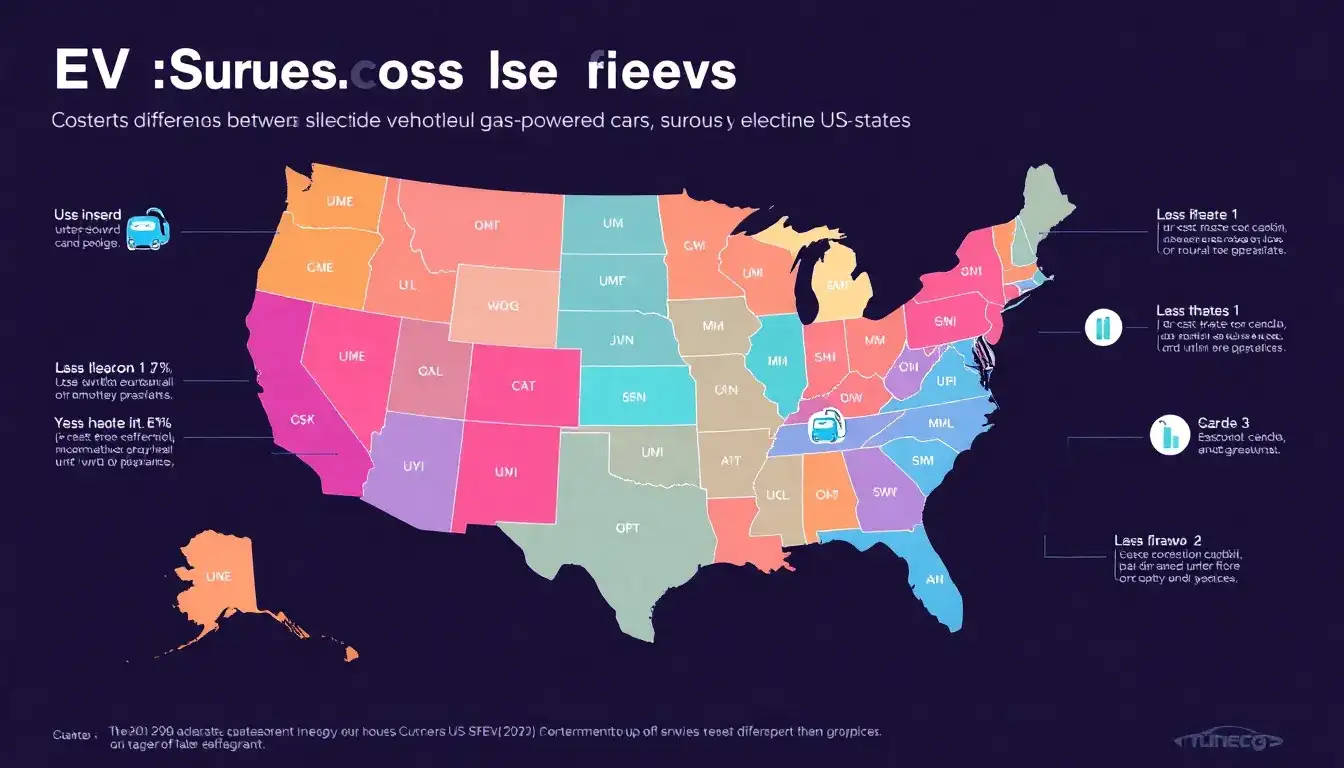
Biggest Cost Differences
1. Washington
Leads with 5x greater cost to drive gas cars due to expensive gasoline ($2.59/gal historically, though gasoline prices fluctuate) and very cheap residential electricity (under 10¢/kWh in past data). Recent analysis confirms it remains a top state for EV savings.
2. Oregon
Historically offered $1,238 annual EV savings (for average mileage) with low electricity prices (10.8¢/kWh) and moderate gas prices ($2.44/gal). Current data suggests it remains among the highest-savings states.
3. Western States
Montana, Nevada, and Utah historically showed $950–$1,059 annual EV savings due to favorable electricity-gas price ratios. Modern analyses confirm these regions still lead in cost differences.
Smallest Cost Differences
1. Connecticut
Previously the “worst” state for EV savings still showed $353/year advantage over gas cars. Current data indicates faster chargers (if used exclusively) could narrow this gap further.
2. Southeast States
Florida ($483/year) and South Carolina ($457/year) have smaller gaps due to lower annual mileage and historically cheaper gas prices, though recent trends still favor EVs.
3. California
Has among the lowest EV cost advantages due to high electricity prices, though gasoline prices are also steep – keeping EVs cheaper but with narrower margins.
Key Factors
- Charging method: Home charging makes EVs cheaper everywhere; fast public charging erases much of the savings.
- Energy prices: States with high gas taxes (e.g., Washington) and low renewable energy costs (e.g., hydro-rich states) favor EVs most.
Original article by NenPower, If reposted, please credit the source: https://nenpower.com/blog/which-states-have-the-biggest-cost-differences-between-evs-and-gas-powered-cars/

